JUSTICE GETS ANOTHER CHANCE
Brazil Orders New Trials in Nun’s Death
Alexei Barrionuevo reports in the NY Times
RIO DE JANEIRO — A court in Brazil ordered new trials on Tuesday for two men accused of murdering an American-born nun in a land dispute in the Amazon rain forest.
Sister Dorothy, who was from Dayton, Ohio, was killed in 2005 after she fought to preserve a piece of jungle that ranchers wanted to clear for logging and cattle ranching. She spent about two decades fighting destruction of the Amazon, and was viewed as a leader in the movement for sustainable development there.
Go to full article.

Wednesday, April 08, 2009


Tuesday, April 07, 2009
SUSTAINABLE TIMBER BUYING IN ACRE
That's the idea of this new program in Acre State where the State and City governments have agreed in principle to buying only wood that has been certified as logged in sustainable fashion.
Of course the devil is in the details and enforcement is not always perfect. However, State and City governments are by far the largest purchasers of local wood and this is a most welcome development. Illegal logging is a big problem in the Brazilian domestic market and governments account for a huge purchasing power. They can be the trend-setters. The hope is that programs like this will spread to other states and cities in Brazil.
That's the idea of this new program in Acre State where the State and City governments have agreed in principle to buying only wood that has been certified as logged in sustainable fashion.
Of course the devil is in the details and enforcement is not always perfect. However, State and City governments are by far the largest purchasers of local wood and this is a most welcome development. Illegal logging is a big problem in the Brazilian domestic market and governments account for a huge purchasing power. They can be the trend-setters. The hope is that programs like this will spread to other states and cities in Brazil.
HOW MUCH STUFF?
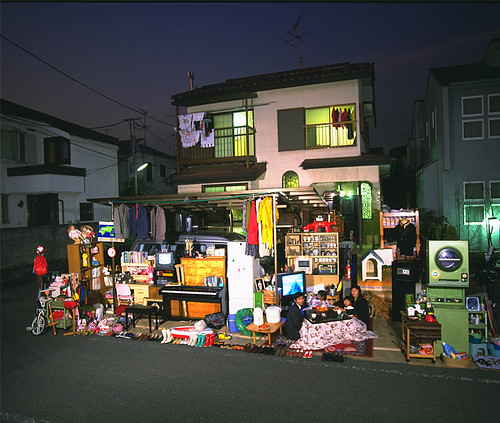
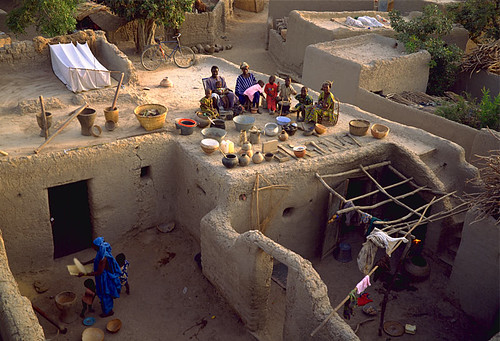
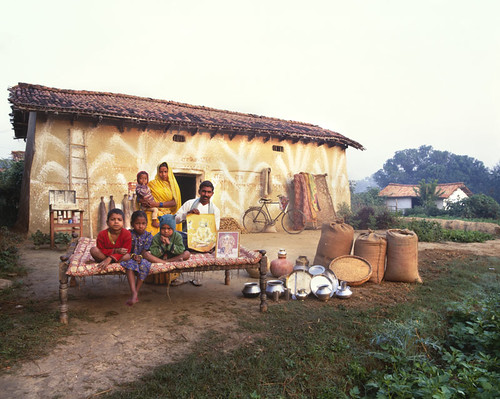
The following photos give a sense of the incredible range of ownership of material stuff in today's world.
Stuff in Japan...
Stuff in Mali...
Stuff in China...

Stuff in India...
Stuff in the US...
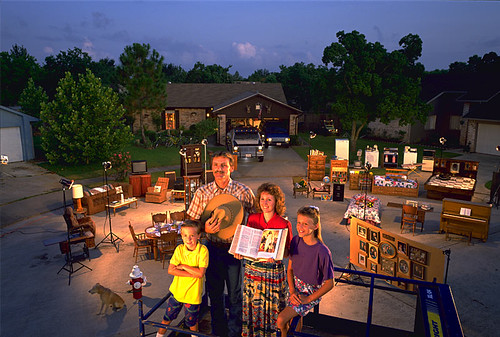
All of the above photos are by Peter Menzel. There's more about these photos and his marvelous photography here and here.
The above photos are not intended as wholly representative of the countries and their economies but they help illustrate both the legitimate desire of many folks to gain access to material comforts and they also raise the question of "how much is enough?"
About a month ago Andrew Revkin explored the issue of The Endless Pursuit of Unnecessary Things. The full post (and links) is fascinating...
February 6, 2008, 10:32 am
‘The Endless Pursuit of Unnecessary Things’
By Andrew C. Revkin
The following photos give a sense of the incredible range of ownership of material stuff in today's world.
Stuff in Japan...
Stuff in Mali...
Stuff in China...
Stuff in India...
Stuff in the US...
All of the above photos are by Peter Menzel. There's more about these photos and his marvelous photography here and here.
The above photos are not intended as wholly representative of the countries and their economies but they help illustrate both the legitimate desire of many folks to gain access to material comforts and they also raise the question of "how much is enough?"
About a month ago Andrew Revkin explored the issue of The Endless Pursuit of Unnecessary Things. The full post (and links) is fascinating...
February 6, 2008, 10:32 am
‘The Endless Pursuit of Unnecessary Things’
By Andrew C. Revkin
Amid the flow of Super Tuesdays, Superbowl surprises, news about faltering energy projects and rising solar cities, I’ve been collecting threads that relate to a central theme of Dot Earth: the implications of humanity’s growing numbers and resource thirst.
Here are a few from the last few days:
- A radio commentary quoting one of the less-familiar dictums of Adam Smith, who is best known for championing economic growth, but in this case was warning about too much of a good thing.
- The hypnotically unnerving documentary “Manufactured Landscapes,” which glaringly displays the increasingly human-shaped face of Earth.
- A sociology paper proposing that the best way to lessen consumption for its own sake is to reduce how much people work. (Is there a win-win here, or am I missing something?)
- A paper in the journal Science on sustainability showing that, by one measure, afflictions related to affluence take away as many years of life as do ills associated with poverty.
These papers and observations all circle around the two questions at the heart of the sustainability puzzle that will largely determine the quality of human lives and the environment in which they are lived: How many? How much?
How many people will inhabit Earth in the next few generations?
How much stuff – energy, land, water, marine life – will they consume?
A few examples: The overlay of rising demand and lagging supply of oil or comparable liquid fuel will shape everything from economics to international conflict. The amount of coal extracted and burned (along with the oil) will influence climate for centuries to come. The extent of land used to grow fuel, food, or fiber will determine the costs of those necessities and also the fate of the world’s last untrammeled ecosystems.
Back to the related nuggets above.
I was listening to the public-radio program Marketplace and heard a guest commentary by Charles Handy, an expert on business management who founded the London Business School and is in residence at the Drucker School of Business of Claremont (Calif.) Graduate University.
He was musing on the ideas of two departed pillars of economics, Adam Smith and Peter Drucker, in relation to limits to growth.
An excerpt:
…I wonder how [Peter Drucker] would have reacted to some of the things that bother me. For instance, how would he respond to what I call “Adam Smith’s Great Conundrum?”
Adam Smith, the father of economics, 250 years ago, said: “An investment is by all right-minded people to be commended, because it brings comforts and necessities to the citizenry. But, if continued indefinitely, it will lead to the endless pursuit of unnecessary things.”
Now that I am living for a while in California, I am staggered by the amount of “unnecessary things” that I see in the malls that dot the suburbs. America is no different from anywhere else, of course — just more so.
The conundrum is this: All that stuff creates jobs — making it, promoting it, selling it. It’s literally the stuff of growth. What I’d love to ask Peter Drucker is: How do you grow an economy without the jobs and taxes that these unnecessary things produce?
Drucker saw business as the agent of progress. Its main responsibility, he said, was to come up with new ideas and take them to market. But not just any new ideas, please — only those that bring genuine benefits to the customers, and do not muck up the environment.
The market, unfortunately, does not differentiate between good and bad. If the people want junk, the market will provide. So we have to fall back on the conscience of our business leaders.
Then there was “Manufactured Landscapes,” a film examining how human demands for resources and products are transforming the physical world, and the environment experienced on a daily basis by humans caught up in the rush of urbanized, mechanized, work-centered life. It does so over the shoulder of the Canadian photographer Edward Burtynsky, who has made chronicling the face of the Anthropocene epoch his life’s work of late.
I saw a snippet of it when writing a post on the “urban age” last week, but finally had a chance to watch the DVD. It is an unforgettable experience, something like a mash-up of “Apocalypse Now” and “Modern Times.”
It is a sobering view, particularly the scenes in sprawling Chinese factory cities churning out the (unnecessary?) things that prosperous people seem to need in ever-rising amounts. Watch the hands of a young woman as she speeds through the 20 or so manipulations necessary to make an electronic device whose purpose she only can guess at. She makes 400 a day. Then watch as the camera pans cavernous halls full of similar workers, then cuts outdoors to the cordons of thousands of workers heading to yellow dormitories.
How many factories? How much stuff?
Then came “Sustainable Consumption and Worktime Reduction,” a paper by Juliet Schor, a sociologist at Boston College, that I stumbled on while surfing a 2005 special issue of the journal Industrial Ecology on the global impacts of cities. The entire issue is enlightening.
She chronicles how industrialized economies have generally translated productivity gains in the workplace into making more stuff (and money to buy stuff) instead of making less work (reducing work hours).
A world heading toward 9 billion, however, following that path of ever more work and money to buy ever more stuff, cannot be sustained, Professor Schor concludes:
Achieving a sustainable and equitable global solution is clearly incompatible with a worldwide replication of U.S. lifestyles or even the somewhat less damaging ecological impacts of the lifestyles of other industrialized countries. In such a situation, inhabitants of the global North can and should opt for a new economic and social vision based on quality of life, rather than quantity of stuff, with reduced work time and ecological sustainability at its core. Such a vision has the potential to create broad-based pressure for an alternative to the current system of ecologically destructive, inequitable consumer-driven growth. Indeed, the future of the planet increasingly depends on it.
This paper echoed ideas I explored in 2005, when writing on Bhutan’s experiment with “gross national happiness” as a substitute for the more familiar gross national product.
Finally, there was “Science and Technology for Sustainable Well-Being,” a paper in Science by John P. Holdren, the Harvard expert on energy, environment, development and lots of other things.
The paper is a sprawling portrait of a world poised between a livable path toward 9 billion and one wracked by disruption and suffering, along with a menu for limiting losses as we head into crunch time these next few decades. But one chart really grabbed my attention. By Dr. Holdren’s analysis, when you measure human tolls in years of life lost (e.g., a child cut down by disease loses decades; a grandmother dying of a stroke at 80 loses a few years.), the major afflictions of poverty and affluence do us in at roughly equal rates.
Childhood and maternal malnutrition, he estimates, erased 200 million life years in the year 2000. High blood pressure, cholesterol, obesity, and lack of physical activity erased 150 million life years. (There’s a long list of other causes, from war to tobacco.)
So at each end of the development ladder – from not enough to too much – we get into trouble.
So are we now locked into the “endless pursuit of unnecessary things?” In thinking about this warning from Adam Smith, I can’t help but feel bad for Thomas Malthus, who has taken all the heat from free-market champions of eternal growth over the years.
Maybe it was Adam Smith who was the first Malthusian prophet of doom.Wednesday, April 01, 2009
CAN YOU BELIEVE IT?
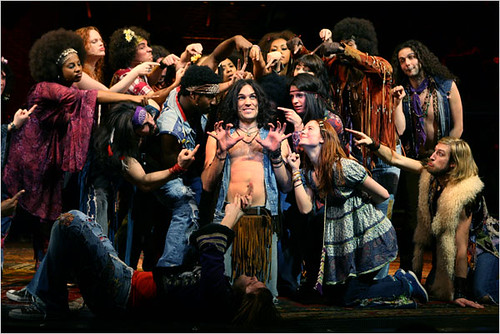
Photo: Sara Krulwich/The New York Times
HAIR is back on Broadway. I saw it first run on Broadway in 1968. Good to know some things never die.
April 1, 2009
THEATER REVIEW | 'HAIR'
A Frizzy, Fizzy Welcome to the Untamed ’60s
By BEN BRANTLEY
You’ll be happy to hear that the kids are all right. Quite a bit more than all right. Having moved indoors to Broadway from the Delacorte Theater in Central Park — where last summer they lighted up the night skies, howled at the moon and had ticket seekers lining up at dawn — the young cast members of Diane Paulus’s thrilling revival of “Hair” show no signs of becoming domesticated.
On the contrary, they’re tearing down the house in the production that opened on Tuesday night at the Al Hirschfeld Theater. And any theatergoer with a pulse will find it hard to resist their invitation to join the demolition crew. This emotionally rich revival of “The American Tribal Love-Rock Musical” from 1967 delivers what Broadway otherwise hasn’t felt this season: the intense, unadulterated joy and anguish of that bi-polar state called youth.
....
But of course no stage can contain the hormone-stoked exuberance of those who inhabit it, whether they’re yipping, unzipping or tripping, both merrily and scarily. Know that you may find yourself in intimate contact with various dancing, cajoling tribe members. They may give you daisies or leaflets. They may even ask you to embrace them. Not that you haven’t already. Go to full review
Photo: Sara Krulwich/The New York Times
HAIR is back on Broadway. I saw it first run on Broadway in 1968. Good to know some things never die.
April 1, 2009
THEATER REVIEW | 'HAIR'
A Frizzy, Fizzy Welcome to the Untamed ’60s
By BEN BRANTLEY
You’ll be happy to hear that the kids are all right. Quite a bit more than all right. Having moved indoors to Broadway from the Delacorte Theater in Central Park — where last summer they lighted up the night skies, howled at the moon and had ticket seekers lining up at dawn — the young cast members of Diane Paulus’s thrilling revival of “Hair” show no signs of becoming domesticated.
On the contrary, they’re tearing down the house in the production that opened on Tuesday night at the Al Hirschfeld Theater. And any theatergoer with a pulse will find it hard to resist their invitation to join the demolition crew. This emotionally rich revival of “The American Tribal Love-Rock Musical” from 1967 delivers what Broadway otherwise hasn’t felt this season: the intense, unadulterated joy and anguish of that bi-polar state called youth.
....
But of course no stage can contain the hormone-stoked exuberance of those who inhabit it, whether they’re yipping, unzipping or tripping, both merrily and scarily. Know that you may find yourself in intimate contact with various dancing, cajoling tribe members. They may give you daisies or leaflets. They may even ask you to embrace them. Not that you haven’t already. Go to full review
BIOCHAR: The Latest
Biochar news is soaring through the Internet, and so is controversy. Bottom line -- BIOCHAR IS A MIRACLE CURE BUT LIKE OTHER POWERFUL REMEDIES IT MUST BE USED ONLY AS DIRECTED.
Here is a bunch from the March International Biochar Initiative newsletter:
Chapter 1 of Biochar for Environmental Management now Available Online
The Introduction, Foreward, and Chapter 1 in PDF Format of Biochar for Environmental Management is now available online at the IBI website, thanks to Earthscan Press. In March 2010, the entire book will be available on the IBI site to read online. For more information, click here.
IBI is pleased to announce the following new resources for biochar researchers, gardeners, farmers, and photographers.
IBI Biochar Trials Document Now Available
Many people all over the world are now experimenting with biochar in their home gardens. Farmers, nursery operators and schools are all looking for more information about how to use biochar. The interest is high, but until now, there has not been much information available outside of the academic world. The good news is that for all the budding experimentalists out there, IBI Extension Director Julie Major has compiled A Guide to Conducting Biochar Trials. This guide is now available to download as a pdf file from the IBI website.
A Guide to Conducting Biochar Trials will help you design your scientifically valid biochar experiment at any scale ranging from a few pots in a greenhouse to a large farm. The Guide contains data sheets for you to record the details of your design setup and your results. If you would like to register your project with the IBI, send an email with your contact information to Julie Major.
Biochar Bibliography: Search IBI's RefShare Database for Peer-Reviewed Articles Relevant to Biochar, Black Carbon, and Terra Preta.
This database offers up-to-date references with abstracts, whenever available. It is maintained and updated by IBI, and contains articles relating to a wide range of biochar-related topics organized in folders. Available here
Announcing the Biochar Gardens photo group on Flickr. Biochar Gardens is a place for farmers and gardeners to post pictures of their gardens, farms, containers and greenhouses that use soil amendments based on biochar. Please share pictures of your garden at all stages of growth, from preparing your soil to harvesting. Members would also love to see your pictures of composting and your methods for making charcoal and preparing your biochar soil amendments. You can indicate how you would like to share your photos and if you like, leave contact information so that potential users can get your permission to use your photos in their publications. See the photos here.
16 March 2009, BBC News, Engineer on turning sewage into charcoal. Video interview with German engineer Helmut Gerber as he demonstrates his pyrolysis machine. See it here
16 March 2009, BBC News, How to make your plants grow faster. Video interview with Dr Bruno Glaser from Bayreuth University in Germany as he shows results of his experiments with biochar. See it here.
12 March 2009, Nòva, Il bio-segreto di Eldorado. The bio-secret of Eldorado. Two video interviews here: one with inventor Nat Mulcahy demonstrating his pyrolyzing biomass stove, and one with Franco Miglietta, a researcher at the Institute of Biometeorology, CNR, in Florence, Italy, showing his biochar field trials. See it here.
March/April, Orion Magazine, Plants Suck, by Bill McKibben who says: "After twenty years of studying climate change, if I'm sure of anything, it's that there's no one fix that will save the world." And also, "If you could continually turn a lot of organic material into biochar, you could, over time, reverse the history of the last two hundred years. During those two centuries we've taken millions of years of compressed organic material-weeds and sticks and dinosaurs and plankton-and drilled and mined them up to the surface so we could burn them. All that ancient biomass is now up in the atmosphere, causing problems. Big problems, like melting the ice caps. The biggest problems ever." Read more here.
30 March 2009, CNN, Can 'biochar' save the planet?, by Azadeh Ansari. Focus of this article is on researchers in Athens, Georgia. Includes interviews with research engineer Brian Bibens, biochar researcher Christoph Steiner, and Eprida CEO, Danny Day. Read more here.
28 March 2009, Green Left Weekly, Can biochar help stop climate change?, by Renfrey Clarke. Review of Australian biochar research finds much promise and calls for more investment: "Private capital, meanwhile, remains unwilling to take the risks involved in developing a large-scale biochar industry. The need is obvious for governments to step in." Read more here.
28 March 2009, The Guardian, Letters: Credit and criticism for biochar. Several letters in response to George Monbiot including one from IBI Executive Director, Stephen Brick.: "We don't have all the answers on biochar production and utilization; indeed the mission of the International Biochar Initiative (IBI) is to seek these answers, objectively and quickly." Read more here.
27 March 2009, The Guardian, Charleaders must cool enthusiasm for setting fire to the planet, by George Monbiot. Monbiot responds to rebuttals of his March 24 column. Read more here.
27 March 2009, The Guardian, This gift of nature is the best way to save us from climate catastrophe, by Peter Read. Read more here.
26 March 2009, The New Republic, Saving the world-with monster microwaves, by Rob Inglis. A look at Carbonscape's microwave biochar technology and the controversy aired in The Guardian. Read more here.
26 March 2009, G-Online, Biochar - a solution to climate change?, by Katie Lee. A review of biochar research in Australia with quotes from Annette Cowie, forest scientist for New South Wales's Department of Primary Industries in Sydney, Australia. Read more here.
25 March 2009, The Guardian, We never said biochar is a miracle cure, by Pushker Kharecha and Jim Hansen. Response from NASA climate scientists to Monbiot: "It is unfortunate that George Monbiot has insinuated that one of us (Jim Hansen) is a believer in biochar as a "miracle" solution for the climate crisis. If he is basing this on our published papers, then he has grossly misunderstood them." Read more here.
25 March 2009, Solve Climate, Biochar and George Monbiot's misguided rant, by Max Ajl: "Monbiot is right to pillory ... vast plantations of socially and ecologically disruptive fast-growing monoculture trees. But that doesn't mean biochar isn't a good idea, even if it makes for good copy to attack it and its proponents in the harshest terms." Read more here.
25 March 2009, Environmental Research Web, Competing to solve climate change. "UK based newspaper the Financial Times and sustainable development charity Forum for the Future are running a competition to find the most innovative solution to the effects of climate change... The winner will receive $75,000 donated by global electronics giant Hewlett-Packard." One of the finalists is the biochar producer Carbonscape. Read more here.
25 March 2009, Greentech Media, Cars into electricity, corncobs into ammonia. Review of some pyrolysis technologies including processes to make ammonia-based fertilizer and biochar from crop waste. Read more here.
24 March 2009, The Guardian, Biochar: Much is unknown but this is no reason to rule it out, by Chris Goodall. Goodall, author of Ten Technologies to Save the Planet responds to Monbiot: "George
Monbiot is right to tell biochar enthusiasts to calm down... Nevertheless in his eagerness to get us to tone down our enthusiasm he goes too far. Biochar is a useful and important way to help reduce
atmospheric concentrations of CO2." Read more here.
24 March 2009, The Guardian, Biochar: let the Earth remove CO2 for us, by James Lovelock. Earth scientist James Lovelock responds to Monbiot's column critical of biochar and its proponents. "George Monbiot is wrong to dismiss biochar out of hand - burying carbon is one way to tackle climate change." Read more here.
24 March 2009, The Guardian, Woodchips with everything. It's the Atkins plan of the low-carbon world, by George Monbiot. The Guardian's environmental columnist criticizes biochar and its proponents:"The latest miracle mass fuel cure, biochar, does not stand up; yet many who should know better have been suckered into it." Read more here.
24 March 2009, Reuters, Harnessing pig power for clean energy, by Gerard Wynn. Discusses the challenges of soil carbon sequestration, including biochar. Read more here.
23 March 2009, ISTOÉ Magazine, And the good news of the land, article in Portuguese about Brazil's terra preta, biochar research, and the upcoming IBI conference in Sao Paulo in 2010. Read more here.
23 March 2009, The Engineer, Green giants? In-depth analysis of technology developments in China and India with mention of biochar as a preferred sequestration technology along with information on India's Environmental Engineering Research Institute [NEERI] where biochar research is ongoing. Read more here.
23 March 2009, Farm and Dairy, No-till works, but is not always applicable for storing carbon. Article compares no-till methods to other soil carbon sequestration techniques including biochar.
Read more here.
19 March 2009, InSciences, Climate change is such a serious threat to national security that military organizations are now part of the solution. Report on the Climate Change & Security at Copenhagen
conference and discussion of "fast-action" mitigations that include reduction of soot emissions and increased use of biochar. Read more here.
19 March 2009, Business Day, The colour of carbon, by Denise McNabb. Report on progress and setbacks for emissions trading schemes in Australia and New Zealand and news that "Cit Investment Research ... is also sceptical about the magnitude of achievable abatement from forestry and biochar..."
Read more here.
19 March 2009, CNET News, Manmade biomass coal offers storage and fuel, by Candace Lombardi. Report on Carbonscape's Black Phantom machine: "The invention combines two popular environmental efforts: using biochar for carbon capture and storage (CCS), and developing alternative fuel sources from biomass." Read more here.
Additional stories on the Black Phantom are here and here and here.
17 March 2009, Canadian Business Online, Alterna Energy extols virtues of biocarbon, by Joe Castaldo. "Inside the boardroom of Alterna Energy's office in Prince George, B.C., a row of what appear to be coal briquettes rest on a ledge. Company president and co-founder Leonard Legault picks one of them up, rests the plum-sized object in his hand and explains, 'This is a carbonized apple.'" Read more here.
16 March 2009, BBC News, Biochar: Is the hype justified?, by Roger Harrabin. "A growing worldwide movement is now bringing together the soil scientists fascinated by the benefits of biochar..." The author interviews some of the scientists, including Bruno Glaser of University of Bayreuth where new studies show that "biochar may almost double plant growth in poor soils." Read more here.
15 March 2009, The Prep, BioChar Experiment. Report on biochar science project in the newsletter of Seton Hall Preparatory School: "Environmental Science teacher Dave Snyder has partnered up his class with a cutting edge green start-up that is modernizing some environmentally positive agricultural techniques that actually go back centuries." Includes detailed description of experimental method. Read more here.
14 March 2009, Waikato Times, Prizewinner is a gas. Jake Martin, 17, won three of the top prizes in New Zealand's Realise the Dream national awards for science students for his wood gasifier that produces biochar which Jake uses to fertilize his mum's vegetable garden. Read more here.
12 March, 2009, The Guardian, Battersea woman wins eco award, by Katie Wilson. "A Battersea woman and her team beat off stiff international competition last week to be crowned winners of the Cooling the Planet environmental award." Their idea was to use hydro-pyrolysis to produce energy and biochar from landfill waste.Read more here,
12 March 2009, Il Sole 24 Ore, Lucia Stove, born in Tortona, is the solution to bring energy and biochar to villages, by Marco Magrini. The story of Nat Mulcahy and how he came to invent his co-axial gasification stove that produces biochar. In Italian. Read more here.
12 March 2009, Cornell Sun, Univ. turns waste into renewable energy. The Cornell University Renewable Bioenergy Initiative will use multiple approaches to produce energy from university biomass waste, including pyrolysis. "Having many different complementary bioenergy approaches under one roof is especially intriguing because we have in our landscapes multiple feedstocks that require differential treatment," said Prof. Johannes Lehmann, crop and soil sciences. Read more here.
11 March 2009, The Australian, Carbon hopes push case for charcoal, by Jill Rowbotham. In-depth review of pyrolysis research in Australia, biochar and climate policy and the struggle to produce enough biochar to supply research programs. Read more here.
4 March 2009, BBC News, Big problems need big solutions, by Tim Lenton. Lenton discusses implications of his study on geo-engineering. He says: "Perhaps the most potent option, on the century timescale at least, is to grow plants to get CO2 out of the air and then convert their biomass to both charcoal and (bio)fuels." Biochar is also attractive as a potentially income-generating option. All other options are likely to cost money. Read more here.
25 February 2009, New Scientist, Hacking the planet: The only climate solution left?, by Catherine Brahic. A look at geo-engineering options. Includes an interesting graphic side-by-side view of biochar and other options. Graphic is here and Read more here.
Industry Press Releases
20 March 2009, Carbonscape, NZ company makes shortlist in UK climate challenge. Read more here.
23 March 2009, Mantria Industries, Mantria Industries, LLC and Carbon Diversion Inc. release EternaGreen BioChar specs. Read more here.
30 March 2009, EternaGreen, BioChar Brokers offers first online and retail sales of EternaGreen™ BioChar. Read more here.
Biochar news is soaring through the Internet, and so is controversy. Bottom line -- BIOCHAR IS A MIRACLE CURE BUT LIKE OTHER POWERFUL REMEDIES IT MUST BE USED ONLY AS DIRECTED.
Here is a bunch from the March International Biochar Initiative newsletter:
Chapter 1 of Biochar for Environmental Management now Available Online
The Introduction, Foreward, and Chapter 1 in PDF Format of Biochar for Environmental Management is now available online at the IBI website, thanks to Earthscan Press. In March 2010, the entire book will be available on the IBI site to read online. For more information, click here.
IBI is pleased to announce the following new resources for biochar researchers, gardeners, farmers, and photographers.
IBI Biochar Trials Document Now Available
Many people all over the world are now experimenting with biochar in their home gardens. Farmers, nursery operators and schools are all looking for more information about how to use biochar. The interest is high, but until now, there has not been much information available outside of the academic world. The good news is that for all the budding experimentalists out there, IBI Extension Director Julie Major has compiled A Guide to Conducting Biochar Trials. This guide is now available to download as a pdf file from the IBI website.
A Guide to Conducting Biochar Trials will help you design your scientifically valid biochar experiment at any scale ranging from a few pots in a greenhouse to a large farm. The Guide contains data sheets for you to record the details of your design setup and your results. If you would like to register your project with the IBI, send an email with your contact information to Julie Major.
Biochar Bibliography: Search IBI's RefShare Database for Peer-Reviewed Articles Relevant to Biochar, Black Carbon, and Terra Preta.
This database offers up-to-date references with abstracts, whenever available. It is maintained and updated by IBI, and contains articles relating to a wide range of biochar-related topics organized in folders. Available here
Announcing the Biochar Gardens photo group on Flickr. Biochar Gardens is a place for farmers and gardeners to post pictures of their gardens, farms, containers and greenhouses that use soil amendments based on biochar. Please share pictures of your garden at all stages of growth, from preparing your soil to harvesting. Members would also love to see your pictures of composting and your methods for making charcoal and preparing your biochar soil amendments. You can indicate how you would like to share your photos and if you like, leave contact information so that potential users can get your permission to use your photos in their publications. See the photos here.
16 March 2009, BBC News, Engineer on turning sewage into charcoal. Video interview with German engineer Helmut Gerber as he demonstrates his pyrolysis machine. See it here
16 March 2009, BBC News, How to make your plants grow faster. Video interview with Dr Bruno Glaser from Bayreuth University in Germany as he shows results of his experiments with biochar. See it here.
12 March 2009, Nòva, Il bio-segreto di Eldorado. The bio-secret of Eldorado. Two video interviews here: one with inventor Nat Mulcahy demonstrating his pyrolyzing biomass stove, and one with Franco Miglietta, a researcher at the Institute of Biometeorology, CNR, in Florence, Italy, showing his biochar field trials. See it here.
March/April, Orion Magazine, Plants Suck, by Bill McKibben who says: "After twenty years of studying climate change, if I'm sure of anything, it's that there's no one fix that will save the world." And also, "If you could continually turn a lot of organic material into biochar, you could, over time, reverse the history of the last two hundred years. During those two centuries we've taken millions of years of compressed organic material-weeds and sticks and dinosaurs and plankton-and drilled and mined them up to the surface so we could burn them. All that ancient biomass is now up in the atmosphere, causing problems. Big problems, like melting the ice caps. The biggest problems ever." Read more here.
30 March 2009, CNN, Can 'biochar' save the planet?, by Azadeh Ansari. Focus of this article is on researchers in Athens, Georgia. Includes interviews with research engineer Brian Bibens, biochar researcher Christoph Steiner, and Eprida CEO, Danny Day. Read more here.
28 March 2009, Green Left Weekly, Can biochar help stop climate change?, by Renfrey Clarke. Review of Australian biochar research finds much promise and calls for more investment: "Private capital, meanwhile, remains unwilling to take the risks involved in developing a large-scale biochar industry. The need is obvious for governments to step in." Read more here.
28 March 2009, The Guardian, Letters: Credit and criticism for biochar. Several letters in response to George Monbiot including one from IBI Executive Director, Stephen Brick.: "We don't have all the answers on biochar production and utilization; indeed the mission of the International Biochar Initiative (IBI) is to seek these answers, objectively and quickly." Read more here.
27 March 2009, The Guardian, Charleaders must cool enthusiasm for setting fire to the planet, by George Monbiot. Monbiot responds to rebuttals of his March 24 column. Read more here.
27 March 2009, The Guardian, This gift of nature is the best way to save us from climate catastrophe, by Peter Read. Read more here.
26 March 2009, The New Republic, Saving the world-with monster microwaves, by Rob Inglis. A look at Carbonscape's microwave biochar technology and the controversy aired in The Guardian. Read more here.
26 March 2009, G-Online, Biochar - a solution to climate change?, by Katie Lee. A review of biochar research in Australia with quotes from Annette Cowie, forest scientist for New South Wales's Department of Primary Industries in Sydney, Australia. Read more here.
25 March 2009, The Guardian, We never said biochar is a miracle cure, by Pushker Kharecha and Jim Hansen. Response from NASA climate scientists to Monbiot: "It is unfortunate that George Monbiot has insinuated that one of us (Jim Hansen) is a believer in biochar as a "miracle" solution for the climate crisis. If he is basing this on our published papers, then he has grossly misunderstood them." Read more here.
25 March 2009, Solve Climate, Biochar and George Monbiot's misguided rant, by Max Ajl: "Monbiot is right to pillory ... vast plantations of socially and ecologically disruptive fast-growing monoculture trees. But that doesn't mean biochar isn't a good idea, even if it makes for good copy to attack it and its proponents in the harshest terms." Read more here.
25 March 2009, Environmental Research Web, Competing to solve climate change. "UK based newspaper the Financial Times and sustainable development charity Forum for the Future are running a competition to find the most innovative solution to the effects of climate change... The winner will receive $75,000 donated by global electronics giant Hewlett-Packard." One of the finalists is the biochar producer Carbonscape. Read more here.
25 March 2009, Greentech Media, Cars into electricity, corncobs into ammonia. Review of some pyrolysis technologies including processes to make ammonia-based fertilizer and biochar from crop waste. Read more here.
24 March 2009, The Guardian, Biochar: Much is unknown but this is no reason to rule it out, by Chris Goodall. Goodall, author of Ten Technologies to Save the Planet responds to Monbiot: "George
Monbiot is right to tell biochar enthusiasts to calm down... Nevertheless in his eagerness to get us to tone down our enthusiasm he goes too far. Biochar is a useful and important way to help reduce
atmospheric concentrations of CO2." Read more here.
24 March 2009, The Guardian, Biochar: let the Earth remove CO2 for us, by James Lovelock. Earth scientist James Lovelock responds to Monbiot's column critical of biochar and its proponents. "George Monbiot is wrong to dismiss biochar out of hand - burying carbon is one way to tackle climate change." Read more here.
24 March 2009, The Guardian, Woodchips with everything. It's the Atkins plan of the low-carbon world, by George Monbiot. The Guardian's environmental columnist criticizes biochar and its proponents:"The latest miracle mass fuel cure, biochar, does not stand up; yet many who should know better have been suckered into it." Read more here.
24 March 2009, Reuters, Harnessing pig power for clean energy, by Gerard Wynn. Discusses the challenges of soil carbon sequestration, including biochar. Read more here.
23 March 2009, ISTOÉ Magazine, And the good news of the land, article in Portuguese about Brazil's terra preta, biochar research, and the upcoming IBI conference in Sao Paulo in 2010. Read more here.
23 March 2009, The Engineer, Green giants? In-depth analysis of technology developments in China and India with mention of biochar as a preferred sequestration technology along with information on India's Environmental Engineering Research Institute [NEERI] where biochar research is ongoing. Read more here.
23 March 2009, Farm and Dairy, No-till works, but is not always applicable for storing carbon. Article compares no-till methods to other soil carbon sequestration techniques including biochar.
Read more here.
19 March 2009, InSciences, Climate change is such a serious threat to national security that military organizations are now part of the solution. Report on the Climate Change & Security at Copenhagen
conference and discussion of "fast-action" mitigations that include reduction of soot emissions and increased use of biochar. Read more here.
19 March 2009, Business Day, The colour of carbon, by Denise McNabb. Report on progress and setbacks for emissions trading schemes in Australia and New Zealand and news that "Cit Investment Research ... is also sceptical about the magnitude of achievable abatement from forestry and biochar..."
Read more here.
19 March 2009, CNET News, Manmade biomass coal offers storage and fuel, by Candace Lombardi. Report on Carbonscape's Black Phantom machine: "The invention combines two popular environmental efforts: using biochar for carbon capture and storage (CCS), and developing alternative fuel sources from biomass." Read more here.
Additional stories on the Black Phantom are here and here and here.
17 March 2009, Canadian Business Online, Alterna Energy extols virtues of biocarbon, by Joe Castaldo. "Inside the boardroom of Alterna Energy's office in Prince George, B.C., a row of what appear to be coal briquettes rest on a ledge. Company president and co-founder Leonard Legault picks one of them up, rests the plum-sized object in his hand and explains, 'This is a carbonized apple.'" Read more here.
16 March 2009, BBC News, Biochar: Is the hype justified?, by Roger Harrabin. "A growing worldwide movement is now bringing together the soil scientists fascinated by the benefits of biochar..." The author interviews some of the scientists, including Bruno Glaser of University of Bayreuth where new studies show that "biochar may almost double plant growth in poor soils." Read more here.
15 March 2009, The Prep, BioChar Experiment. Report on biochar science project in the newsletter of Seton Hall Preparatory School: "Environmental Science teacher Dave Snyder has partnered up his class with a cutting edge green start-up that is modernizing some environmentally positive agricultural techniques that actually go back centuries." Includes detailed description of experimental method. Read more here.
14 March 2009, Waikato Times, Prizewinner is a gas. Jake Martin, 17, won three of the top prizes in New Zealand's Realise the Dream national awards for science students for his wood gasifier that produces biochar which Jake uses to fertilize his mum's vegetable garden. Read more here.
12 March, 2009, The Guardian, Battersea woman wins eco award, by Katie Wilson. "A Battersea woman and her team beat off stiff international competition last week to be crowned winners of the Cooling the Planet environmental award." Their idea was to use hydro-pyrolysis to produce energy and biochar from landfill waste.Read more here,
12 March 2009, Il Sole 24 Ore, Lucia Stove, born in Tortona, is the solution to bring energy and biochar to villages, by Marco Magrini. The story of Nat Mulcahy and how he came to invent his co-axial gasification stove that produces biochar. In Italian. Read more here.
12 March 2009, Cornell Sun, Univ. turns waste into renewable energy. The Cornell University Renewable Bioenergy Initiative will use multiple approaches to produce energy from university biomass waste, including pyrolysis. "Having many different complementary bioenergy approaches under one roof is especially intriguing because we have in our landscapes multiple feedstocks that require differential treatment," said Prof. Johannes Lehmann, crop and soil sciences. Read more here.
11 March 2009, The Australian, Carbon hopes push case for charcoal, by Jill Rowbotham. In-depth review of pyrolysis research in Australia, biochar and climate policy and the struggle to produce enough biochar to supply research programs. Read more here.
4 March 2009, BBC News, Big problems need big solutions, by Tim Lenton. Lenton discusses implications of his study on geo-engineering. He says: "Perhaps the most potent option, on the century timescale at least, is to grow plants to get CO2 out of the air and then convert their biomass to both charcoal and (bio)fuels." Biochar is also attractive as a potentially income-generating option. All other options are likely to cost money. Read more here.
25 February 2009, New Scientist, Hacking the planet: The only climate solution left?, by Catherine Brahic. A look at geo-engineering options. Includes an interesting graphic side-by-side view of biochar and other options. Graphic is here and Read more here.
Industry Press Releases
20 March 2009, Carbonscape, NZ company makes shortlist in UK climate challenge. Read more here.
23 March 2009, Mantria Industries, Mantria Industries, LLC and Carbon Diversion Inc. release EternaGreen BioChar specs. Read more here.
30 March 2009, EternaGreen, BioChar Brokers offers first online and retail sales of EternaGreen™ BioChar. Read more here.
AFFLUENZA
Maureen Dowd's op-ed No More Hummer Nation gave me the idea that it might be a good time to provide the wiki link with resources for dealing with this problem. Surely the pandemic of depression in the "developed" world suggests that something is amiss. Here's where you can find out more.
Maureen Dowd's op-ed No More Hummer Nation gave me the idea that it might be a good time to provide the wiki link with resources for dealing with this problem. Surely the pandemic of depression in the "developed" world suggests that something is amiss. Here's where you can find out more.
POLIDORO AND HIS PARROTS
Polidoro and his parrots live at Vila Fortaleza. He is the son of Solange and a grandson of Luiz Mendes. The beautiful song is a Santo Daime hymn of Rosana Cristiane Pereira. Polidoro's birds don't sing or fly but they bring much love and joy which is what the hymn is about.
Note: The hymn refers to vovo beija-flor (grandfather humming-bird) in a reference to Padrinho Sebastião, the founder of Mapia which is the largest Santo Daime community in the forest.
Polidoro and his parrots live at Vila Fortaleza. He is the son of Solange and a grandson of Luiz Mendes. The beautiful song is a Santo Daime hymn of Rosana Cristiane Pereira. Polidoro's birds don't sing or fly but they bring much love and joy which is what the hymn is about.
Note: The hymn refers to vovo beija-flor (grandfather humming-bird) in a reference to Padrinho Sebastião, the founder of Mapia which is the largest Santo Daime community in the forest.
Pigeons fly cell phones into Brazilian prison
In what is truly a case of "innovation without borders" natural and digital technologies combine with intriguing but less-than-desirable results.
By STAN LEHMAN
Go to original
SAO PAULO (AP) — Inmates have devised an innovative way to smuggle in cell phones into a prison farm in Brazil: carrier pigeons.
Guards at the Danilio Pinheiro prison near the southeastern city of Sorocaba noticed a pigeon resting on an electric wire with a small cloth bag tied to one of its legs last week.
"The guards nabbed the bird after luring it down with some food and discovered components of a small cell phone inside the bag," police investigator Celso Soramiglio said Tuesday.
One day later, another pigeon was spotted dragging a similar bag inside the prison's exercise yard. Inside the bag was the cell phone's charger, Soramiglio said.
The birds were apparently bred and raised inside the prison, smuggled out, outfitted with the cell phone parts and then released to fly back.
"Pigeons instinctively fly back home, always," the investigator said.
Soramiglio said that police have not discovered who raised the pigeons nor the name of the inmate who was going to receive the cell phone, but that he hoped the telephone carrier would provide the information.
"Some of them are members of organized crime groups that use cell phones to talk to family and friends and to give and receive orders for criminal actions outside and inside prisons," Soramiglio said.
He did not want to elaborate further until investigations conclude.
In 2006, Sao Paulo's notorious First Capital Command used cell phones to coordinate a wave of assaults on police, banks and buses that left more than 200 people dead in South America's largest city.
The gang's leaders are based in prisons, and use smuggled cell phones to plan and execute drug deals, kidnappings and bank robberies.
In what is truly a case of "innovation without borders" natural and digital technologies combine with intriguing but less-than-desirable results.
By STAN LEHMAN
Go to original
SAO PAULO (AP) — Inmates have devised an innovative way to smuggle in cell phones into a prison farm in Brazil: carrier pigeons.
Guards at the Danilio Pinheiro prison near the southeastern city of Sorocaba noticed a pigeon resting on an electric wire with a small cloth bag tied to one of its legs last week.
"The guards nabbed the bird after luring it down with some food and discovered components of a small cell phone inside the bag," police investigator Celso Soramiglio said Tuesday.
One day later, another pigeon was spotted dragging a similar bag inside the prison's exercise yard. Inside the bag was the cell phone's charger, Soramiglio said.
The birds were apparently bred and raised inside the prison, smuggled out, outfitted with the cell phone parts and then released to fly back.
"Pigeons instinctively fly back home, always," the investigator said.
Soramiglio said that police have not discovered who raised the pigeons nor the name of the inmate who was going to receive the cell phone, but that he hoped the telephone carrier would provide the information.
"Some of them are members of organized crime groups that use cell phones to talk to family and friends and to give and receive orders for criminal actions outside and inside prisons," Soramiglio said.
He did not want to elaborate further until investigations conclude.
In 2006, Sao Paulo's notorious First Capital Command used cell phones to coordinate a wave of assaults on police, banks and buses that left more than 200 people dead in South America's largest city.
The gang's leaders are based in prisons, and use smuggled cell phones to plan and execute drug deals, kidnappings and bank robberies.
The Price Is Not Right
New York Times columnist Thomas Friedman definitely has the right idea...
April 1, 2009
Op-Ed Columnist
The Price Is Not Right
By THOMAS L. FRIEDMAN
Go to original.
I don’t expect much from the G-20 meeting this week, but if I had my wish, the leaders of the world’s 20 top economies would commit themselves to a new standard of accounting — call it “Market to Mother Nature” accounting. Why? Because it’s now obvious that the reason we’re experiencing a simultaneous meltdown in the financial system and the climate system is because we have been mispricing risk in both arenas — producing a huge excess of both toxic assets and toxic air that now threatens the stability of the whole planet.
Just as A.I.G. sold insurance derivatives at prices that did not reflect the real costs and the real risks of massive defaults (for which we the taxpayers ended up paying the difference), oil companies, coal companies and electric utilities today are selling energy products at prices that do not reflect the real costs to the environment and real risks of disruptive climate change (so future taxpayers will end up paying the difference).
Whenever products are mispriced and do not reflect the real costs and risks associated with their usage, people go to excess. And that is exactly what happened in the financial marketplace and in the energy/environmental marketplace during the credit bubble.
Our biggest financial-services companies, some of which came to be seen as too big to fail, engaged in complex financial trading schemes that did not adequately price in the costs and risks of a market reversal. A.I.G., for instance, was selling insurance for all kinds of financial instruments and did not have anywhere near adequate reserves to cover claims if things went badly wrong, as they did. And our biggest energy companies, utilities and auto companies became dependent on cheap hydrocarbons that spin off climate-changing greenhouse gases, and we clearly have not forced them, through a carbon tax, to price in the true risks and costs to society from these climate-changing fuels.
“When the balance sheet of a company does not capture the true costs and risks of its business activities,” and when that company is too big to fail, “you end up with them privatizing their gains and socializing their losses,” Nandan Nilekani, the co-chairman of the Indian technology company Infosys, remarked to me. That is, everyone gets to rack up their private profits today and pay them out in current bonuses and dividends. But any catastrophic losses — if the company is too big to fail — “get socialized and paid off by taxpayers.”
This is why we need new banking regulation that reins in the leverage and speculative trading that big banks and insurance companies can undertake so they never again become simultaneously too reckless to regulate but too big fail and taxpayers are forced to pay off the toxic assets they accumulate. And this is also why we need a tax on carbon — so we and our power utilities don’t become permanently addicted to cheap coal that makes for lower electricity prices today but spits out toxic greenhouse gases that have to be paid for by future generations tomorrow.
That’s what “Market to Mother Nature” accounting is all about. It begins with the premise that the distinction between the G-20 and the Copenhagen climate change negotiations is totally artificial. They are just flip sides of the same global problem — how we as a world keep raising standards of living for more and more people in ways that will not, as a byproduct, have both the Market and Mother Nature producing huge amounts of toxic assets.
The old system, which has reached its financial and environmental limits, worked like this: We built more and more stores in America to sell more and more stuff, which was made in more and more Chinese factories powered by more and more coal that earned more and more dollars to buy more and more U.S. T-bills that got recycled back to America in the form of cheap credit to build more and more stores and more and more houses that gave rise to more and more Chinese factories. ...
This system was a powerful engine of wealth creation and lifted millions out of poverty, but it relied upon the risks to the Market and to Mother Nature being underpriced and to profits being privatized in good times and losses socialized in bad times. This capitalist engine doesn’t need to be discarded; it needs some fixes. For starters, we need to get back to basics — accountable lending, prudent saving, reasonable leverage and, most important, more engineering of goods than just financial products.
Some of our biggest financial firms got away from their original purpose — to fund innovation and to finance the process of “creative destruction,” whereby new technologies that improve people’s lives replace old ones, said the Columbia University economist Jagdish Bhagwati, in an interview in The American Interest. Instead, he added, too many banks got involved in exotic and incomprehensible financial innovations — to simply make money out of money — which ended up as “destructive creation.”
“Destructive creation” has wounded both the Market and Mother Nature. Smart regulation and carbon taxation can heal both.
New York Times columnist Thomas Friedman definitely has the right idea...
April 1, 2009
Op-Ed Columnist
The Price Is Not Right
By THOMAS L. FRIEDMAN
Go to original.
I don’t expect much from the G-20 meeting this week, but if I had my wish, the leaders of the world’s 20 top economies would commit themselves to a new standard of accounting — call it “Market to Mother Nature” accounting. Why? Because it’s now obvious that the reason we’re experiencing a simultaneous meltdown in the financial system and the climate system is because we have been mispricing risk in both arenas — producing a huge excess of both toxic assets and toxic air that now threatens the stability of the whole planet.
Just as A.I.G. sold insurance derivatives at prices that did not reflect the real costs and the real risks of massive defaults (for which we the taxpayers ended up paying the difference), oil companies, coal companies and electric utilities today are selling energy products at prices that do not reflect the real costs to the environment and real risks of disruptive climate change (so future taxpayers will end up paying the difference).
Whenever products are mispriced and do not reflect the real costs and risks associated with their usage, people go to excess. And that is exactly what happened in the financial marketplace and in the energy/environmental marketplace during the credit bubble.
Our biggest financial-services companies, some of which came to be seen as too big to fail, engaged in complex financial trading schemes that did not adequately price in the costs and risks of a market reversal. A.I.G., for instance, was selling insurance for all kinds of financial instruments and did not have anywhere near adequate reserves to cover claims if things went badly wrong, as they did. And our biggest energy companies, utilities and auto companies became dependent on cheap hydrocarbons that spin off climate-changing greenhouse gases, and we clearly have not forced them, through a carbon tax, to price in the true risks and costs to society from these climate-changing fuels.
“When the balance sheet of a company does not capture the true costs and risks of its business activities,” and when that company is too big to fail, “you end up with them privatizing their gains and socializing their losses,” Nandan Nilekani, the co-chairman of the Indian technology company Infosys, remarked to me. That is, everyone gets to rack up their private profits today and pay them out in current bonuses and dividends. But any catastrophic losses — if the company is too big to fail — “get socialized and paid off by taxpayers.”
This is why we need new banking regulation that reins in the leverage and speculative trading that big banks and insurance companies can undertake so they never again become simultaneously too reckless to regulate but too big fail and taxpayers are forced to pay off the toxic assets they accumulate. And this is also why we need a tax on carbon — so we and our power utilities don’t become permanently addicted to cheap coal that makes for lower electricity prices today but spits out toxic greenhouse gases that have to be paid for by future generations tomorrow.
That’s what “Market to Mother Nature” accounting is all about. It begins with the premise that the distinction between the G-20 and the Copenhagen climate change negotiations is totally artificial. They are just flip sides of the same global problem — how we as a world keep raising standards of living for more and more people in ways that will not, as a byproduct, have both the Market and Mother Nature producing huge amounts of toxic assets.
The old system, which has reached its financial and environmental limits, worked like this: We built more and more stores in America to sell more and more stuff, which was made in more and more Chinese factories powered by more and more coal that earned more and more dollars to buy more and more U.S. T-bills that got recycled back to America in the form of cheap credit to build more and more stores and more and more houses that gave rise to more and more Chinese factories. ...
This system was a powerful engine of wealth creation and lifted millions out of poverty, but it relied upon the risks to the Market and to Mother Nature being underpriced and to profits being privatized in good times and losses socialized in bad times. This capitalist engine doesn’t need to be discarded; it needs some fixes. For starters, we need to get back to basics — accountable lending, prudent saving, reasonable leverage and, most important, more engineering of goods than just financial products.
Some of our biggest financial firms got away from their original purpose — to fund innovation and to finance the process of “creative destruction,” whereby new technologies that improve people’s lives replace old ones, said the Columbia University economist Jagdish Bhagwati, in an interview in The American Interest. Instead, he added, too many banks got involved in exotic and incomprehensible financial innovations — to simply make money out of money — which ended up as “destructive creation.”
“Destructive creation” has wounded both the Market and Mother Nature. Smart regulation and carbon taxation can heal both.
Tuesday, March 31, 2009
2009 Encounter for a New Horizon
-- the PHOTOS
Each year's Festival at Fortaleza fills my camera with a huge number of photos. It's a good thing because trying to describe a spiritual journey of 10 days at Fortaleza is a daunting task. So here are a series of slide shows.
NOTE: You can skip the slide shows any go directly to the full collection here.
Opening Works and New Year
A few pics from the first concentration work and the New Year work that opened this years gathering.
Lucio's Haircut
Every year the Encounter for a New Horizon is full of special moments. This year one such moment was Lucio's haircut. It was on New Year's Day. Saturnino had been kidding him for weeks about his long hair. Lucio evidently made a firm New Year resolution to take action. What fun it was!
Lojinha - The Little Store
There was a fine New Year's day inauguration of the little store and visitor center at Fortaleza. It began outside with Cicero telling stories for Padrinho Luiz Mendes and then everyone carried the party inside, ending with a grand entertainment for the children.
Spiritual Works in the Forest
The day of spiritual works in the forest begins with a festive gathering at the church and then drinking Daime and strolling through the forest to sing hymns at three locations. One of the high points it when Padrinho Luiz offers his dramatization of the forest spirit Casmerim delivering a message that the forest provides everything and must not be damaged.
It is also recognized that in nature nothing is permanent -- the great Copaiba tree now lies on the ground as a result of a big wind storm last year. But nothing in nature is wasted. The ecologists say that a fallen log is the most important structural component of a forest. It stores water, provides a habitat for many plants and creatures, and decays to create new soil. The ways of nature are infinite and the cycles life and death create a world without end.
This year a fourth spiritual work in the forest was added to the official calendar. The new Salão de Apui is especially dedicated for the singing of Padrinho Alfredo's hinario, Nova Era.
Camping
During festival times many visitors camp, creating mini-tent cities of folks from the same region. So there's bound to be a Sao Paulo "Barraca", one for Campo Grande, Minas Gerais, etc. Tents and laundry dominate and so does intimacy and friendship.
Xipamano River Trip
The land of Fortaleza is bordered by the Xipamano River which separates Brazil and Bolivia. This year the community has inaugurated a series of boat trips, up the river, to visit and "old-style" settlement of "colonistas" who inhabit, farm and raise livestock on one of the cleared areas on the Bolivian side.
Solon and Berg led a presentation of stories and songs -- telling of the past and of their love for nature.
Birthdays
The birthday of Padrinho Luiz Mendes -- and Junaida and Janaina -- is like a non-stop festival of joy. It begins at night with a spiritual session singing the hinario's of two of Padrinho's dear friends -- Seu Tufi Amin and Eduardo Gabrish. One of the most moving times comes near the end when people offer their heartfelt words expressing their deep love for Padrinho. It continues with a morning breakfast and cake party and later an afternoon barbecue.
Day of the Holy Kings
The day of the Holy Kings is one of the most important festivals of the official Santo Daime calendar. It signifies the completion of a year of spiritual activity to begin anew the day-to-day work of living in the Holy Peace of God.
It is also a time for personal milestones such as baptisms and receiving a star. This year Flora and Gustavo were baptized by Padrinho Luiz and Christina (from France) received her star.
Theater and Culture
One of the events that everyone looks forward to is the night of theater and culture presenting the folklore of Amazônia. This year's "choreographers" were Joaquim and Cicero who held many rehearsals and guided family and friends and audience to a fine time for all.
Forró
Forró is the popular dance form from Northeastern Brazil where Mestre Irineu was born. In its modern form it is a vigorous dance like a polka but more rhythmic and hip twisting and it has been remixed into forms that are currently popular in the Brazilian dance club scene.
In Fortaleza it is danced mostly in the old-fashioned waltz style. This year's innovation was that the music was led by a saxophone player who used to play at some of the Concentration Works of Mestre Irineu.
Closing and Farewells
The closing spiritual session of each year's encounter involves singing the hiarios Novo Horizonte (Luiz Mendes) and Nova Jerusalem (Pad Sebastiao).
At the closing there is a very special time for people to share their thoughts and feelings. The words are like prayers -- true words from the heart. There is a second kind of prayer as well. It's what the Native Americans call the "listening prayer" Yes, indeed, speaking and listening from the heart is surely a way that one might sum up what it's like to experience an Encounter for a New Horizon.
Feitio
At Fortaleza the work never ends. Immediately following the farewells and departures yet another cycle of work started -- the making of the Daime beginning with the night of the full moon.
We hope to see you next year which should be pretty special -- it marks the 70th birthday of Mestre Conselheiro Luiz Mendes.
-- the PHOTOS
Each year's Festival at Fortaleza fills my camera with a huge number of photos. It's a good thing because trying to describe a spiritual journey of 10 days at Fortaleza is a daunting task. So here are a series of slide shows.
NOTE: You can skip the slide shows any go directly to the full collection here.
Opening Works and New Year
A few pics from the first concentration work and the New Year work that opened this years gathering.
Lucio's Haircut
Every year the Encounter for a New Horizon is full of special moments. This year one such moment was Lucio's haircut. It was on New Year's Day. Saturnino had been kidding him for weeks about his long hair. Lucio evidently made a firm New Year resolution to take action. What fun it was!
Lojinha - The Little Store
There was a fine New Year's day inauguration of the little store and visitor center at Fortaleza. It began outside with Cicero telling stories for Padrinho Luiz Mendes and then everyone carried the party inside, ending with a grand entertainment for the children.
Spiritual Works in the Forest
The day of spiritual works in the forest begins with a festive gathering at the church and then drinking Daime and strolling through the forest to sing hymns at three locations. One of the high points it when Padrinho Luiz offers his dramatization of the forest spirit Casmerim delivering a message that the forest provides everything and must not be damaged.
It is also recognized that in nature nothing is permanent -- the great Copaiba tree now lies on the ground as a result of a big wind storm last year. But nothing in nature is wasted. The ecologists say that a fallen log is the most important structural component of a forest. It stores water, provides a habitat for many plants and creatures, and decays to create new soil. The ways of nature are infinite and the cycles life and death create a world without end.
This year a fourth spiritual work in the forest was added to the official calendar. The new Salão de Apui is especially dedicated for the singing of Padrinho Alfredo's hinario, Nova Era.
Camping
During festival times many visitors camp, creating mini-tent cities of folks from the same region. So there's bound to be a Sao Paulo "Barraca", one for Campo Grande, Minas Gerais, etc. Tents and laundry dominate and so does intimacy and friendship.
Xipamano River Trip
The land of Fortaleza is bordered by the Xipamano River which separates Brazil and Bolivia. This year the community has inaugurated a series of boat trips, up the river, to visit and "old-style" settlement of "colonistas" who inhabit, farm and raise livestock on one of the cleared areas on the Bolivian side.
Solon and Berg led a presentation of stories and songs -- telling of the past and of their love for nature.
Birthdays
The birthday of Padrinho Luiz Mendes -- and Junaida and Janaina -- is like a non-stop festival of joy. It begins at night with a spiritual session singing the hinario's of two of Padrinho's dear friends -- Seu Tufi Amin and Eduardo Gabrish. One of the most moving times comes near the end when people offer their heartfelt words expressing their deep love for Padrinho. It continues with a morning breakfast and cake party and later an afternoon barbecue.
Day of the Holy Kings
The day of the Holy Kings is one of the most important festivals of the official Santo Daime calendar. It signifies the completion of a year of spiritual activity to begin anew the day-to-day work of living in the Holy Peace of God.
It is also a time for personal milestones such as baptisms and receiving a star. This year Flora and Gustavo were baptized by Padrinho Luiz and Christina (from France) received her star.
Theater and Culture
One of the events that everyone looks forward to is the night of theater and culture presenting the folklore of Amazônia. This year's "choreographers" were Joaquim and Cicero who held many rehearsals and guided family and friends and audience to a fine time for all.
Forró
Forró is the popular dance form from Northeastern Brazil where Mestre Irineu was born. In its modern form it is a vigorous dance like a polka but more rhythmic and hip twisting and it has been remixed into forms that are currently popular in the Brazilian dance club scene.
In Fortaleza it is danced mostly in the old-fashioned waltz style. This year's innovation was that the music was led by a saxophone player who used to play at some of the Concentration Works of Mestre Irineu.
Closing and Farewells
The closing spiritual session of each year's encounter involves singing the hiarios Novo Horizonte (Luiz Mendes) and Nova Jerusalem (Pad Sebastiao).
At the closing there is a very special time for people to share their thoughts and feelings. The words are like prayers -- true words from the heart. There is a second kind of prayer as well. It's what the Native Americans call the "listening prayer" Yes, indeed, speaking and listening from the heart is surely a way that one might sum up what it's like to experience an Encounter for a New Horizon.
Feitio
At Fortaleza the work never ends. Immediately following the farewells and departures yet another cycle of work started -- the making of the Daime beginning with the night of the full moon.
We hope to see you next year which should be pretty special -- it marks the 70th birthday of Mestre Conselheiro Luiz Mendes.
Saturday, March 28, 2009
THE SENSATIONALIST REACTION BEGINS
Here's an early mainstream media reaction to the recent court victory for Santo Daime in the US as presented by ABC News.
The good news is that people tell me that something similar happened in Brazil when Santo Daime was first made legitimate. Eventually it all quieted down. Nowadays, Santo Daime receives very fair, balanced and even favorable treatment in Brazil's mainstream media. Here is O GLOBO's treatment in it's extremely popular family magazine, FANTASTICO. More recently, Mestre Irineu and Santo Daime were featured in 3 episodes of a popular mini-series called Amazônia.
Of course, the fear-mongers can become a serious problem but, for now, let's hope and pray that things will settle down as they have in Brazil.
Here's an early mainstream media reaction to the recent court victory for Santo Daime in the US as presented by ABC News.
The good news is that people tell me that something similar happened in Brazil when Santo Daime was first made legitimate. Eventually it all quieted down. Nowadays, Santo Daime receives very fair, balanced and even favorable treatment in Brazil's mainstream media. Here is O GLOBO's treatment in it's extremely popular family magazine, FANTASTICO. More recently, Mestre Irineu and Santo Daime were featured in 3 episodes of a popular mini-series called Amazônia.
Of course, the fear-mongers can become a serious problem but, for now, let's hope and pray that things will settle down as they have in Brazil.
Pyrolising the Planet
Posted March 27, 2009
The debate over biochar hots up.
By George Monbiot. Published on his Guardian blog, 27th March 2009
Well that got ‘em going. So far James Lovelock, Jim Hansen and Pushker Kharecha, Chris Goodall and Peter Read have all responded in the Guardian to my column on biochar.
Reading their responses, I realise that it was unfair of me to include James Lovelock and Jim Hansen on the list of those who have been suckered by the charleaders. Their position is more nuanced than I made out. Chris Goodall, to his credit, has accepted that he was too bullish about the technology. The points he makes in its defence seem fair and well-reasoned.
On the other hand, I wasn’t harsh enough about Peter Read. In his response column today he uses the kind of development rhetoric that I thought had died out with the Indonesian transmigration programme.
To him, people and land appear to be as fungible as counters in a board game. He makes the extraordinary assertion that “degraded land” - which he wants to cover with plantations - is uninhabited by subsistence farmers, pastoralists or hunters and gatherers. That must be news to all the subsistence farmers, pastoralists and hunters and gatherers I’ve met in such places. Then he repeats the ancient canard that, by denying such people the opportunity to have their land turned into a eucalyptus plantation/hydroelectric dam/opencast mine/nuclear test site/re-education camp or whatever
project the latest swivel-eyed ideologue is trying to promote, we are keeping them in poverty.
Has he learnt nothing from the past 40 years of development studies? Does he not understand that development is something that people must choose, not something that can be imposed on them from on high by megalomaniacs?
As for the “unused potential arable land” he wants to use, that could apply to most of the surface of the planet that possesses a soil layer: rainforest, wetland, savannah - you name it. From my office window I can see a perfect candidate for his attentions: the brakes and thickets of the Cambrian Mountains. I can also see the kind of crop with which Read would cover them: the sitka spruce plantations that blight the lives of everyone who loves the countryside here. Yes this land is degraded, overgrazed and poorly managed. But is there anyone who would prefer that it was all converted to plantations?
But at least a debate is taking place. For far too long this technology has gone largely unchallenged by environmentalists, fooled perhaps by Read’s cunning rebranding of charcoal as biochar, on the grounds - wait for it - that this stuff is “finely divided”. By all means, as Hansen and Kharecha recommend, let’s use genuine waste - whether from crops, forestry, sewage or food - to make charcoal. But let’s stop the charleaders from pyrolising the planet in the name of saving it.
Friday, March 27, 2009
HAPPY NEW YEAR
(in Bali)
My good friend Newman sends us this report of New Year celebrations in Bali (25 March):
It's Nyepi Day here. That's Balinese New Year.

The evening before; New Years Eve, you make a racket and chase out all the demons and bad energies that have taken up residence in your house over the year. Then you sit quietly at home all day Nyepi Day. You are not allowed to go out on the streets, certainly not drive a vehicle (medical emergencies excepted). If you are really serious about it, you don't cook or talk for the day.
The idea is that the demons and lost souls that have accumulated in the nooks and crannies of your home over the year will be chased out and then (because things are so quiet and still) think that there is no life in the house; so they'll go find some place else to hang out and your place will be energetically cleaned out.
It's perhaps evident to the Balinese that destructive energies seem to take up residence in the emotional bodies of boys and young men in particular. Thus in the month preceding Nyepi groups of youths in each Banjar are organized to build the baddest monster they can imagine. These monsters are called "Ogoh ogoh"

and can range from one to four meters high and take the form of traditional Balinese "Buta Kala" (forces of evil) or contemporary versions of the same (Punk Rockers , Grim Reapers and Bikers have been popular in more recent years.). They are mounted on bamboo platforms and are the carried by the teams of young men or boys that built them in a Nyepi Eve Ogoh Ogoh parade. The monsters in the Ubud parade line up on Jalan Raya and Jalan Monkey Forest and one by one are rushed into the central space of this main crossroad in the center of town (cross roads are the gathering places of dark energies in many world cultures). The parade is accompanied by the marching gamelan of the banjar and the boys rush at the crowds with their huge raucous creations.

There is an air of Carnival about the whole evening as thousands of people gather to see the spectacle. There is also a great sense of competition between the different teams and the harnessing and channeling of this energy is perhaps akin to sending young men off to war, in this case a symbolic, artistic war that is part of a larger energy cleansing ceremony for the whole community. Fireworks and explosions continue into the night until midnight. The Ogoh Ogoh Parade does for the larger community what the banging of pots and pans does for the home; negative energies are stirred up out of their lairs and the whole of the next day find nobody about in the village; so they go find someplace else where they can bother people (perhaps someplace that never stops, I can think of a few that definitely seem to have more than the normal share of negative energy !).
Consequently today; Nyepi day, is beautifully quiet, perhaps like Bali was a hundred years ago before there were any cars or motorbikes (I live in the middle of the rice padis, so it's not so noisy here anyway.). I love this day, one is forced to stop the fast pace of life and reflect. I think the whole planet could use to do the same. I can hear birds and roosters, morning doves and wind chimes. The rainy season has wound down and it is cool in the mornings now and quite hot in the afternoons. It's lovely.
 Our friend and maskmaker
extraordinaire Newman winters in
Bali where he lives and works with
local carvers and mask makers.
There are some fine examples of Newm's work at Newman's Commedia Mask Company.
(in Bali)
My good friend Newman sends us this report of New Year celebrations in Bali (25 March):
It's Nyepi Day here. That's Balinese New Year.
The evening before; New Years Eve, you make a racket and chase out all the demons and bad energies that have taken up residence in your house over the year. Then you sit quietly at home all day Nyepi Day. You are not allowed to go out on the streets, certainly not drive a vehicle (medical emergencies excepted). If you are really serious about it, you don't cook or talk for the day.
The idea is that the demons and lost souls that have accumulated in the nooks and crannies of your home over the year will be chased out and then (because things are so quiet and still) think that there is no life in the house; so they'll go find some place else to hang out and your place will be energetically cleaned out.
It's perhaps evident to the Balinese that destructive energies seem to take up residence in the emotional bodies of boys and young men in particular. Thus in the month preceding Nyepi groups of youths in each Banjar are organized to build the baddest monster they can imagine. These monsters are called "Ogoh ogoh"
and can range from one to four meters high and take the form of traditional Balinese "Buta Kala" (forces of evil) or contemporary versions of the same (Punk Rockers , Grim Reapers and Bikers have been popular in more recent years.). They are mounted on bamboo platforms and are the carried by the teams of young men or boys that built them in a Nyepi Eve Ogoh Ogoh parade. The monsters in the Ubud parade line up on Jalan Raya and Jalan Monkey Forest and one by one are rushed into the central space of this main crossroad in the center of town (cross roads are the gathering places of dark energies in many world cultures). The parade is accompanied by the marching gamelan of the banjar and the boys rush at the crowds with their huge raucous creations.
There is an air of Carnival about the whole evening as thousands of people gather to see the spectacle. There is also a great sense of competition between the different teams and the harnessing and channeling of this energy is perhaps akin to sending young men off to war, in this case a symbolic, artistic war that is part of a larger energy cleansing ceremony for the whole community. Fireworks and explosions continue into the night until midnight. The Ogoh Ogoh Parade does for the larger community what the banging of pots and pans does for the home; negative energies are stirred up out of their lairs and the whole of the next day find nobody about in the village; so they go find someplace else where they can bother people (perhaps someplace that never stops, I can think of a few that definitely seem to have more than the normal share of negative energy !).
Consequently today; Nyepi day, is beautifully quiet, perhaps like Bali was a hundred years ago before there were any cars or motorbikes (I live in the middle of the rice padis, so it's not so noisy here anyway.). I love this day, one is forced to stop the fast pace of life and reflect. I think the whole planet could use to do the same. I can hear birds and roosters, morning doves and wind chimes. The rainy season has wound down and it is cool in the mornings now and quite hot in the afternoons. It's lovely.
Our friend and maskmakerextraordinaire Newman winters in
Bali where he lives and works with
local carvers and mask makers.
There are some fine examples of Newm's work at Newman's Commedia Mask Company.
Wednesday, March 25, 2009
Tuesday, March 24, 2009
THE GREAT BIOCHAR DEBATE
[NOTE: I have been updating this post as comments arrive from many notable voices. They are appended to the Monbiot article.]
There's great biochar debate going on in at the guardian.co.uk with heayweights George Monbiot, Chris Goodall and James Lovelock pulling no punches. It's really worth considering. please ...
Woodchips with everything. It's the Atkins plan of the low-carbon world
by George Monbiot
The latest miracle mass fuel cure, biochar, does not stand up; yet many who should know better have been suckered into it
Whenever you hear the word miracle, you know there's trouble just around the corner. But no matter many times they lead to disappointment or disaster, the newspapers never tire of promoting miracle cures, miracle crops, miracle fuels and miracle financial instruments. We have a limitless ability to disregard the laws of economics, biology and thermodynamics when we encounter a simple solution to complex problems. So welcome, ladies and gentlemen, to the new miracle. It's a low-carbon regime for the planet that makes the Atkins diet look healthy: woodchips with everything.
Biomass is suddenly the universal answer to our climate and energy problems. Its advocates claim that it will become the primary source of the world's heating fuel, electricity, road transport fuel (cellulosic ethanol) and aviation fuel (biokerosene). Few people stop to wonder how the planet can accommodate these demands and still produce food and preserve wild places. Now an even crazier use of woodchips is being promoted everywhere (including in the Guardian). The great green miracle works like this: we turn the planet's surface into charcoal.
Sorry, not charcoal. We don't call it that any more. Now we say biochar. The idea is that wood and crop wastes are cooked to release the volatile components (which can be used as fuel), then the residue - the charcoal - is buried in the soil. According to the magical thinkers who promote it, the new miracle stops climate breakdown, replaces gas and petroleum, improves the fertility of the soil, reduces deforestation, cuts labour, creates employment, prevents respiratory disease and ensures that when you drop your toast it always lands butter side up. (I invented the last one, but give them time).
They point out that the indigenous people of the Amazon created terras pretas (black soils) by burying charcoal over hundreds of years. These are more fertile than the surrounding soils, and the carbon has stayed where they put it. All we need to do is to roll this out worldwide and the world's problems - except, for the time being, the toast conundrum - are solved. It takes carbon out of circulation, reducing atmospheric concentrations. It raises crop yields. If some of the carbon is produced in efficient cooking stoves, it reduces the smoke in people's homes and means they have to gather less fuel, curtailing deforestation.
This miracle solution has suckered people who ought to know better, including James Lovelock, Jim Hansen, the author Chris Goodall and the climate campaigner Tim Flannery. At the UN climate talks beginning in Bonn on Sunday, several governments will demand that biochar is made eligible for carbon credits, providing the financial stimulus required to turn this into a global industry. Their proposal boils down to this: we must destroy the biosphere in order to save it.
In his otherwise excellent book, Ten Technologies to Save the Planet, Goodall abandons his usual scepticism and proposes we turn 200m hectares of "forests, savannah and croplands" into biochar plantations. Thus we would increase carbon uptake by grubbing up "wooded areas containing slow-growing trees" (that is, natural forest) and planting "faster growing species". This is environmentalism?
But that's just the start of it. Carbonscape, a company that hopes to be among the first to commercialise the technique, talks of planting 930m hectares. The energy lecturer Peter Read proposes new biomass plantations of trees and sugar covering 1.4bn hectares.
The arable area of the UK is 5.7m hectares, or one 245th of Read's figure. China has 104m hectares of cropland. The US has 174m. The global total is 1.36bn. Were we to follow Read's plan, we would either have to replace all the world's crops with biomass plantations, causing instant global famine, or double the cropped area, trashing most of the remaining natural habitats. Read was one of the promoters of first-generation liquid biofuels, which played a major role in the rise in the price of food last year, throwing millions into malnutrition. Have these people learned nothing?
Of course they claim everything can be reconciled. Peter Read says the new plantations can be created across "land on which the occupants are not engaged in economic activity". This means land used by subsistence farmers, pastoralists, hunters and gatherers and anyone else who isn't producing commodities for the mass market: poorly defended people whose rights and title can be disregarded. Both Read and Carbonscape speak of these places as "degraded lands". We used to call them unimproved, or marginal. Degraded land is the new code for natural habitat someone wants to destroy.
Goodall is even more naive. He believes we can maintain the profusion of animals and plants in the rainforests he hopes to gut by planting a mixture of fast-growing species, rather than a monoculture. As the Amazon ecologist Philip Fearnside has shown, a mixture does "not substantially change the impact of very large-scale plantations from the standpoint of biodiversity".
In their book Pulping the South, Ricardo Carrere and Larry Lohmann show what has happened in the 100m hectares of industrial plantations established around the world so far. Aside from destroying biodiversity, tree plantations have dried up river catchments, caused soil erosion when the land is ploughed for planting (meaning loss of soil carbon), exhausted nutrients and required so many pesticides that the run-off has poisoned marine fisheries.
In Brazil and South Africa, tens of thousands of people have been thrown off their land, often by violent means, to create plantations. In Thailand the military government that came to power in 1991 sought to expel five million people. Forty thousand families were dispossessed before the junta was overthrown. In many cases plantations cause a net loss of employment. Working conditions are brutal, often involving debt peonage and repeated exposure to pesticides.
As Almuth Ernsting and Rachel Smolker of Biofuelwatch point out, many of the claims made for biochar don't stand up. In some cases charcoal in the soil improves plant growth, in others it suppresses it. Just burying carbon bears little relation to the farming techniques that created terras pretas. Nor is there any guarantee that most of the buried carbon will stay in the soil. In some cases charcoal stimulates bacterial growth, causing carbon emissions from soils to rise. As for reducing deforestation, a stove that burns only part of the fuel is likely to increase, not decrease, demand for wood. There are plenty of other ways of eliminating household smoke which don't involve turning the world's forests to cinders.
None of this is to suggest that the idea has no virtues, simply that they are outweighed by hazards, which the promoters have overlooked or obscured. Nor does this mean that charcoal can't be made on a small scale, from material that would otherwise go to waste. But the idea that biochar is a universal solution that can be safely deployed on a vast scale is as misguided as Mao Zedong's Great Leap Backwards. We clutch at straws (and other biomass) in our desperation to believe there is an easy way out.
********
Response from Chris Goodall:
Biochar: Much is unknown but this is no reason to rule it out
Biochar - where wood and crop wastes are cooked to release the volatile components buried in the soil - is a cheap and highly beneficial way of disrupting the global carbon cycle
George Monbiot is right to tell biochar enthusiasts to calm down. Some of us have been guilty of febrile proselytising for this most unlikely scheme for geo-engineering. It is often thus: it is only after a period of reflection and assessment that some of the disadvantages of a new weapon against climate change become apparent.
Nevertheless in his eagerness to get us to tone down our enthusiasm he goes too far. Biochar is a useful and important way to help reduce atmospheric concentrations of CO2.
First of all, let's ask why small knots of dedicated people have been focusing on biochar for the past five or 10 years. Biochar looks as if it is a cheap and highly beneficial way of disrupting the global carbon cycle.
As plants grow, they naturally absorb carbon dioxide, only to give it back as they die and then rot away. Huge volumes of carbon are continuously moving between the soil, plants and the atmosphere, dwarfing the emissions from the burning of fossil fuels. If instead of letting plant matter rot, it is turned into charcoal which is almost pure carbon and stable for many centuries, we are reducing atmospheric concentrations of CO2.
No one disputes the basic science, even George. If we can get this to work on a large scale, we can make a significant difference to greenhouse gas levels. We will have to take the organic outputs of large areas of land in order to achieve this and Monbiot is right to express horrified disbelief at some of the figures that we have suggested.
Here we depart from the path of agreement. Monbiot mentions but then ignores the other benefits of biochar. These are at least as important as direct climate change mitigation. First, soil dosed with charcoal can substantially improve agricultural productivity. Food crops grow better. Trees planted in biochar often have better root systems. Crop yields are improved. This means that we can provide food supplies for more people from a smaller area of land. Growing bigger plants and trees, which are largely made from carbon, hydrogen and oxygen has a secondary effect of holding back CO2 that would otherwise be in the air. It is another form of useful carbon sequestration, albeit a once-only gain, adding to the primary effect of storing charcoal in the soil.
The second effect of biochar is to reduce the emission of other greenhouse gases, such as nitrous oxide and methane, from the soil. Thirdly, conventional fertilisers added to biochar appear to be much more effective and less likely to be washed away. Biochar-dosed soil therefore maintains its fertility better.
No one argues that biochar's effects are well understood. Scientific investigation is only just beginning. Next month sees the publication of Biochar for Environmental Management, a book edited by Johannes Lehmann and Stephen Joseph, two of the world's pre-eminent scientific advocates of biochar. This 400-page book is not the work of gullible fools, it is a resolutely serious attempt to tell the world of the many uncertainties surrounding how best to make and apply biochar.
Its chapters on climate change mitigation are not an attempt to minimise the problems but rather to offer realistic and practical ways of utilising biochar's beneficial properties for the good of the planet and its poorer people. Yes, we don't yet understand fully why biochar works but this is not an argument to ignore it or rule it out. I challenge George to read the science in this book and then tell us whether he is quite so sceptical as he is today.
• Chris Goodall is the author of Ten Technologies to Save the Planet
********
Response from James Lovelock
Biochar: let the Earth remove C02 for us
What we have to do is turn a portion of all the waste of agriculture into charcoal and bury it
I usually agree with George Monbiot and love the way he says it but this time – with his assertion that the latest miracle mass fuel cure, biochar, does not stand up – he has got it only half right.
Yes, it is silly to rename charcoal as biochar and yes, it would be wrong to plant anything specifically to make charcoal. So I agree, George, it would be wrong to have plantations in the tropics just to make charcoal.
I said in my recent book that perhaps the only tool we had to bring carbon dioxide back to pre-industrial levels was to let the biosphere pump it from the air for us. It currently removes 550bn tons a year, about 18 times more than we emit, but 99.9% of the carbon captured this way goes back to the air as CO2 when things are eat eaten.
What we have to do is turn a portion of all the waste of agriculture into charcoal and bury it. Consider grain like wheat or rice; most of the plant mass is in the stems, stalks and roots and we only eat the seeds. So instead of just ploughing in the stalks or turning them into cardboard, make it into charcoal and bury it or sink it in the ocean. We don't need plantations or crops planted for biochar, what we need is a charcoal maker on every farm so the farmer can turn his waste into carbon. Charcoal making might even work instead of landfill for waste paper and plastic.
Incidentally, in making charcoal this way, there is a by-product of biofuel that the farmer can sell. If we are to make this idea work it is vital that it pays for itself and requires no subsidy. Subsidies almost always breed scams and this is true of most forms of renewable energy now proposed and used. No one would invest in plantations to make charcoal without a subsidy, but if we can show the farmers they can turn their waste to profit they will do it freely and help us and Gaia too.
There is no chance that carbon capture and storage from industry or power stations will make a dent in CO2 accumulation, even if we had the will and money to do it. But we have to grow food, so why not help Gaia do the job of CO2 removal for us?
• James Lovelock is an independent scientist, author, researcher, environmentalist. He is known for proposing the Gaia hypothesis.
*********
We never said biochar is a miracle cure
by Pushker Kharecha and Jim Hansen
George Monbiot's implication that we believe biochar is a miracle solution to CO2 reduction is grossly misunderstood.
It is unfortunate that George Monbiot has insinuated that one of us (Jim Hansen) is a believer in biochar as a "miracle" solution for the climate crisis. If he is basing this on our published papers, then he has grossly misunderstood them. An attentive reader would know his insinuation is false by simply examining our land use-related assumptions in our recently published peer-reviewed paper, Target atmospheric CO2: Where should humanity aim?
Broadly speaking, our climate change mitigation scenarios are strictly illustrative in nature, in other words, they serve to convey the types, magnitude and time frame of mitigation measures needed to reduce atmospheric carbon dioxide amounts. Although we do mention waste-derived biochar as a possible mitigation option, it certainly does not mean we are advocating that as the panacea. Indeed, as we very clearly outline in the paper, our scenarios assume waste-derived biochar provides only a very small fraction of the land use-related CO2 drawdown, with reforestation and curtailed deforestation providing a magnitude more. Nowhere do we assert or imply plantations should be grown specifically for biochar, or that reforestation should be at the expense of food crops, pristine ecosystems or substantially inhabited land. Furthermore, all relevant numbers used in our mitigation scenarios are derived from the peer-reviewed scientific literature.
On the issue of land use changes in general, our paper clearly states any biofuels approach must be very carefully designed, and we cite two major critiques of current biofuels approaches. We agree there are still fundamental uncertainties associated with biochar as a mitigation option, but the peer-reviewed papers we cite describe these uncertainties.
Monbiot's piece might leave readers with the impression that human-assisted reforestation is a lose-lose situation everywhere on the planet. However, there are numerous scientific assessments that indicate there are hundreds of millions of hectares of suitable, sparsely inhabited lands — lands degraded by human activities in the first place. Given that reforestation occurs on a large scale even in nature (for example natural succession), it makes perfect sense to promote sensible, anthropogenic reforestation, among other reasons to undo the damage caused by large-scale deforestation.
Pushker Kharecha and Jim Hansen are at the Nasa Goddard Institute for Space Studies and Columbia University Earth Institute
********
Response from Monbiot
25 Mar 09,
Dear Jim,
I accept that (unlike some of the other people I mentioned) you are not advocating the creation of biomass plantations. But I believe that you might still be making a wrong call here.
Yes, I based what I said on the paper you reference: Target atmospheric CO2: Where should humanity aim? In it you say:
"Replacing slash-and-burn agriculture with slash-and-char and use of agricultural and forestry wastes for biochar production could provide a CO2 drawdown of ~8 ppm or more in half a century [85]."
In the Appendix to the paper you note that:
"Waste-derived biochar application will be phased in linearly over the period 2010-2020, by which time it will reach a maximum uptake rate of 0.16 GtC/yr."
I note that neither in the paper nor in the Appendix do you produce an estimate for the amount of plant material required to supply 0.16GtC/yr, or seek to determine how much of this could be provided by agricultural or forestry wastes.
Chris Goodall, in the book I referenced, proposes that to create 0.4GtC of charcoal we'd need to process about 1.6Gt of biomass. This, he suggests, requires dedicated biochar production across 200m hectares. If his ratios are correct, your proposal would require waste products equivalent to annual dedicated biomass production across 80m hectares. Do such quantities of available waste exist? And how much of it is genuinely available, and genuinely waste? (ie not earmarked for composting/ploughing in/animal bedding, cooking fuel/other forms of biomass burning etc).
Are you in danger of setting up a target which cannot be met by the means you propose?
As for "slash-and-char", if this were to be supported by carbon credits or some other financing mechanism, would that not create a powerful incentive for deforestation - effectively subsidising slash and burn farming?
Best wishes,
George Monbiot
********
response from Kharecha
25 Mar 09
George,
Pushker Kharecha here, Jim's co-author on the 'Target CO2' paper who was responsible for devising the mitigation scenarios.
Re your comments above (3/25/09, 2:22 pm)...First, I think you still might be misunderstanding the nature of our scenarios. As we mention above, they are purely illustrative in nature (as are all such scenarios), thus we are not suggesting that it's absolutely necessary to include biochar in mitigation efforts. The basic point is that fossil fuel emissions reductions alone will not be sufficient to achieve our atmospheric CO2 target of 350 ppm within this century, i.e. we will need to maintain existing biospheric CO2 uptake capacity (by ending deforestation) and restore human-degraded lands (by reforestation, enhancing soil carbon storage, etc.).
As we also mention in the above posting, in our scenarios we assume that the combination of curtailed deforestation and enhanced reforestation are over an order of magnitude greater than that of waste-derived char. This was precisely to acknowledge the fact that these strategies have already proven successful on the necessary scales (when devised properly of course), whereas large-scale char use is still fraught with uncertainties. The bottom line is that even if we omitted the char component from our scenarios, the land use-related CO2 drawdown would be virtually unaffected. If one were looking for substitutes for our char component, a perfectly viable one would be soil carbon sequestration via improved agricultural practices such as conservation tillage (which could actually provide an even higher contribution than the char value we assumed).
Re our specific assumptions for char that you've referred to here, first note that by 'waste-derived biochar', we mean precisely that, i.e. char which is produced from material that would have otherwise not been used (e.g., burned or placed in landfills instead). The value you're referring to (0.16 GtC/yr) is directly from a review paper in a refereed scientific journal (reference 85 in our Target CO2 paper). That review paper lists the following five *current* global sources of waste as the basis of the 0.16 GtC/yr value: forest and mill residues (0.04 and 0.05 GtC/yr, respectively); rice husks (0.04 GtC/yr); groundnut shells (0.002 GtC/yr); and urban waste (0.03 GtC/yr; this one is the most uncertain). All of these sources are assessed to have high/medium availability and suitability, and none of them would entail production of new biomass.
As for whether slash-and-char would encourage deforestation, that is obviously not our intent, nor is it a reasonable inference from our paper. As we state therein, we assume that deforestation is linearly phased out by 2015 (a lofty goal, but again, this shouldn't be taken too literally -- if it ends up not happening until say 2020 or so, that's not the end of the world). Furthermore, we suggest a price (tax) on carbon emissions that increases with time, thus any future deforestation would end up being substantially taxed, not subsidized. So the slash-and-char issue really would only apply to the period over which deforestation is being phased out. And just to clarify, note that slash-and-char was only mentioned in the main text -- it was not included in the mitigation scenarios (see Section 15 of the Supplement).
Regards,
Pushker Kharecha
*********
response from Monbiot:
25 Mar 09
Hi Pushker,
I take your points. What you say sounds reasonable to me.
Best wishes,
George
********
Press Release: IBI Response to Recent Guardian Article on Biochar
March 25, 2009: For Immediate Release:
IBI has taken note of an article by George Monbiot in the UK Guardian on March 24, 2009 that questioned the validity of biochar as a climate mitigation tool and the scientists and others who support the development of biochar.
The Guardian has published responses from several of those biochar supporters mentioned by Mr. Monbiot, including James Hansen, Chris Goodall, and James Lovelock.
IBI sent The Guardian the response below written by IBI staff members Stephen Brick and Debbie Reed.
For more information, contact:
Stephen Brick, IBI Executive Director, sbrick5714@sbcglobal.net
Debbie Reed, IBI Policy Director, dcdebbiereed@yahoo.com
Thayer Tomlinson, IBI Communications Director, info@biochar-international.org
George Monbiot is right on the mark about our seemingly irresistible tendency for embracing miracle cures. And it is refreshing to have the press remind us that the laws of thermodynamics will continue to apply in our quest to reduce global carbon emissions. But his diatribe against biochar-like most such screeds-would have us throw the baby out with the bathwater.
This has been said often, but it needs to be said again: there is no magical pathway for cutting global carbon emissions. There is only a collection of steps-complex, costly, and, politically challenging. Put another way, there is no single remedy for the whole problem; but there are, very likely, one hundred different actions that can each bear one percent of the burden. Serious people have understood this for some time, and this would include, we believe, a large fraction of the general public that Mr. Monbiot presumably wishes to warn.
Biochar, produced and used appropriately, should be considered amongst the hundred. Done right, biochar produces four value streams: waste reduction, energy production, soil fertilization and carbon sequestration. Biochar can be made from animal manures and food processing wastes. These residuals are costly to those who produce them, and create greenhouse gas emissions if left untreated. Bio-gas and oil can be used for heating, generating electricity and transportation. Biochar can reduce the need for conventional, fossil-fuel based fertilizers. Finally, biochar can lock up carbon in the soils for extended time periods.
We don't have all the answers on biochar production and utilization; indeed, the mission of the International Biochar Initiative is to seek these answers, objectively and quickly. We know that there are bad ways to make biochar, that crop monoculture for producing feedstock is not a good idea, and that biochar does not affect all soils equally. None of this should rule biochar out of court, however, as we also are assembling a body of knowledge on how to produce and use biochars that are beneficial. In this way, biochar resembles many other carbon-cutting technologies that face uncertainties. In our case, all we seek is an opportunity to be heard fairly as we move towards Copenhagen.
We have no doubt that exaggerating the benefits of biochar is not helpful. On the other hand, the potential of biochar deserves serious consideration. Mr Monbiot's glib dismissal of this potential is unwarranted.
Stephen Brick is the Executive Director of the International Biochar Initiative
Debbie Reed is the Policy Director of the International Biochar Initiative
[NOTE: I have been updating this post as comments arrive from many notable voices. They are appended to the Monbiot article.]
There's great biochar debate going on in at the guardian.co.uk with heayweights George Monbiot, Chris Goodall and James Lovelock pulling no punches. It's really worth considering. please ...
Woodchips with everything. It's the Atkins plan of the low-carbon world
by George Monbiot
The latest miracle mass fuel cure, biochar, does not stand up; yet many who should know better have been suckered into it
Whenever you hear the word miracle, you know there's trouble just around the corner. But no matter many times they lead to disappointment or disaster, the newspapers never tire of promoting miracle cures, miracle crops, miracle fuels and miracle financial instruments. We have a limitless ability to disregard the laws of economics, biology and thermodynamics when we encounter a simple solution to complex problems. So welcome, ladies and gentlemen, to the new miracle. It's a low-carbon regime for the planet that makes the Atkins diet look healthy: woodchips with everything.
Biomass is suddenly the universal answer to our climate and energy problems. Its advocates claim that it will become the primary source of the world's heating fuel, electricity, road transport fuel (cellulosic ethanol) and aviation fuel (biokerosene). Few people stop to wonder how the planet can accommodate these demands and still produce food and preserve wild places. Now an even crazier use of woodchips is being promoted everywhere (including in the Guardian). The great green miracle works like this: we turn the planet's surface into charcoal.
Sorry, not charcoal. We don't call it that any more. Now we say biochar. The idea is that wood and crop wastes are cooked to release the volatile components (which can be used as fuel), then the residue - the charcoal - is buried in the soil. According to the magical thinkers who promote it, the new miracle stops climate breakdown, replaces gas and petroleum, improves the fertility of the soil, reduces deforestation, cuts labour, creates employment, prevents respiratory disease and ensures that when you drop your toast it always lands butter side up. (I invented the last one, but give them time).
They point out that the indigenous people of the Amazon created terras pretas (black soils) by burying charcoal over hundreds of years. These are more fertile than the surrounding soils, and the carbon has stayed where they put it. All we need to do is to roll this out worldwide and the world's problems - except, for the time being, the toast conundrum - are solved. It takes carbon out of circulation, reducing atmospheric concentrations. It raises crop yields. If some of the carbon is produced in efficient cooking stoves, it reduces the smoke in people's homes and means they have to gather less fuel, curtailing deforestation.
This miracle solution has suckered people who ought to know better, including James Lovelock, Jim Hansen, the author Chris Goodall and the climate campaigner Tim Flannery. At the UN climate talks beginning in Bonn on Sunday, several governments will demand that biochar is made eligible for carbon credits, providing the financial stimulus required to turn this into a global industry. Their proposal boils down to this: we must destroy the biosphere in order to save it.
In his otherwise excellent book, Ten Technologies to Save the Planet, Goodall abandons his usual scepticism and proposes we turn 200m hectares of "forests, savannah and croplands" into biochar plantations. Thus we would increase carbon uptake by grubbing up "wooded areas containing slow-growing trees" (that is, natural forest) and planting "faster growing species". This is environmentalism?
But that's just the start of it. Carbonscape, a company that hopes to be among the first to commercialise the technique, talks of planting 930m hectares. The energy lecturer Peter Read proposes new biomass plantations of trees and sugar covering 1.4bn hectares.
The arable area of the UK is 5.7m hectares, or one 245th of Read's figure. China has 104m hectares of cropland. The US has 174m. The global total is 1.36bn. Were we to follow Read's plan, we would either have to replace all the world's crops with biomass plantations, causing instant global famine, or double the cropped area, trashing most of the remaining natural habitats. Read was one of the promoters of first-generation liquid biofuels, which played a major role in the rise in the price of food last year, throwing millions into malnutrition. Have these people learned nothing?
Of course they claim everything can be reconciled. Peter Read says the new plantations can be created across "land on which the occupants are not engaged in economic activity". This means land used by subsistence farmers, pastoralists, hunters and gatherers and anyone else who isn't producing commodities for the mass market: poorly defended people whose rights and title can be disregarded. Both Read and Carbonscape speak of these places as "degraded lands". We used to call them unimproved, or marginal. Degraded land is the new code for natural habitat someone wants to destroy.
Goodall is even more naive. He believes we can maintain the profusion of animals and plants in the rainforests he hopes to gut by planting a mixture of fast-growing species, rather than a monoculture. As the Amazon ecologist Philip Fearnside has shown, a mixture does "not substantially change the impact of very large-scale plantations from the standpoint of biodiversity".
In their book Pulping the South, Ricardo Carrere and Larry Lohmann show what has happened in the 100m hectares of industrial plantations established around the world so far. Aside from destroying biodiversity, tree plantations have dried up river catchments, caused soil erosion when the land is ploughed for planting (meaning loss of soil carbon), exhausted nutrients and required so many pesticides that the run-off has poisoned marine fisheries.
In Brazil and South Africa, tens of thousands of people have been thrown off their land, often by violent means, to create plantations. In Thailand the military government that came to power in 1991 sought to expel five million people. Forty thousand families were dispossessed before the junta was overthrown. In many cases plantations cause a net loss of employment. Working conditions are brutal, often involving debt peonage and repeated exposure to pesticides.
As Almuth Ernsting and Rachel Smolker of Biofuelwatch point out, many of the claims made for biochar don't stand up. In some cases charcoal in the soil improves plant growth, in others it suppresses it. Just burying carbon bears little relation to the farming techniques that created terras pretas. Nor is there any guarantee that most of the buried carbon will stay in the soil. In some cases charcoal stimulates bacterial growth, causing carbon emissions from soils to rise. As for reducing deforestation, a stove that burns only part of the fuel is likely to increase, not decrease, demand for wood. There are plenty of other ways of eliminating household smoke which don't involve turning the world's forests to cinders.
None of this is to suggest that the idea has no virtues, simply that they are outweighed by hazards, which the promoters have overlooked or obscured. Nor does this mean that charcoal can't be made on a small scale, from material that would otherwise go to waste. But the idea that biochar is a universal solution that can be safely deployed on a vast scale is as misguided as Mao Zedong's Great Leap Backwards. We clutch at straws (and other biomass) in our desperation to believe there is an easy way out.
********
Response from Chris Goodall:
Biochar: Much is unknown but this is no reason to rule it out
Biochar - where wood and crop wastes are cooked to release the volatile components buried in the soil - is a cheap and highly beneficial way of disrupting the global carbon cycle
George Monbiot is right to tell biochar enthusiasts to calm down. Some of us have been guilty of febrile proselytising for this most unlikely scheme for geo-engineering. It is often thus: it is only after a period of reflection and assessment that some of the disadvantages of a new weapon against climate change become apparent.
Nevertheless in his eagerness to get us to tone down our enthusiasm he goes too far. Biochar is a useful and important way to help reduce atmospheric concentrations of CO2.
First of all, let's ask why small knots of dedicated people have been focusing on biochar for the past five or 10 years. Biochar looks as if it is a cheap and highly beneficial way of disrupting the global carbon cycle.
As plants grow, they naturally absorb carbon dioxide, only to give it back as they die and then rot away. Huge volumes of carbon are continuously moving between the soil, plants and the atmosphere, dwarfing the emissions from the burning of fossil fuels. If instead of letting plant matter rot, it is turned into charcoal which is almost pure carbon and stable for many centuries, we are reducing atmospheric concentrations of CO2.
No one disputes the basic science, even George. If we can get this to work on a large scale, we can make a significant difference to greenhouse gas levels. We will have to take the organic outputs of large areas of land in order to achieve this and Monbiot is right to express horrified disbelief at some of the figures that we have suggested.
Here we depart from the path of agreement. Monbiot mentions but then ignores the other benefits of biochar. These are at least as important as direct climate change mitigation. First, soil dosed with charcoal can substantially improve agricultural productivity. Food crops grow better. Trees planted in biochar often have better root systems. Crop yields are improved. This means that we can provide food supplies for more people from a smaller area of land. Growing bigger plants and trees, which are largely made from carbon, hydrogen and oxygen has a secondary effect of holding back CO2 that would otherwise be in the air. It is another form of useful carbon sequestration, albeit a once-only gain, adding to the primary effect of storing charcoal in the soil.
The second effect of biochar is to reduce the emission of other greenhouse gases, such as nitrous oxide and methane, from the soil. Thirdly, conventional fertilisers added to biochar appear to be much more effective and less likely to be washed away. Biochar-dosed soil therefore maintains its fertility better.
No one argues that biochar's effects are well understood. Scientific investigation is only just beginning. Next month sees the publication of Biochar for Environmental Management, a book edited by Johannes Lehmann and Stephen Joseph, two of the world's pre-eminent scientific advocates of biochar. This 400-page book is not the work of gullible fools, it is a resolutely serious attempt to tell the world of the many uncertainties surrounding how best to make and apply biochar.
Its chapters on climate change mitigation are not an attempt to minimise the problems but rather to offer realistic and practical ways of utilising biochar's beneficial properties for the good of the planet and its poorer people. Yes, we don't yet understand fully why biochar works but this is not an argument to ignore it or rule it out. I challenge George to read the science in this book and then tell us whether he is quite so sceptical as he is today.
• Chris Goodall is the author of Ten Technologies to Save the Planet
********
Response from James Lovelock
Biochar: let the Earth remove C02 for us
What we have to do is turn a portion of all the waste of agriculture into charcoal and bury it
I usually agree with George Monbiot and love the way he says it but this time – with his assertion that the latest miracle mass fuel cure, biochar, does not stand up – he has got it only half right.
Yes, it is silly to rename charcoal as biochar and yes, it would be wrong to plant anything specifically to make charcoal. So I agree, George, it would be wrong to have plantations in the tropics just to make charcoal.
I said in my recent book that perhaps the only tool we had to bring carbon dioxide back to pre-industrial levels was to let the biosphere pump it from the air for us. It currently removes 550bn tons a year, about 18 times more than we emit, but 99.9% of the carbon captured this way goes back to the air as CO2 when things are eat eaten.
What we have to do is turn a portion of all the waste of agriculture into charcoal and bury it. Consider grain like wheat or rice; most of the plant mass is in the stems, stalks and roots and we only eat the seeds. So instead of just ploughing in the stalks or turning them into cardboard, make it into charcoal and bury it or sink it in the ocean. We don't need plantations or crops planted for biochar, what we need is a charcoal maker on every farm so the farmer can turn his waste into carbon. Charcoal making might even work instead of landfill for waste paper and plastic.
Incidentally, in making charcoal this way, there is a by-product of biofuel that the farmer can sell. If we are to make this idea work it is vital that it pays for itself and requires no subsidy. Subsidies almost always breed scams and this is true of most forms of renewable energy now proposed and used. No one would invest in plantations to make charcoal without a subsidy, but if we can show the farmers they can turn their waste to profit they will do it freely and help us and Gaia too.
There is no chance that carbon capture and storage from industry or power stations will make a dent in CO2 accumulation, even if we had the will and money to do it. But we have to grow food, so why not help Gaia do the job of CO2 removal for us?
• James Lovelock is an independent scientist, author, researcher, environmentalist. He is known for proposing the Gaia hypothesis.
*********
We never said biochar is a miracle cure
by Pushker Kharecha and Jim Hansen
George Monbiot's implication that we believe biochar is a miracle solution to CO2 reduction is grossly misunderstood.
It is unfortunate that George Monbiot has insinuated that one of us (Jim Hansen) is a believer in biochar as a "miracle" solution for the climate crisis. If he is basing this on our published papers, then he has grossly misunderstood them. An attentive reader would know his insinuation is false by simply examining our land use-related assumptions in our recently published peer-reviewed paper, Target atmospheric CO2: Where should humanity aim?
Broadly speaking, our climate change mitigation scenarios are strictly illustrative in nature, in other words, they serve to convey the types, magnitude and time frame of mitigation measures needed to reduce atmospheric carbon dioxide amounts. Although we do mention waste-derived biochar as a possible mitigation option, it certainly does not mean we are advocating that as the panacea. Indeed, as we very clearly outline in the paper, our scenarios assume waste-derived biochar provides only a very small fraction of the land use-related CO2 drawdown, with reforestation and curtailed deforestation providing a magnitude more. Nowhere do we assert or imply plantations should be grown specifically for biochar, or that reforestation should be at the expense of food crops, pristine ecosystems or substantially inhabited land. Furthermore, all relevant numbers used in our mitigation scenarios are derived from the peer-reviewed scientific literature.
On the issue of land use changes in general, our paper clearly states any biofuels approach must be very carefully designed, and we cite two major critiques of current biofuels approaches. We agree there are still fundamental uncertainties associated with biochar as a mitigation option, but the peer-reviewed papers we cite describe these uncertainties.
Monbiot's piece might leave readers with the impression that human-assisted reforestation is a lose-lose situation everywhere on the planet. However, there are numerous scientific assessments that indicate there are hundreds of millions of hectares of suitable, sparsely inhabited lands — lands degraded by human activities in the first place. Given that reforestation occurs on a large scale even in nature (for example natural succession), it makes perfect sense to promote sensible, anthropogenic reforestation, among other reasons to undo the damage caused by large-scale deforestation.
Pushker Kharecha and Jim Hansen are at the Nasa Goddard Institute for Space Studies and Columbia University Earth Institute
********
Response from Monbiot
25 Mar 09,
Dear Jim,
I accept that (unlike some of the other people I mentioned) you are not advocating the creation of biomass plantations. But I believe that you might still be making a wrong call here.
Yes, I based what I said on the paper you reference: Target atmospheric CO2: Where should humanity aim? In it you say:
"Replacing slash-and-burn agriculture with slash-and-char and use of agricultural and forestry wastes for biochar production could provide a CO2 drawdown of ~8 ppm or more in half a century [85]."
In the Appendix to the paper you note that:
"Waste-derived biochar application will be phased in linearly over the period 2010-2020, by which time it will reach a maximum uptake rate of 0.16 GtC/yr."
I note that neither in the paper nor in the Appendix do you produce an estimate for the amount of plant material required to supply 0.16GtC/yr, or seek to determine how much of this could be provided by agricultural or forestry wastes.
Chris Goodall, in the book I referenced, proposes that to create 0.4GtC of charcoal we'd need to process about 1.6Gt of biomass. This, he suggests, requires dedicated biochar production across 200m hectares. If his ratios are correct, your proposal would require waste products equivalent to annual dedicated biomass production across 80m hectares. Do such quantities of available waste exist? And how much of it is genuinely available, and genuinely waste? (ie not earmarked for composting/ploughing in/animal bedding, cooking fuel/other forms of biomass burning etc).
Are you in danger of setting up a target which cannot be met by the means you propose?
As for "slash-and-char", if this were to be supported by carbon credits or some other financing mechanism, would that not create a powerful incentive for deforestation - effectively subsidising slash and burn farming?
Best wishes,
George Monbiot
********
response from Kharecha
25 Mar 09
George,
Pushker Kharecha here, Jim's co-author on the 'Target CO2' paper who was responsible for devising the mitigation scenarios.
Re your comments above (3/25/09, 2:22 pm)...First, I think you still might be misunderstanding the nature of our scenarios. As we mention above, they are purely illustrative in nature (as are all such scenarios), thus we are not suggesting that it's absolutely necessary to include biochar in mitigation efforts. The basic point is that fossil fuel emissions reductions alone will not be sufficient to achieve our atmospheric CO2 target of 350 ppm within this century, i.e. we will need to maintain existing biospheric CO2 uptake capacity (by ending deforestation) and restore human-degraded lands (by reforestation, enhancing soil carbon storage, etc.).
As we also mention in the above posting, in our scenarios we assume that the combination of curtailed deforestation and enhanced reforestation are over an order of magnitude greater than that of waste-derived char. This was precisely to acknowledge the fact that these strategies have already proven successful on the necessary scales (when devised properly of course), whereas large-scale char use is still fraught with uncertainties. The bottom line is that even if we omitted the char component from our scenarios, the land use-related CO2 drawdown would be virtually unaffected. If one were looking for substitutes for our char component, a perfectly viable one would be soil carbon sequestration via improved agricultural practices such as conservation tillage (which could actually provide an even higher contribution than the char value we assumed).
Re our specific assumptions for char that you've referred to here, first note that by 'waste-derived biochar', we mean precisely that, i.e. char which is produced from material that would have otherwise not been used (e.g., burned or placed in landfills instead). The value you're referring to (0.16 GtC/yr) is directly from a review paper in a refereed scientific journal (reference 85 in our Target CO2 paper). That review paper lists the following five *current* global sources of waste as the basis of the 0.16 GtC/yr value: forest and mill residues (0.04 and 0.05 GtC/yr, respectively); rice husks (0.04 GtC/yr); groundnut shells (0.002 GtC/yr); and urban waste (0.03 GtC/yr; this one is the most uncertain). All of these sources are assessed to have high/medium availability and suitability, and none of them would entail production of new biomass.
As for whether slash-and-char would encourage deforestation, that is obviously not our intent, nor is it a reasonable inference from our paper. As we state therein, we assume that deforestation is linearly phased out by 2015 (a lofty goal, but again, this shouldn't be taken too literally -- if it ends up not happening until say 2020 or so, that's not the end of the world). Furthermore, we suggest a price (tax) on carbon emissions that increases with time, thus any future deforestation would end up being substantially taxed, not subsidized. So the slash-and-char issue really would only apply to the period over which deforestation is being phased out. And just to clarify, note that slash-and-char was only mentioned in the main text -- it was not included in the mitigation scenarios (see Section 15 of the Supplement).
Regards,
Pushker Kharecha
*********
response from Monbiot:
25 Mar 09
Hi Pushker,
I take your points. What you say sounds reasonable to me.
Best wishes,
George
********
Press Release: IBI Response to Recent Guardian Article on Biochar
March 25, 2009: For Immediate Release:
IBI has taken note of an article by George Monbiot in the UK Guardian on March 24, 2009 that questioned the validity of biochar as a climate mitigation tool and the scientists and others who support the development of biochar.
The Guardian has published responses from several of those biochar supporters mentioned by Mr. Monbiot, including James Hansen, Chris Goodall, and James Lovelock.
IBI sent The Guardian the response below written by IBI staff members Stephen Brick and Debbie Reed.
For more information, contact:
Stephen Brick, IBI Executive Director, sbrick5714@sbcglobal.net
Debbie Reed, IBI Policy Director, dcdebbiereed@yahoo.com
Thayer Tomlinson, IBI Communications Director, info@biochar-international.org
George Monbiot is right on the mark about our seemingly irresistible tendency for embracing miracle cures. And it is refreshing to have the press remind us that the laws of thermodynamics will continue to apply in our quest to reduce global carbon emissions. But his diatribe against biochar-like most such screeds-would have us throw the baby out with the bathwater.
This has been said often, but it needs to be said again: there is no magical pathway for cutting global carbon emissions. There is only a collection of steps-complex, costly, and, politically challenging. Put another way, there is no single remedy for the whole problem; but there are, very likely, one hundred different actions that can each bear one percent of the burden. Serious people have understood this for some time, and this would include, we believe, a large fraction of the general public that Mr. Monbiot presumably wishes to warn.
Biochar, produced and used appropriately, should be considered amongst the hundred. Done right, biochar produces four value streams: waste reduction, energy production, soil fertilization and carbon sequestration. Biochar can be made from animal manures and food processing wastes. These residuals are costly to those who produce them, and create greenhouse gas emissions if left untreated. Bio-gas and oil can be used for heating, generating electricity and transportation. Biochar can reduce the need for conventional, fossil-fuel based fertilizers. Finally, biochar can lock up carbon in the soils for extended time periods.
We don't have all the answers on biochar production and utilization; indeed, the mission of the International Biochar Initiative is to seek these answers, objectively and quickly. We know that there are bad ways to make biochar, that crop monoculture for producing feedstock is not a good idea, and that biochar does not affect all soils equally. None of this should rule biochar out of court, however, as we also are assembling a body of knowledge on how to produce and use biochars that are beneficial. In this way, biochar resembles many other carbon-cutting technologies that face uncertainties. In our case, all we seek is an opportunity to be heard fairly as we move towards Copenhagen.
We have no doubt that exaggerating the benefits of biochar is not helpful. On the other hand, the potential of biochar deserves serious consideration. Mr Monbiot's glib dismissal of this potential is unwarranted.
Stephen Brick is the Executive Director of the International Biochar Initiative
Debbie Reed is the Policy Director of the International Biochar Initiative
Subscribe to:
Posts (Atom)


