
 An Amazing Story
Translated from the Portuguese by Jose Murilo and Lou Gold
Go to Portuguese Version
THE DAIME, CAETANO AND GIL
by Juarez Duarte Bomfim
The journalist Carlos Marques , who is today an adviser at UNESCO living in Paris, was 20 years old when the managers of Manchete magazine decided to send him, accompanied by a photographer, to do an article about the distant city of Rio Branco, capital of Acre state, in the year of 1969. [1] Among the many interviews, Marques talked with the Italian bishop Giocondo Maria Grotti, who two years later (1971) would die in an airplane accident in the region of Sena Madureira.
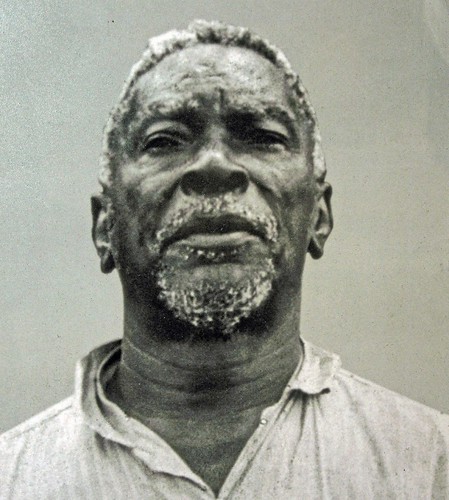
When asked about the problems he was facing in the region, the bishop complained about the Santo Daime Doctrine, which was founded by a black man from Maranhão state, Raimundo Irineu Serra.
Marques decided to meet Master Irineu Serra, who was working in the cut field on his property when the journalist arrived.
- That meeting was the most extraordinary experience in my whole life. Master Raimundo said he knew I would come, and that he was waiting. He said my name, that I had recently been released from prison, and that I had a scar on my leg.
Marques also said that he spent 3 days at Alto Santo and drank Daime, but he did not reveal details of his experience.
- He told me I would some day come back to Acre, but I never believed in this possibility.
During his farewell to Master Irineu Serra, surprisingly he was offered a bottle of Daime with the recommendation to drink its contents along with his sensitive friends. [2]
Back in Rio de Janeiro, Carlos Marques handed the bottle and its contents to the tropicalismo musician and composer Gilberto Gil, describing it as "a sacred indigenous beverage that produces gorgeous visions and the highest states of soul". [3]
On that same day Gilberto Gil took a dose of the drink, and soon afterwards he went to Santo Dumont airport, in Rio de Janeiro, to take a flight to São Paulo.
Once he was in São Paulo's Congonhas airport lobby, where a military exposition from the Brazilian Air Force (FAB) was being launched, the effect of the Daime fully came on, and Gil "caught indescribable contents from the presence of the military". [4]
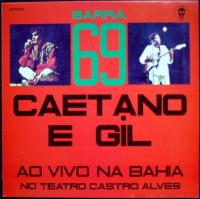
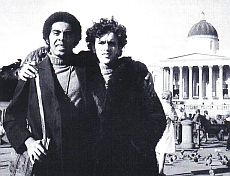
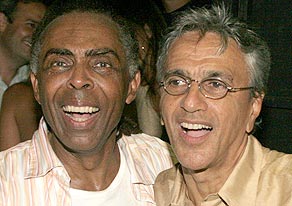
It was during the time of the military dictatorship and the Brazilian artistic and intellectual class was being brutally persecuted, and these very artists -- Gil and Caetano from Bahia state -- would soon be arrested and "invited" to leave Brazil.
Under the influence of the Daime, Gilberto Gil in the fashion of Glauber Rocha [a famous exiled Brazilian film maker also from Bahia] felt "as if he had understood the ultimate meaning of our people's historical moment as a nation under authoritarian oppression"... and even influenced by the fear that the military evoked then... he felt that he could "love -- beyond the terror and his convictions or political leanings -- the whole world in all its manifestations, including the oppressive military". [5]
There was the Christian message arriving in the heart of the artist, despite all the persecution and fear: "Love your enemies". [6] That was the Daime operating...
After this solitary experience during a Rio-São Paulo flight, Gilberto Gil gathered a group of friends in the apartment of the musician and composer Caetano Veloso and he proposed that they all should make a collective trip. Following Carlos Marques' recommendation, Gil serves to each one a little more than a half glass. [7]
Caetano narrates: "the thick and yellowish beverage had a taste like vomiting, but it did not cause any nausea". [8] From now on, the poet's inspired prose transmits a compelling report of the visions and perceptions of what he saw and felt, from the life he could perceive from inanimate objects, "the story of each grain of matter" from a prosaic nylon carpet in his apartment, for example...
Listening to the sounds of Pink Floyd's progressive rock, in the tiny limits of the twentieth floor of a São Paulo building, the experiment unfolds:
"Sandra (Gil's wife) was coming in and out of the bedroom with hard eyes and serious face. She was scared. I thought she looked like an Indian. Gil had his eyes full of tears and was saying something about dying, having died, I don't know. Dedé (Caetano's wife) was circulating around the living room saying that she was seeing herself elsewhere. I was very happy to observe that the people were so clearly themselves... Some colored points of light surged in the infinite space of darkness... Circular forms were composed by beautiful dancing points of light. Little by little I knew who each of these illuminated points was. And soon they were showing themselves as human beings. There were many of them, from both sexes, all of them naked and resembling Indians. These people were dancing in complex circle designs, but I could not only understand all the subtleties of this complexity but also had a calm concentrated awareness to know about each person the same amount I know about myself and my close and loved ones". [9]
It is said that it is from experiences such as with the Daime, particularly the peak experiences like this one -- from Gilberto Gil ("Gil... was saying something about dying, having died"...) -- that there came about beautiful songs from his repertoire, such as "If I would speak with God".
Here it is being sung by Elis Regina
If I would speak with God
I have to be alone
I have to turn off the lights
I have to shut the voice
I have to find the peace
I have to unfold the knots
From the shoes, from the necklace
From the desires, from the fears
I have to forget the date
I have to miss the count
I have to have empty hands
To the soul and the body naked
If I would speak with God
I have to accept the pain
I have to eat the bread
That the devil stretched
I have to turn myself into a dog
I have to lick the floor
From the palaces, from the castles
Magnificences of my dream
I have to see myself sad
I have to see myself as scary
And despite an evil so big
Rejoice my heart
If I would speak with God
I have to adventure myself
I have to climb to the skies
With no ropes to hold
I have to say farewell
Turn my back, walk
Decided, along the road
Which in the end reaches nothing
Nothing, nothing, nothing, nothing
Nothing, nothing, nothing, nothing
Nothing, nothing, nothing, nothing
From what I thought I would find. [10]
And, in ecstasy, Caetano would watch his "Indian angels" in this "celestial experience".
"I would alternate -- while opening and closing my eyes -- the observation of the external world and the experience of this [internal] world of images that would become each time more dense... soon I started to recognize that the beings I watched with closed eyes were undoubtedly more real than my friends who were in the room, the sound, the room's walls and the carpets".[11]
With awareness expanded by the miração [vision], Caetano acknowledges a new conception of space, different from the standard and precarious "conventionality" -- the "time was equally criticized by this higher stance in my lucid consciousness: Benevolently and with no anguish, I knew that the fact of being experienced in that moment was irrelevant in front of the evidence I already had -- or would have -- of being born, alive and dead -- and also never being -- even though the perception of my 'self' in that situation was an inevitable illusion". [12]
[Caetano] the artist from Santo Amaro [a city in Bahia state] continues this inspired narrative of his experience -- which we recommend to be read with care, because it is not possible to transcribe all of it here. And remember the one who speaks is also the philosophy student from the University of Bahia: facing the representation of the "idea of God" declares not knowing that he had the "sudden retraction of one who had learned that the face of the Creator cannot be viewed...." There comes the doubt in the heart of someone who was experiencing an extraordinary ecstatic moment, and while being taken by Dedé to look at himself in the bathroom mirror, to see his 'everyday' face after the whole experience... he then was certain that "he was mad". But "this 'self' who was certain was indestructible -- this one does not get mad, does not sleep, does not die, does not get distracted...."
What a beautiful experience... We see that the light of the Daime was revealed to this sensitive poet and composer from Bahia with the merit to see himself as spirit, discerning his own essence -- which is Divine -- as it happens with all of us.
Inebriated by the divine and marvelous which is God, playing with the philosophical doubts in a Rogério Duarte style, the future Hare Krishna devotee says, "I don't believe in God, but I saw it!" or "It's obvious that God doesn't exist, but the inexistence of God is only one of the many aspects of its [God's] existence" ... Parodying Nietzsche, Caetano will cry out to all Brazil, "God is released!" under the boos in the festival presentation of his "It is prohibited to prohibit".
From this transcendental experience, Caetano reflects: "...for more than a month I felt like living one palm [floating] above every existing thing. And for more than a year some remnants were maintained. In fact, something of an essential kind changed inside of me from that night on".
Miracles From the People - Caetano Veloso
"The one who is an atheist,
and has seen miracles like I did
Knows that the gods without God
Don't cease to blossom,
and don't get tired of waiting
And the heart that is sovereign and is the lord
Doesn't fit in the darkness,
doesn't fit in his 'no'
Doesn't fit in itself of so much 'yes'
It's pure dance and sex and glory,
and floats beyond history
Ojuobá would go there and watch
Ojuobahia
Xangô ordered to call
Obatalá the guide
Mother Oxum cries tears
Tears of happiness
Petals of Iemanjá
Iansã-Oiá would go
Ojuobá would go there and watch
OjuoBahia
Obá
The one who is an atheist..."
(Miracles from the People - Caetano Veloso) [13]
Going back to the start of our story... can you believe that journalist Carlos Marques returned to Acre after 40 years? At the end of an audience with then Governor Jorge Viana, he was asked if he already knew Acre. Marques reported what we have just narrated, and to his surprise the Governor showed him the invitation he had received to participate in the celebrations of the 50 year marriage anniversary of Master Raimundo Irineu Serra with Madrinha Peregrina Gomes Serra, the leader of the Center of Christian Illumination Universal Light - CICLU Alto Santo, on the next day, September 15th, 2006. And [thus] he convinced the journalist to stay in Acre one day more.
Marques again met with Madrinha Peregrina Serra, Irineu Serra's widow, to whom he apologized for the offensive content that his report carried in the edition of Manchete magazine, because many pages were published with the prevailing version of the bishop that we were speaking about a diabolical sect. "That was the first among many other [reports] to annoy Irineu Serra and his followers". [14]
- "I could not reveal that I had found God" - said Carlos Marques.
On the night of April 30th, 2008, in the headquarters of CICLU Alto Santo, there was an official event where the Elias Mansour Foundation from Acre state, the Garibaldi Brasil Foundation from the city of Rio Branco, and representatives from the centers that integrate the three branches of the Ayahuasca doctrines (Santo Daime, Barquinha and União do Vegetal), made a request to the Minister of Culture Gilberto Gil, that the National Artistic and Historic Heritage Institute (IPHAN) begin the process of recognizing the use of Ayahuasca in religious rituals as a Brazilian Non-material Cultural Heritage.
The event was a full success and a milestone in the Brazilian Ayahuasca universe. In the closing speech of this religious work of the April 30th, 2008, when the authorities (Minister, Governor, State Secretaries and politicians in general) had already left, the official speaker of CICLU - Alto Santo recalled the unique story of the journalist Carlos Marques, concluding that (in my words from my memory's account): Master Irineu, knowing about the past, present and future of the journalist Carlos Marques, gifted him exceptionally with a bottle of Daime so that he could make it reach the singer Gilberto Gil, in a way that he could take it and get acquainted with it, so that, 40 years later, he could come to Alto Santo as a Minister of State to mediate the request of recognizing ayahuasca as a non-material heritage of Brazilian culture.
An Amazing Story
Translated from the Portuguese by Jose Murilo and Lou Gold
Go to Portuguese Version
THE DAIME, CAETANO AND GIL
by Juarez Duarte Bomfim
The journalist Carlos Marques , who is today an adviser at UNESCO living in Paris, was 20 years old when the managers of Manchete magazine decided to send him, accompanied by a photographer, to do an article about the distant city of Rio Branco, capital of Acre state, in the year of 1969. [1] Among the many interviews, Marques talked with the Italian bishop Giocondo Maria Grotti, who two years later (1971) would die in an airplane accident in the region of Sena Madureira.
When asked about the problems he was facing in the region, the bishop complained about the Santo Daime Doctrine, which was founded by a black man from Maranhão state, Raimundo Irineu Serra.
Marques decided to meet Master Irineu Serra, who was working in the cut field on his property when the journalist arrived.
- That meeting was the most extraordinary experience in my whole life. Master Raimundo said he knew I would come, and that he was waiting. He said my name, that I had recently been released from prison, and that I had a scar on my leg.
Marques also said that he spent 3 days at Alto Santo and drank Daime, but he did not reveal details of his experience.
- He told me I would some day come back to Acre, but I never believed in this possibility.
During his farewell to Master Irineu Serra, surprisingly he was offered a bottle of Daime with the recommendation to drink its contents along with his sensitive friends. [2]
Back in Rio de Janeiro, Carlos Marques handed the bottle and its contents to the tropicalismo musician and composer Gilberto Gil, describing it as "a sacred indigenous beverage that produces gorgeous visions and the highest states of soul". [3]
On that same day Gilberto Gil took a dose of the drink, and soon afterwards he went to Santo Dumont airport, in Rio de Janeiro, to take a flight to São Paulo.
Once he was in São Paulo's Congonhas airport lobby, where a military exposition from the Brazilian Air Force (FAB) was being launched, the effect of the Daime fully came on, and Gil "caught indescribable contents from the presence of the military". [4]
It was during the time of the military dictatorship and the Brazilian artistic and intellectual class was being brutally persecuted, and these very artists -- Gil and Caetano from Bahia state -- would soon be arrested and "invited" to leave Brazil.
Under the influence of the Daime, Gilberto Gil in the fashion of Glauber Rocha [a famous exiled Brazilian film maker also from Bahia] felt "as if he had understood the ultimate meaning of our people's historical moment as a nation under authoritarian oppression"... and even influenced by the fear that the military evoked then... he felt that he could "love -- beyond the terror and his convictions or political leanings -- the whole world in all its manifestations, including the oppressive military". [5]
There was the Christian message arriving in the heart of the artist, despite all the persecution and fear: "Love your enemies". [6] That was the Daime operating...
After this solitary experience during a Rio-São Paulo flight, Gilberto Gil gathered a group of friends in the apartment of the musician and composer Caetano Veloso and he proposed that they all should make a collective trip. Following Carlos Marques' recommendation, Gil serves to each one a little more than a half glass. [7]
Caetano narrates: "the thick and yellowish beverage had a taste like vomiting, but it did not cause any nausea". [8] From now on, the poet's inspired prose transmits a compelling report of the visions and perceptions of what he saw and felt, from the life he could perceive from inanimate objects, "the story of each grain of matter" from a prosaic nylon carpet in his apartment, for example...
Listening to the sounds of Pink Floyd's progressive rock, in the tiny limits of the twentieth floor of a São Paulo building, the experiment unfolds:
"Sandra (Gil's wife) was coming in and out of the bedroom with hard eyes and serious face. She was scared. I thought she looked like an Indian. Gil had his eyes full of tears and was saying something about dying, having died, I don't know. Dedé (Caetano's wife) was circulating around the living room saying that she was seeing herself elsewhere. I was very happy to observe that the people were so clearly themselves... Some colored points of light surged in the infinite space of darkness... Circular forms were composed by beautiful dancing points of light. Little by little I knew who each of these illuminated points was. And soon they were showing themselves as human beings. There were many of them, from both sexes, all of them naked and resembling Indians. These people were dancing in complex circle designs, but I could not only understand all the subtleties of this complexity but also had a calm concentrated awareness to know about each person the same amount I know about myself and my close and loved ones". [9]
It is said that it is from experiences such as with the Daime, particularly the peak experiences like this one -- from Gilberto Gil ("Gil... was saying something about dying, having died"...) -- that there came about beautiful songs from his repertoire, such as "If I would speak with God".
Here it is being sung by Elis Regina
If I would speak with God
I have to be alone
I have to turn off the lights
I have to shut the voice
I have to find the peace
I have to unfold the knots
From the shoes, from the necklace
From the desires, from the fears
I have to forget the date
I have to miss the count
I have to have empty hands
To the soul and the body naked
If I would speak with God
I have to accept the pain
I have to eat the bread
That the devil stretched
I have to turn myself into a dog
I have to lick the floor
From the palaces, from the castles
Magnificences of my dream
I have to see myself sad
I have to see myself as scary
And despite an evil so big
Rejoice my heart
If I would speak with God
I have to adventure myself
I have to climb to the skies
With no ropes to hold
I have to say farewell
Turn my back, walk
Decided, along the road
Which in the end reaches nothing
Nothing, nothing, nothing, nothing
Nothing, nothing, nothing, nothing
Nothing, nothing, nothing, nothing
From what I thought I would find. [10]
And, in ecstasy, Caetano would watch his "Indian angels" in this "celestial experience".
"I would alternate -- while opening and closing my eyes -- the observation of the external world and the experience of this [internal] world of images that would become each time more dense... soon I started to recognize that the beings I watched with closed eyes were undoubtedly more real than my friends who were in the room, the sound, the room's walls and the carpets".[11]
With awareness expanded by the miração [vision], Caetano acknowledges a new conception of space, different from the standard and precarious "conventionality" -- the "time was equally criticized by this higher stance in my lucid consciousness: Benevolently and with no anguish, I knew that the fact of being experienced in that moment was irrelevant in front of the evidence I already had -- or would have -- of being born, alive and dead -- and also never being -- even though the perception of my 'self' in that situation was an inevitable illusion". [12]
[Caetano] the artist from Santo Amaro [a city in Bahia state] continues this inspired narrative of his experience -- which we recommend to be read with care, because it is not possible to transcribe all of it here. And remember the one who speaks is also the philosophy student from the University of Bahia: facing the representation of the "idea of God" declares not knowing that he had the "sudden retraction of one who had learned that the face of the Creator cannot be viewed...." There comes the doubt in the heart of someone who was experiencing an extraordinary ecstatic moment, and while being taken by Dedé to look at himself in the bathroom mirror, to see his 'everyday' face after the whole experience... he then was certain that "he was mad". But "this 'self' who was certain was indestructible -- this one does not get mad, does not sleep, does not die, does not get distracted...."
What a beautiful experience... We see that the light of the Daime was revealed to this sensitive poet and composer from Bahia with the merit to see himself as spirit, discerning his own essence -- which is Divine -- as it happens with all of us.
Inebriated by the divine and marvelous which is God, playing with the philosophical doubts in a Rogério Duarte style, the future Hare Krishna devotee says, "I don't believe in God, but I saw it!" or "It's obvious that God doesn't exist, but the inexistence of God is only one of the many aspects of its [God's] existence" ... Parodying Nietzsche, Caetano will cry out to all Brazil, "God is released!" under the boos in the festival presentation of his "It is prohibited to prohibit".
From this transcendental experience, Caetano reflects: "...for more than a month I felt like living one palm [floating] above every existing thing. And for more than a year some remnants were maintained. In fact, something of an essential kind changed inside of me from that night on".
Miracles From the People - Caetano Veloso
"The one who is an atheist,
and has seen miracles like I did
Knows that the gods without God
Don't cease to blossom,
and don't get tired of waiting
And the heart that is sovereign and is the lord
Doesn't fit in the darkness,
doesn't fit in his 'no'
Doesn't fit in itself of so much 'yes'
It's pure dance and sex and glory,
and floats beyond history
Ojuobá would go there and watch
Ojuobahia
Xangô ordered to call
Obatalá the guide
Mother Oxum cries tears
Tears of happiness
Petals of Iemanjá
Iansã-Oiá would go
Ojuobá would go there and watch
OjuoBahia
Obá
The one who is an atheist..."
(Miracles from the People - Caetano Veloso) [13]
Going back to the start of our story... can you believe that journalist Carlos Marques returned to Acre after 40 years? At the end of an audience with then Governor Jorge Viana, he was asked if he already knew Acre. Marques reported what we have just narrated, and to his surprise the Governor showed him the invitation he had received to participate in the celebrations of the 50 year marriage anniversary of Master Raimundo Irineu Serra with Madrinha Peregrina Gomes Serra, the leader of the Center of Christian Illumination Universal Light - CICLU Alto Santo, on the next day, September 15th, 2006. And [thus] he convinced the journalist to stay in Acre one day more.
Marques again met with Madrinha Peregrina Serra, Irineu Serra's widow, to whom he apologized for the offensive content that his report carried in the edition of Manchete magazine, because many pages were published with the prevailing version of the bishop that we were speaking about a diabolical sect. "That was the first among many other [reports] to annoy Irineu Serra and his followers". [14]
- "I could not reveal that I had found God" - said Carlos Marques.
On the night of April 30th, 2008, in the headquarters of CICLU Alto Santo, there was an official event where the Elias Mansour Foundation from Acre state, the Garibaldi Brasil Foundation from the city of Rio Branco, and representatives from the centers that integrate the three branches of the Ayahuasca doctrines (Santo Daime, Barquinha and União do Vegetal), made a request to the Minister of Culture Gilberto Gil, that the National Artistic and Historic Heritage Institute (IPHAN) begin the process of recognizing the use of Ayahuasca in religious rituals as a Brazilian Non-material Cultural Heritage.
The event was a full success and a milestone in the Brazilian Ayahuasca universe. In the closing speech of this religious work of the April 30th, 2008, when the authorities (Minister, Governor, State Secretaries and politicians in general) had already left, the official speaker of CICLU - Alto Santo recalled the unique story of the journalist Carlos Marques, concluding that (in my words from my memory's account): Master Irineu, knowing about the past, present and future of the journalist Carlos Marques, gifted him exceptionally with a bottle of Daime so that he could make it reach the singer Gilberto Gil, in a way that he could take it and get acquainted with it, so that, 40 years later, he could come to Alto Santo as a Minister of State to mediate the request of recognizing ayahuasca as a non-material heritage of Brazilian culture.
 VIVA! MESTRE IRINEU! VIVA!
NOTES
[1] The information was extracted from Altino Machado's blog: "40 Years Later"
http://altino. blogspot.com/2006/09/40-anos-depois.html
Viewed in September 15th, 2006.
[2] Speech from journalist Antonio Alves in the CICLU Alto Santo headquarters on May 30th, 2008.
[3] VELEOS, Caetano. "Tropical Truth". São Paulo, Cia das Letras, 1997, p. 308.
[4] Ibid, p.308.
[5] Ibid, p. 308.
[6] Luke 6:27.
[7] The old ones say that this was a recommendation of Master Irineu.
[8] VELOSO,, 1997, p. 322.
[9] VELOSO, 1997, p. 324.
[10] Listen to "If I Would Speak With God" - Elis Regina - http://br.youtube.com/watch?v=tWuQc7W0O-A
Viewed on May 26th
[11] VELOSO, 1997, p. 324.
[12] Ibid, p. 324.
[13] Listen to the videoclip Milagres do Povo - Daniela Mercury, at http://www.losacordes.com/videoclip/daniela-mercury/milagres-do-povo
[note: a different version is presented above because of the youtube code allowing it to be embedded in this post]
[14] MACHADO, Altino. "40 Years Later" http://altino. blogspot.com/2006/09/40-anos-depois.html Viewed on September 15th, 2006.
VIVA! MESTRE IRINEU! VIVA!
NOTES
[1] The information was extracted from Altino Machado's blog: "40 Years Later"
http://altino. blogspot.com/2006/09/40-anos-depois.html
Viewed in September 15th, 2006.
[2] Speech from journalist Antonio Alves in the CICLU Alto Santo headquarters on May 30th, 2008.
[3] VELEOS, Caetano. "Tropical Truth". São Paulo, Cia das Letras, 1997, p. 308.
[4] Ibid, p.308.
[5] Ibid, p. 308.
[6] Luke 6:27.
[7] The old ones say that this was a recommendation of Master Irineu.
[8] VELOSO,, 1997, p. 322.
[9] VELOSO, 1997, p. 324.
[10] Listen to "If I Would Speak With God" - Elis Regina - http://br.youtube.com/watch?v=tWuQc7W0O-A
Viewed on May 26th
[11] VELOSO, 1997, p. 324.
[12] Ibid, p. 324.
[13] Listen to the videoclip Milagres do Povo - Daniela Mercury, at http://www.losacordes.com/videoclip/daniela-mercury/milagres-do-povo
[note: a different version is presented above because of the youtube code allowing it to be embedded in this post]
[14] MACHADO, Altino. "40 Years Later" http://altino. blogspot.com/2006/09/40-anos-depois.html Viewed on September 15th, 2006.