VISISIONSHARE (blog header)_edited

Tuesday, April 13, 2010

AN AUDACIOUS HOPE FOR Avatar 2.0

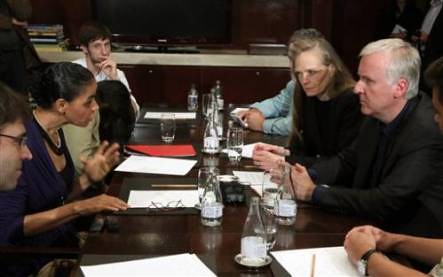
Marina Silva briefs James Cameron
(AP Photo/Andre Penner)

Brazil's Senator and presidential candidate of the Green Party Marina Silva, met with Hollywood film maker James Cameron, in Sao Paulo, Sunday, April 11, 2010 and briefed him on the environmental challenges facing Amazônia and indigenous cultures.


James Cameron has been in Brazil to offer help to the coalition of environmentalists and indigenous peoples who have been in a long-time struggle against the Belo Monte dam, which Cameron calls, "a real life 'Avatar'." He also says that he is collecting information for a sequel to the movie.

Wouldn't it be wonderful if Avatar 2.0 was able to tell a story of terra preta and biochar? It would be an audaciously HOPEFUL story and much more realistic than the romance of forest dwellers defeating the juggernaut of modern civilization in an epic war.

Avatar 2.0 could be the story in which the wisdom of ancient cultures leads modern civilization back from the brink of disaster by showing how agriculture might become earth healing and renewing, thus saving the forest, indigenous cultures and all of us.

WHAT A CONCEPT!


Monday, April 12, 2010

James Cameron says Amazon dam dispute a real-life 'Avatar'

By MARCO SIBAJA and BRADLEY BROOKS
AP - Brasilia - April 12, 2010

Director James Cameron said Monday that a real-life "Avatar" battle is playing out in Brazil's Amazon rain forest, where indigenous groups are trying to halt the construction of a huge hydroelectric project.

In an interview with The Associated Press, Cameron said he was in Brazil's capital to support Indian and environmental groups as they stage protests against the Belo Monte dam project.

Cameron attended an environmental summit in the Amazon last month with former U.S. Vice President Al Gore. He returned this week to Sao Paulo to promote the DVD version of his blockbuster movie "Avatar," in which the fictitious Na'vi race fights to protect its homeland, the forest-covered moon, Pandora, from plans to extract oil. He said he came to Brasilia on his own initiative because he was drawn to the activists' plight.

"Avatar" has struck a chord with environmentalists worldwide, from China, where millions have been displaced by major infrastructure projects, to Bolivia, where Evo Morales, the nation's first indigenous president, praised the film for sending the message of saving the environment from exploitation.

"I'm drawn into a situation where a real-life 'Avatar' confrontation is in progress," Cameron said in a telephone interview while en route to protests taking place in front of the Mines and Energy Ministry.

"What's happening in 'Avatar' is happening in Brazil and places like India and China, where traditional villages are displaced by big infrastructure projects," he added.

The $11 billion Belo Monte hydroelectric dam — which if completed would be the world's third-largest such project — was cleared for construction Feb. 1 by the Environment Ministry. Bidding for prospective builders is expected to take place later this month.

Brazil's government has said that even if it can't find private partners for the dam's construction on the Xingu River, which feeds the Amazon River, the nation has the funds to finish the project itself.

The administration of President Luiz Inacio Lula da Silva argues that the dam will provide clean energy and is needed to meet current and future energy needs.

Environmentalists are sharply opposed. They say it will devastate wildlife and the livelihoods of 40,000 people who live in the area to be flooded. They also argue that the energy generated by the dam will largely go to big mining operations in the Amazon, not benefit the average person.

Cameron said he sent a letter to Silva five days ago requesting a meeting and urging him to stop the project. He has not received a reply from the president, who is currently visiting the U.S.

"I wrote to him that, 'This is an opportunity for you to be a hero, a visionary leader of the 21st century, and modify Brazil's path in such a way that you have sustainable economic growth instead of economic growth that has serious consequences for certain sectors of the population,'" Cameron said.

He said if he were able to meet with Silva he also would tell him that he believes North America and Europe have to help pay to preserve the rain forest, which he said "provides a service to the entire world" by helping fight global warming.

The Brazilian Amazon is arguably the world's biggest natural defense against global warming, acting as a "sink," or absorber, of carbon dioxide. But it is also a great contributor to warming. About 75 percent of Brazil's emissions come from rain-forest clearing, as vegetation burns and felled trees rot.

"If North America and Europe have been responsible for the carbon pollution that started us down this inevitable slide of global warming, then they should take financial responsibility for those services that nature naturally provides," Cameron said.


Sunday, April 11, 2010

MY FATHER'S GARDEN


Mirko Faienza discovers a whole world in his father's garden.

Stunningly beautiful.
AVATAR 2.0 ARRIVES AS BELO MONTE HEATS UP

INDIAN WOMAN WITH MACHETE
Indian woman from the Xingu River of the central Amazon valley demonstrating her
opposition to the Belo Monte dam. (June, 2008)


invisibleindians
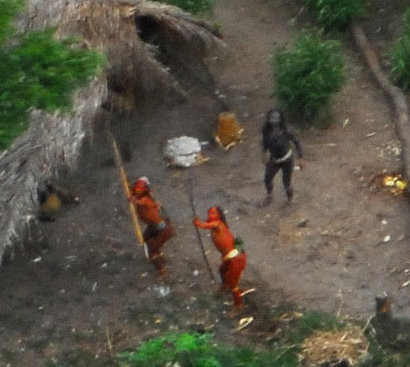
Members of an uncontacted tribe in Acre state of Brazil's western Amazon point their
arrows at a government helicopter flying over their encampment.


The 2008 message of the tribes (photos above) from across Amazônia was simple: GET LOST!!!
But the motif of anger and violence did not play well as the media tended to focus on it rather than on the issues. The massive
Belo Monte hydroelectric project was delayed but only temporarily. Now its specter has risen once again.

Recently, the Brazilian government approved the project and will hold an auction for construction bids later this month. It's not yet a "done deal." Already several private firms have stated that the project would not be economical and have withdrawn. But President Luiz Inacio Lula da Silva says Brazil's government will itself build the massive Belo Monte hydroelectric dam if no private firms bid for the project. Let's see.

The conflict has remained as a stand-off for many years but now the march of modern civilization is once again drawing closer to overwhelming the territories of traditional people. And the political flash-point is drawing closer as well. This time there are no Indians brandishing machetes. Instead, a new weapon has appeared. AVATAR 2.0 has arrived as an important ally.


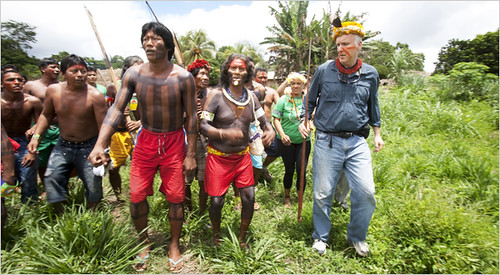
James Cameron backs efforts to halt the building of the Belo Monte dam.
photo: André Vieira for The New York Times


Today's NY Times reports the story and has a marvelous audio slideshow.

AMAZON WATCH would be an excellent place to keep updated.

Here's their recent video:


Colossal Solar Energy Generating Waterfall Tower
for Rio 2016 Olympic Games!


Solar-City-Tower-Rio_2

I have no idea about the cost-effectiveness of this spectacular project (or if it is a green-washing of excess) but my first response is to celebrate building such a beautiful monument to alternative energy.

Via Your Solar Link Blog.

This solar energy generating tower is going to be located on the coast of Rio de Janeiro. It is one of the first buildings that are being designed for the 2016 Rio Olympics. This solar energy generating tower looks like an enormous waterfall. The Solar City Tower is designed by Swiss (Zurich-based) company – RAFAA Architecture & Design. It features a large solar system to generate energy during the day and a pumped water storage system to generate energy at night. RAFAA’s goal is that a symbolic tower such as this can serve as a starting point for a global green movement and help make the 2016 Olympic Games more sustainable.

Solar-City-Tower-Rio_3

The Solar City Tower is a solar power plant. It is designed to create renewable energy for use in the Olympic Village as well as the city of Rio. A large solar power plant generates energy during the day. Any excess power not used during the day is utilized to pump seawater into a storage tank within the tower. At night, the water is released to power turbines, which will provide nighttime power for the city. A special feature of the building is the urban waterfall. Water is pumped out to create a waterfall over the edges of the building, which Rafael Schmidt of RAFAA says will be “a symbol for the forces of nature.”

Solar-City-Tower-Rio_4

Access to the eco-tower is gained through an urban plaza and amphitheater 60 meters above sea level, which can be used for public gatherings. On the ocean side of the 105 meter tower (behind the waterfall) is a cafeteria and shop. An elevator takes visitors up to the top floor where an observation deck offers 360 spectacular views of the ocean and Rio. At level 90.5, there is a retractable bungee platform for daring guests.


Saturday, April 10, 2010

PRIMATE CAPOEIRA

First, some monkeyshines from Brazil's Pantnal
(hat tip to Avi)


Next: some human versions


More about Capoeira.


And here is the rest of it.

Friday, April 09, 2010

LET THERE BE LIGHT...

GUINEA AFTER SCHOOL AIRPORT
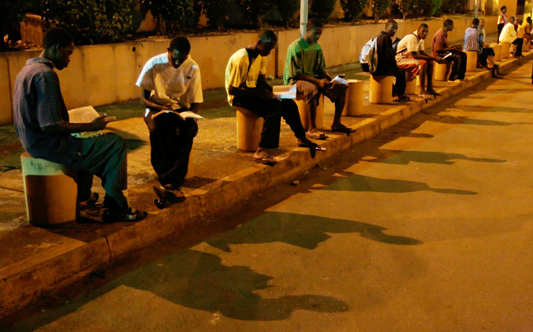
Guinean students study under the lights of the Conakry airport parking lot because they have no light at home.(Rebecca Blackwell/The Associated Press)

Burj Khalifa (Burj Caliph) Tower in Dubai
The recently completed Burj Khalifa Tower in Dubai, United Arab Emirates

In the latest iteration of the always evolving Dot Earth blog, Andrew Revkin is reframing (slightly) the main question of the 21st Century from "Climate Change" (negative) to "Energy Quest" (more positive). Of course, the two are related because development requires energy and both have huge environmental impacts. This, in turn, raises the question of energy scarcity versus energy gluttony, and whether or not the focus on cheap efficient energy carries us away from seeing that such energy is often used in earth damaging ways.

There are no easy answers but I find it poignant (perhaps also useful) to meditate on the two photos above which surely give iconic views of scarcity versus gluttony. At some point "how much is enough, for whom and where are we going?" must become the central questions.

Below is the grand celebration of development in Dubai. No doubt that it is quite a show. It would seem that the Earth displays its catastrophes spectacularly and its harmonies subtly. In the media-driven world of human perception what might be the grand celebration of life in balance?


Thursday, April 08, 2010

THERE'S DANCING IN THE STREETS

In what appears to be an exclusive (yet to appear in the MSM) NatureSong reports The Strike in Puerto Maldonado is over!

Policemen are dancing together with miners in the main square of Puerto Maldonado.

"Viva the national Peruvian police!" the man with the mike shouts and the crowd answers.

Both sides have reached an agreement, in Lima, according to which the Decree would be put on hold for 6 month.

In this time the two sides would sit together and work together on the content of the decree.

Puerto Maldonado is celebrating to the music of the police orchestra.


It's good that violent confrontation has yielded to peaceful dialogue. Now, let's hope that voiceless nature (the rivers don't demonstrate and the forest doesn't vote) will also find its rightful and righteous representation.

[UPDATE: More news here]

Wednesday, April 07, 2010

AND THE ORACLE SAYS...

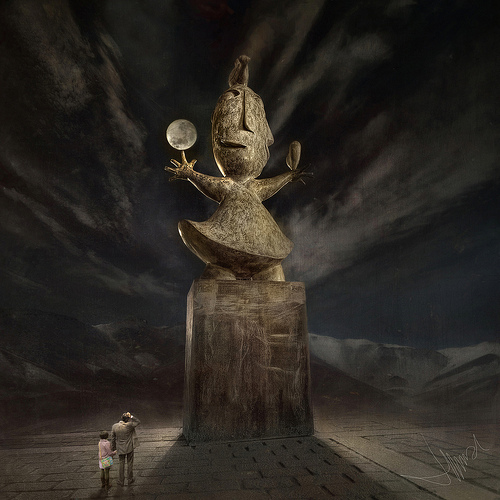
"I do not believe in coincidences"
"I do not believe in coincidences" by el silencio

I think the mark of great art is the way it opens a space for many interpretations and yet remains mysterious. In my own imagination, I can give this image all kinds of meanings but at the moment I am thinking about an average person trying to make sense in the raging debate about what is going on with our changing weather and how to evaluate the pronouncements of the oracles climate science.

el silencio has to be my favorite artist at Flickr. I just can't get enough of his images. For a real treat go to the el silencio photostream, click on an image and then on the top button that says "all sizes." There, you can bring up the image at the original size and view it like this.


FOR THE LOVE OF GO(L)D

Peru's gold rush sparks fears of ecological disaster
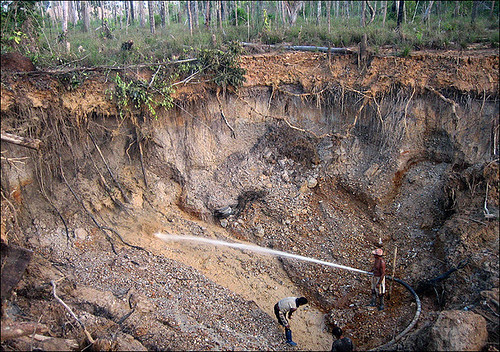
Gold mining in southeast Peru - photo: BBC

As they used to say in my old Josephine County, Oregon home, "Been there. Seen it."


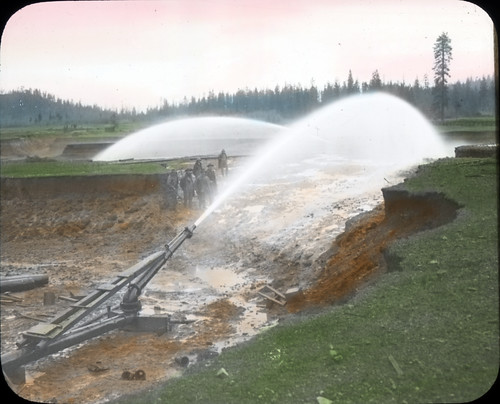
Placer gold mining in Josephine County, Oregon circa 1905-10
Photo: Oregon State University Archives


Nope, I haven't seen it in Peru. That's what they were doing 100 years ago ago in my old Oregon home ground -- a region that is considered to be the center of greatest biodiversity in western North America. They started in the southern Oregon gold rush of the 1860s working largely with indentured Chinese laborers and continued relentlessly until the most of the deposits were washed through the sluices and sieves to capture the precious flakes and nuggets. I didn't see it happen but I saw the land still stripped bare of any topsoil (known in miner jargon as the "overburden") a century later. All for the love of gold.

Nowadays, the drama is repeating here in western Amazônia, in the tri-national region called by the acronym MAP -- Madre de Dios in Peru, Acre in Brazil and Pando in Bolivia -- where the biodiversity of nature's garden is connecting with human aspirations for economic development and a better life. This region used to be considered as the "end of the road" because it literally was. But with modernization and infrastructure development -- bridges, roads, rural electrification, Internet and more -- contact and globalization have set human and wild nature on an ugly collision course. While Acre has been able to make many initiatives toward sustainable development, across the border in much poorer Madre de Dios (Mother of God) it's an often violent confrontation over illegal logging of mahogany and/or "informal mining" in an out-of-control rush to grab valuable resources.

Recently, there have been daily reports of a violent and continuing confrontation between gold miners and the Lima government's plan to regularize "informal" mining which has resulted in a blockade by 6,000 miners of the Panamericana Road. Six deaths have already occurred and there's no end to the violence in sight.

[NEWS FLASH - 7 April, 2010 (08:14): Miners lift strike for 48 hours to enter dialogue.]

Writing daily updates in the blog LivinginPeru, Isabel Guerra reports:

"The Decree 012-2010 includes the suspension of new mining concessions, formalization of all informal miners to make them pay taxes and have environmental licenses, and the creation of a special non-mining area in Madre de Dios, to avoid further damage to the ecosystem.

"Informal mining involves transactions worth US $600 million every year in Peru, produces 20 tons of gold per year in several places in Peru and generates jobs for 40,000 people, but this figure could actually reach 100,000."

Everyone seems to be digging in -- President Alan García says he won't negotiate until the miners end the blockade and violence and "Peru's Prime Minister Javier Velásquez claims that these social protests may be sponsored by businesspeople from Russia, Brazil and Bolivia, who allegedly are extracting gold with big machinery in Madre de Dios, under the disguise of wildcat, informal miners."

Meanwhile, our dear friend
Raviv Angel is reporting, in her blog NatureSong a very different picture from her perch in Puerto Maldonado where she hears first hand the stories of the people caught in the chaos and contradictions of poverty, opportunism, prostitution and the struggles for a better life. It reminds her, she says, of her times in Gaza.

Trying to make sense of it all, she writes "When the earth suffers the people suffer."

Many people will die
and not for the sake of the earth
The earth would keep hurting
Small mines would close down
Big mines would open
Money would change hands
The earth would shut her eyes
tolerate more pain
again
People would feel more pain
And keep lying

Some people would tell the miners’ story
Others would sing the voice of the government
Some would say “humanity”
Others would say “environment”

I would plant trees


I wonder what I would do? I would like to tell an inspiring story from my old Oregon home of how awareness and laws changed after the craziness of the Gold Rush to usher in an age of harmony between people and nature. But I can't. Indeed, they are still fighting over the conflict between the 1872 Mining Law and the more recent Wilderness Act. At stake is the dredging for gold of one of the last pristine rivers on the West Coast -- often, for RECREATION!

All I can do is to give you the best picture that I know of what is at stake, of what may be lost forever. That picture would come from the botanist David Campbell who studies the forest in Acre's Juruá watershed and writes in his award-winning Land of Ghosts:

I now have data from a total of 18 hectares. A hectare is an area of only 100 by 100 meters, and 18 hectares [less than 50 acres] is just a mote in the vast Amazon Valley. But that small area seems a universe to me. Its diversity is stunning: more than 20,000 individual trees belonging to about 2,000 species -- three times as many tree species as there are in all of North America. And each tree is an ecosystem unto itself, bearing fungi, lichens, mosses, ferns, aerophytes, orchids, lianas, reptiles, mammals, birds, spiders, scorpions, centipedes, millipedes, mites and uncountable legions of insects. The number of insect species alone -- especially of beetles -- may exceed the combined total of all the other species of plants and animals in the forest.

The Amazon River and its forest are the last continent-sized stretch of untrammeled wilderness on Earth and the greatest expression of her biodiversity. The Amazon Valley, in fact, has more species than have ever existed anywhere at any time during the four-billion-year history of life on Earth. Yet just at this moment of peak biotic eloquence, we know that inevitably most of it will be lost. Over the next several decades Earth will lose hundreds of thousands -- perhaps millions -- of species. Most of this extinction will occur in the tropical forests and especially in Amazonia. In the course of a generation or two, the Amazon rainforest will be destroyed as a wilderness and as a functioning ecosystem. It is an old story, stale by now. Yet the loss of this place, I'm convinced, will be the most egregious event of a generation of atrocities.


A dark vision but I'm afraid it's quite real. Can it be changed? I don't know. But I do know that it is worth trying.


Tuesday, April 06, 2010

THE SILVER OTTER

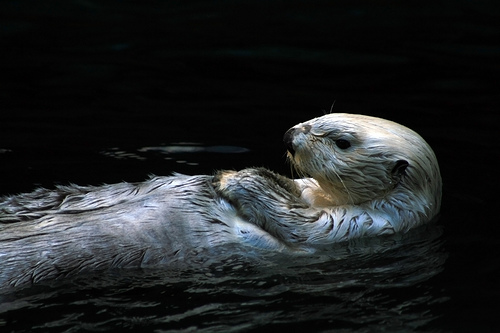
Silver Otter
Sliver Otter by Orion Photography

When a friend passed on a traditional teaching story -- The Silver Otter -- I immediately wrote to storyteller Valerie Callahan asking for permission to publish it, mentioning Black Elk's famous statement that "a vision means nothing unless it is shared with the people." She wrote back quickly saying, "I agree both with Black Elk as well as with the prophets who observe that 'a people without a vision soon perish.' I believe the story must have wings to both share its legacy and capture the voices of others who have not yet heard it." INDEED! Could any words be more perfect for VisionShare? So here is the story with a prayer that you, the reader, will continue to give it wings.

As a young girl, my grandfather told me many stories he thought would help explain the world to me. Often long, always colorful, all of his stories – or so he said – included the “signature” phrases of each of the storytellers who had handed down these tales through the generations before him. In this way, the story itself was a kind of family or village history that continuously honored and shaped the wisdom of the past -- so that the village might better embrace the challenges of the future. One of these tales is the story of the Silver Otter. (V.C. - December, 2009)

The Legend of the Silver Otter And the Time of the Great Disruption

Storyteller -- Valerie Callahan

In a far away place and a far off time, there was once a very special silver otter whose great athletic skills far surpassed any of his fellow woodland creatures.

The silver otter lived near a bend in the river, where the waters rushed downward to the lake below.

This was a place of balance and harmony with resources enough for the many different animals who lived there.

And then, with very little warning to those who had ignored the signs...

It began.

The time of the GREAT DISRUPTION!

Life’s rhythms changed. Nothing could be as it had been before.

In a great seizing, the land itself cried out in pain…

And the animals heard the land of their birth cry out to them: “Go from me for I am now the prisoner of chaos!”

The animals were frightened…

How would they get to the safer ground below?

The surging ice, the tumultuous wind, the raging waters…was there safe harbor?

So powerful were the forces of the Great Disruption not even the raven could fly above them.

And so the animals, panicked and separate in their fear, suffered and often perished as they tried to find their way to calmer waters and the lives they had once known.

As his fellow animals struggled, Silver Otter summoned all his strength and unusual skills … and he found a route in, under, and above the raging river to the safer lake below.

“Follow me … over here… I will show you the way!” he said. “Come… go with the forces… like so… up here… under there… across beyond… between those rocks… come, come, there is no time to waste!”

But the animals turned away from Silver Otter, still focused on their own fear… and still fearful for their very survival.

“I will hide here,” said the deer. “I cannot run any farther. Do as you will, Silver Otter, but I must rest now.”

“Silver Otter does not speak to me,” said the Eagle.

“He has nothing I can use,” said the Raven.

“What is he saying? I cannot hear him” called the Beaver.

“It is too late for me…the water is too high” whispered the big cat.

“Why don’t you listen?” shouted Silver Otter. “I can save you! Do as I say or you will surely die. You have no choice. And there is no time to lose!”

But as the Great Disruption claimed more and more of the earth, no one heeded Silver Otter’s call.

Silver Otter was distraught. Deploring the senseless waste around him, he called out to his Great Spirit for help.

And so the Grey Wolf appeared to Silver Otter at the magical moment when the dark of night slowly melts into the hope of morning.

Silver Otter trembled before the Grey Wolf, but was so very thankful Grey Wolf had come.

“I do not understand it,” said Silver Otter. “The animals, they ignore me. They chase their own tails, they rush to their deaths, they freeze in their tracks, they work against each other. Yet, they will not listen to me.“

“Yes,” was the Wolf’s terse reply.

“Well, what is wrong with them? Why can’t they see that I can save them?”

“Because you cannot.”

“But I alone can swim across the great divide. I can take them with me.“

“No,” said the Wolf. “You cannot.”

Silver Otter grew quiet. “I have bridged the gap a hundred times since the Great Disruption began. I know that I can do this.”

“Yes, you are gifted in strength and spirit. And you know the ways of the water,” said the Grey Wolf. “You are not entirely fooled by the chaos which the Great Disruption brings to the land and river. All this is true.”

“But …,” said Grey Wolf, “Neither have you reclaimed the secret that the Great Disruption has stolen away from each of you.”

“The secret?” asked the Silver Otter. “What is the secret? Please tell me quickly so that I may save the animals!”

Grey Wolf growled deep but softly.

“It is not you who will save the animals or calm the Great Disruption that now feeds on the frenzy of fear around us.”

“Is it you, then Grey Wolf, who will do this?” asked the unusually dismayed Silver Otter.

“The morning comes quickly now,” answered Grey Wolf. “I have little time. You must listen carefully.”

And so, Grey Wolf began to explain as best he could. “The Great Disruption can rob us of our free will. We longer choose.”

“The Great Disruption makes the world a random and unpredictable place,” he continued.

“The animals retreat further and further into a darkened space of scarcity and fear…there are far fewer possibilities in this space… fooled by shifting shadows of what used to be, the animals cannot see their real strengths,” said Grey Wolf. “They rely on what they call common sense, when what they need is uncommon wisdom.”

“Common sense is not enough?” asked Silver Otter

“Common sense only works when things are predictable,” answered Grey Wolf. “Uncommon wisdom knows how to harness the forces around us when common sense is confused…Uncommon wisdom weakens the randomness of life. It builds on the mastery of knowing how and when things work as they do.”

Grey Wolf then added, “When we know this, we are not forced to simply endure and accept. We can shape some changes.”

“But we have to move quickly…” said Silver Otter.

“Yes,” Grey Wolf answered. “But not without direction…Work together. Uncommon wisdom is always shared. It is greater than any of you, but comes from all of you… Find the real choices, the real abundance…”

“Abundance?” protested Silver Otter. “The Great Disruption has taken care of that!”

“The Great Disruption has stolen much,” replied Grey Wolf. “But has also revealed other resources you have overlooked. Find them!”

“But,” insisted Silver Otter, “I know I can help get the animals to safer ground, if they would only listen. All the rest of this can happen later.”

“These things must happen first, or you will not succeed,” Grey Wolf answered firmly.

“No one listens to you because they do not trust you. And why should they? Trust is the greatest gift of all. You must first show them you are worthy…”

Grey Wolf looked up at the breaking dawn. “I must go now,” he said. “And you, Silver Otter, have much work to do.”

Silver Otter heard the thunder in the distance and the terrible rushing of the waters above. But he also saw the beauty of the dawn and vowed to act on Grey Wolf’s counsel… or as much of it as he understood.

Making his way through the perilous passage to the higher ground, Silver Otter was surprised to see the spotted coyote on a ledge beneath the waterfall.

The Spotted Coyote had traveled a great way down the steep cliffs with his family, and Silver Otter wondered how he had done this.

The spotted coyotes were not well-known to the other animals. Few had ever talked with them and many thought they wished only to stay among themselves.

“We, too, can jump great distances, Silver Otter,” said the strange coyote. “We can ford the roiling water when we work together. But only up to this point. We do not swim well and cannot go farther. We are not safe here for long.”

“If the beavers were here,” the spotted coyote continued, “they could change the path of the water over there so we might all pass on the other side, don’t you think? But the beavers cannot come down this far.”

Silver Otter now knew what he must do. “Come back with me to talk with Eagle and the others! I understand now…There is a way to do this together. And I would not have thought of it had I not talked to you!”

So Silver Otter gathered the animals. They were amazed Spotted Coyote had come along with him. If Spotted Coyote would join with Silver Otter, they could at least listen to what he had to say.

Eagle listened as Silver Otter told of Spotted Coyote’s plan to dam the river by the ledge and clear the passage to the lake below. But most of the animals could not get to the ledge, and many would not survive there if they could.

“If you can help me down below the wind’s fury, I can fly swift and strong. And so can Raven and the Owl,” said Eagle.

“But even if you get me to the ledge,” said the Beaver, “it is much too dangerous to build a dam. I will fall into the savage waters!”

“If they carry you to the ledge,” said Eagle, “I can hold you under the wind and above the water while you work.”

The animals talked for a while. And then…they began to work together… to take control.
Some animals gathered resources.

Some moved the resources to where they were needed.

Some built new things with the resources.

Some built things that had not been built before to help them travel down to the ledge. They taught others how to do this as well.

Some helped others in ways they had not thought of before.

In all of this, Silver Otter moved swiftly back and forth between the higher ground, the swirling waters, the ledge, and the lake below… helping to coordinate and connect the animals to each other and to their destination.

He learned much from them. And, he helped to share what he had learned among them as well. Together, they found a powerful rhythm to challenge the Great Disruption.

And, in the end, they found their way to the quieter lake shore below.

Silver Otter had never felt so much joy before. As he talked one night at the village feast with Beaver, Eagle, Fox, and Deer, he noticed something wonderful…

Silver Otter, who had always felt so different and so isolated from all the other woodland animals, now felt he belonged to something greater.

And when he looked closely, he noticed he had turned brown. Humbler, happier, he gladly shed most of his silver fur to better harmonize with his woodland home.

#####


The story's lineage through Valerie's grandfather is to the Wabenaki Federation, specifically the Maritime Abenaki. She notes that,"the story was transcribed -- as best as it could be remembered -- from a very early childhood memory and that it has become a symbol of commitment and positive strategic change for an organization called Greater Lynn Senior Services - GLSS in Lynn, MA. Within the GLSS arena, both Grey Wolf and Silver Otter became strong female characters, which makes great sense for us and which adds to the fun of the signature chain." For more information you may contact Valerie at vcvj.cal@gmail.com.


Thursday, April 01, 2010

KAT FOUNTAIN'S AMAZON ADVENTURE

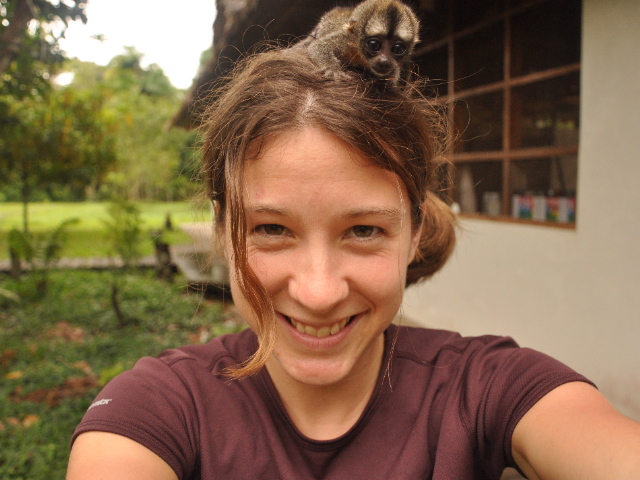
Kat Fountain and Muki

Kat Fountain is a young gonzo gal, surfer chick, monkey maven, peripatetic researcher and jungle adventurer in the Peruvian rainforest. Serious science adventure writing with a flair. I got caught in her blogo-net and felt compelled to go back and read every entry in her must-read blog.


Kat's recent entry says she is leaving the Internet zone to do some work in a cloud forest near Cusco but that she'll return to blogging. Soon, we hope.
FOSSIL FOOLS DAY

350 Not Fooled

350.org, the global grassroots climate activist coalition, is not being fooled by the Obama Administration's proposed opening of coastal regions to off-shore oil drilling.

Indeed, they have started a push-back campaign to stop this nonsense.

You can go directly to the fast-growing campaign at Facebook here.

More background here

Wednesday, March 31, 2010

A PORTRAIT OF LORO


Loro, the inquisitive and irresistible parrot of Fortaleza, is starting to show up in many artistic productions and may be heading toward stardom. This video clip was edited by Pafy and Lorena from material filmed by the kids at Fortaleza during January, 2010.

A SHORT HONEYMOON - NOW BACK TO BUSINESS

obama-signs-bill

President Obama got to bask for a while in the glory of passing the health care bill and his standing in the polls received a welcome recharge but the realities of a complicated world seem to be returning quickly to business-as-usual.

In today’s NY Times, Tom Friedman decries that our Afghanistan policy is being rewarded by the thoroughly corrupt President Karzai proffering an invitation to Iran’s president, Mahmoud Ahmadinejad, to come to Kabul.

And the top story is that, in an early move in the campaign to pass an "enlightened" energy bill, the Administration is proposing to open for the first time vast coastal areas to off-shore oil drilling. The announcement notes that Alaska's ecologically sensitive Bristol Bay will remain off-limits to drilling. Dave Roberts of GRIST tweet-quips: "Glad other parts of the ocean aren't environmentally sensitive!"

[here's a good UPDATE from treehugger]

and... well... does anyone remember this...


Oil, whether foreign or domestic, is not renewable. It's good to recall that candidate Obama promised us change.