WOW
In this blog I've been staying away from the huge torture debate going on in the US, figuring that the mainstream media is delivering the news to you daily. But ex-Secretary of State Condi Rice's comments to students at Stanford University leave me both sad and enraged. I don't want to add any words. The video and transcript here speak for themselves.

Thursday, April 30, 2009


DISNEY TO PLANT 2.7 MILLION TREES IN THE BRAZILIAN AMAZON

photo of forest near Vila Fortaleza in the western Brazilian Amazon
The Brazilian rainforest is about to become bigger by some 2.7 million trees, according to Walt Disney Studios. The studio had said it would arrange to plant a tree for every ticket sold for it’s eco-documentary “Earth” in the first week of release. On Tuesday, Disney said the movie had taken in $16.1 million during week one, from 2.7 million attendees. Read the article.
2.7 million trees seems like a huge amount but the tropical forests are incredibly dense. It will take lots more projects to put a dent in the unimaginable amount of deforestation that has already occurred. But, surely, Disney is to be complimented for this marvelous initiative.
Here are a few more forest pics from Fortaleza:
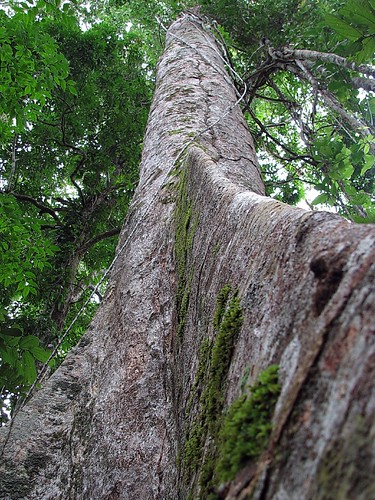
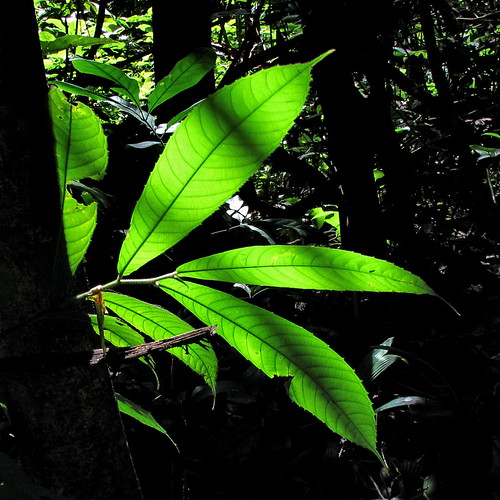
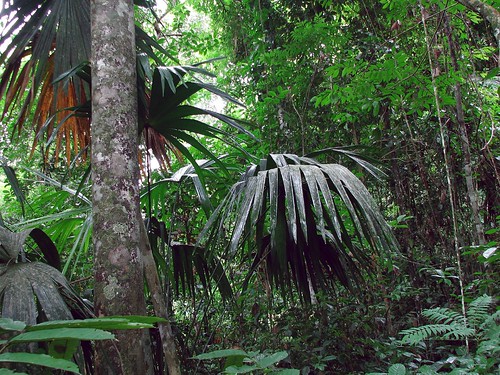
Here's a previous post about the Call of the Samaúma which is one of the most majestic trees in the Amazon forest. I love the featured video. Please take time to watch it.
If you want to find out more and keep up with latest developments worldwide, lots of rain-forest facts have been assembled by Mongabay.
photo of forest near Vila Fortaleza in the western Brazilian Amazon
The Brazilian rainforest is about to become bigger by some 2.7 million trees, according to Walt Disney Studios. The studio had said it would arrange to plant a tree for every ticket sold for it’s eco-documentary “Earth” in the first week of release. On Tuesday, Disney said the movie had taken in $16.1 million during week one, from 2.7 million attendees. Read the article.
2.7 million trees seems like a huge amount but the tropical forests are incredibly dense. It will take lots more projects to put a dent in the unimaginable amount of deforestation that has already occurred. But, surely, Disney is to be complimented for this marvelous initiative.
Here are a few more forest pics from Fortaleza:
Here's a previous post about the Call of the Samaúma which is one of the most majestic trees in the Amazon forest. I love the featured video. Please take time to watch it.
If you want to find out more and keep up with latest developments worldwide, lots of rain-forest facts have been assembled by Mongabay.
Wednesday, April 29, 2009
THOUGHTFUL
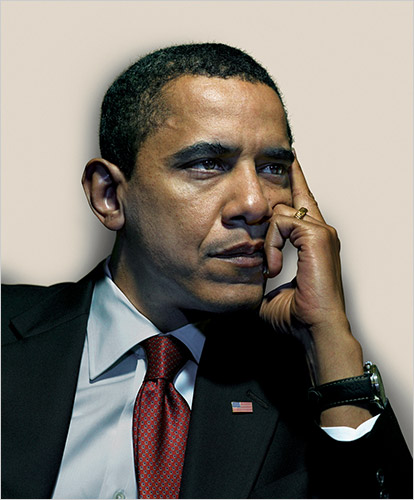
David Leonhardt, the economics editor of the New York Times, gives us a lengthy and probing interview with US President Obama.
After the Great Recession
By DAVID LEONHARDT
On April 14, President Obama gave a speech at Georgetown University, trying to explain why he was taking on so many economic issues so early in his administration. He argued that the country needed to break its bubble-and-bust cycle and cited the New Testament in calling for a new economic foundation for the nation. This foundation would be built on better schools, alternative energy, more affordable health care and a more regulated Wall Street, he said. Later that afternoon (shortly before the Obama family introduced its new dog, Bo, on the South Lawn of the White House), I sat down with the president to talk about how his agenda might change daily life in this country.
[UPDATE: Tim Egan has a 100 day assessment called, The Off-Brand Presidency that focuses on how Obama's style is breaking through many of the old political ideologies. When people are asked to chose a word to describe the new president, 78% say "intelligent".]
Continue reading the interview here.
David Leonhardt, the economics editor of the New York Times, gives us a lengthy and probing interview with US President Obama.
After the Great Recession
By DAVID LEONHARDT
On April 14, President Obama gave a speech at Georgetown University, trying to explain why he was taking on so many economic issues so early in his administration. He argued that the country needed to break its bubble-and-bust cycle and cited the New Testament in calling for a new economic foundation for the nation. This foundation would be built on better schools, alternative energy, more affordable health care and a more regulated Wall Street, he said. Later that afternoon (shortly before the Obama family introduced its new dog, Bo, on the South Lawn of the White House), I sat down with the president to talk about how his agenda might change daily life in this country.
[UPDATE: Tim Egan has a 100 day assessment called, The Off-Brand Presidency that focuses on how Obama's style is breaking through many of the old political ideologies. When people are asked to chose a word to describe the new president, 78% say "intelligent".]
Continue reading the interview here.
BOLIVIA: FASCINATING AND BEAUTIFUL
boingboing tells us why
boingboing tells us why
Bolivia is to Lithium as Saudi Arabia is to Oil.
Photographer/tumblogger Clayton Cubitt says, "Bolivia is the Saudi Arabia of lithium, the metal needed for the batteries that will power our electric car future. I saw this ITN report on News Hour the other night, and was stunned by the visuals and the story."
Above, the video report from ITN which ran on CNN. Below, snip from transcript for the related PBS NewsHour discussion:
Half a world away, Bolivia's president, Evo Morales, is going for a drive in an electric car. The French auto magnate, Vincent Bollore, whose company has developed the vehicle is showing him the prototypes.Bolivia's Lithium Resources May Prove Hot Commodity (PBS NewsHour)Morales is a socialist determined to uphold the rights of Bolivia's indigenous people. He says the Americans are all imperialists, so the Frenchman sees an opportunity to win favor and get the lithium.
VINCENT BOLLORE, French businessman (through translator): It's you who controls the raw materials for the 21st and 22nd centuries. You're like Saudi Arabia. It's you.
LINDSEY HILSUM: In the Bolivian capital La Paz, they're dreaming about that pot of gold. A new socialist constitution says foreign companies exploiting the country's natural resources must reinvest all profits in Bolivia.
LUIS ALBERTO ECHAZU, Bolivian minister of mining (through translator): Any company which would like to work with us will have to develop industries here, otherwise there's nothing. It's very simple: We will not continue exporting raw materials for another 500 years. That is over.
Saturday, April 25, 2009
SANTO DAIME FESTIVAL IN BRASILIA: Connecting the City and the Forest
Brazil's national capital, Brasilia, is located in the great cerrado grassland of the central plateau or high plane (planalto) which is an ecological interior zone between the mountains of southeastern Brazil and the Amazon basin forest. As in Brazil in general, its capital is where many cultural and spiritual traditions meet and mix.
In the ceremonies of Santo Daime one can feel as if in a celestial bus station with lines to many cultures and places. Africa, Europe, Amazônia, forge new mixtures of the Old and the New. In this personal interior zone, the rituals of Santo Daime offer a profound celebration of the universality of Spirit -- many paths and many people.
Last week in Brasilia a Santo Daime festival of spiritual works began by celebrating the birthday of Céu do Planalto and inauguration of its new church with the singing of Padrinho Alfredo's, "O Cruzeirinho". In two subsequent seesions the festival continued with the singing of Padrinho Fernando's hinario, "Na Força do Padrinho Sebastião" and Padrinho Alfredo's hinario, "Nova Era" at Céu do Planalto and then ending at Divina Luz with Madrinha Conceição's hinario, "Forças Verdadeiras" and selections from Padrinho Sebastião's hinario, "Nova Jerusalém".
Truly, it seemed as if the Orixás from Africa, Caboclos from Amazônia, Christian Celestial Beings and the expanding family of Juramidam were journeying together in a great celebration.
Here are some of the videos...
Hymns from Padrinho Fernando's Na Força do Padrinho Sebastião sung at Ceu do Planato:
Hymns from Padrinho Alfredo's Nova Era sung at Ceu do Planalto:
Hymns from Madrinha Conceição's Forças Verdadeiras sung at Divina Luz:
Hymns from Padrinho Sebastião's Nova Jerusalém sung at Divina Luz:
I have posted many more videos from this festival (and others) at youtube. Click here to view them.
Brazil's national capital, Brasilia, is located in the great cerrado grassland of the central plateau or high plane (planalto) which is an ecological interior zone between the mountains of southeastern Brazil and the Amazon basin forest. As in Brazil in general, its capital is where many cultural and spiritual traditions meet and mix.
In the ceremonies of Santo Daime one can feel as if in a celestial bus station with lines to many cultures and places. Africa, Europe, Amazônia, forge new mixtures of the Old and the New. In this personal interior zone, the rituals of Santo Daime offer a profound celebration of the universality of Spirit -- many paths and many people.
Last week in Brasilia a Santo Daime festival of spiritual works began by celebrating the birthday of Céu do Planalto and inauguration of its new church with the singing of Padrinho Alfredo's, "O Cruzeirinho". In two subsequent seesions the festival continued with the singing of Padrinho Fernando's hinario, "Na Força do Padrinho Sebastião" and Padrinho Alfredo's hinario, "Nova Era" at Céu do Planalto and then ending at Divina Luz with Madrinha Conceição's hinario, "Forças Verdadeiras" and selections from Padrinho Sebastião's hinario, "Nova Jerusalém".
Truly, it seemed as if the Orixás from Africa, Caboclos from Amazônia, Christian Celestial Beings and the expanding family of Juramidam were journeying together in a great celebration.
Here are some of the videos...
Hymns from Padrinho Fernando's Na Força do Padrinho Sebastião sung at Ceu do Planato:
Hymns from Padrinho Alfredo's Nova Era sung at Ceu do Planalto:
Hymns from Madrinha Conceição's Forças Verdadeiras sung at Divina Luz:
Hymns from Padrinho Sebastião's Nova Jerusalém sung at Divina Luz:
I have posted many more videos from this festival (and others) at youtube. Click here to view them.
Friday, April 24, 2009
AND THE PURSUIT OF HAPPINESS
And the Pursuit of Happiness is a wonderfully playful blog on the New York Times site. It combines beautiful illustrations with quirky insight to discuss the many facets of American Democracy. From wondering whether Abraham Lincoln would enjoy Frida Kahlo to the subtle change in the Constitution from “the pursuit of property” to “the pursuit of happiness”.
Very americano and delightful too!
And the Pursuit of Happiness is a wonderfully playful blog on the New York Times site. It combines beautiful illustrations with quirky insight to discuss the many facets of American Democracy. From wondering whether Abraham Lincoln would enjoy Frida Kahlo to the subtle change in the Constitution from “the pursuit of property” to “the pursuit of happiness”.
Very americano and delightful too!
THE TRUTH WILL SET US FREE -- I HOPE!
Some of the most no-nonsense probing and pointed commentary is being provided by one of the world's leading bloggers -- Andrew Sullivan.
Some of the most no-nonsense probing and pointed commentary is being provided by one of the world's leading bloggers -- Andrew Sullivan.
Cliff May: We Have To Torture Muslims: I guess the jaw can drop some more.
The Right vs Left Canard: The mainstream media are too cowardly to report the truth.
The Right Vs The Geneva Conventions: Unless we prosecute, America and torture will become synonymous.
Churchill vs Cheney: Torture is the weapon of cowards and bullies and monsters.
The Torture And The Iraq War: Cheney used the former to obtain the latter.
Thursday, April 23, 2009
HANDS OF LOVE
As long as you are kind and there is love in your heart / A thousand hands will naturally come to your aid / As long as you are kind and there is love in your heart / You will reach out with a thousand hands to help others
.Guan Yin is the bodhisattva of compassion, revered by Buddhists as the Goddess of Mercy. Her name is short for Guan Shi Yin. Guan means to observe, watch, or monitor; Shi means the world; Yin means sounds, specifically sounds of those who suffer. Thus, Guan Yin is a compassionate being who watches for, and responds to, the people in the world who cry out for help.
As long as you are kind and there is love in your heart / A thousand hands will naturally come to your aid / As long as you are kind and there is love in your heart / You will reach out with a thousand hands to help others
.Guan Yin is the bodhisattva of compassion, revered by Buddhists as the Goddess of Mercy. Her name is short for Guan Shi Yin. Guan means to observe, watch, or monitor; Shi means the world; Yin means sounds, specifically sounds of those who suffer. Thus, Guan Yin is a compassionate being who watches for, and responds to, the people in the world who cry out for help.
ceudoplanalto26@daime.brasilia
The Santo Daime community of Ceu do Planalto has a new church and a marvelous festival has begun in Brasilia. It began on 21 April with the singing of the O Cruzeirinho hymns of Padrinho Alfredo.
Here's are some pics...
And a few videos...
VIVA SANTO DAIME!
VIVA PADRINHO ALFREDO!
VIVA CEU DO PLANALTO!
VIVA PADRINHO FERNANDO!
VIVA MADRINHA CLARICE!
PARABÉNS PARA TODOS!
The Santo Daime community of Ceu do Planalto has a new church and a marvelous festival has begun in Brasilia. It began on 21 April with the singing of the O Cruzeirinho hymns of Padrinho Alfredo.
Here's are some pics...
And a few videos...
VIVA SANTO DAIME!
VIVA PADRINHO ALFREDO!
VIVA CEU DO PLANALTO!
VIVA PADRINHO FERNANDO!
VIVA MADRINHA CLARICE!
PARABÉNS PARA TODOS!
Wednesday, April 22, 2009
NEWSWEEK LOVES LULA
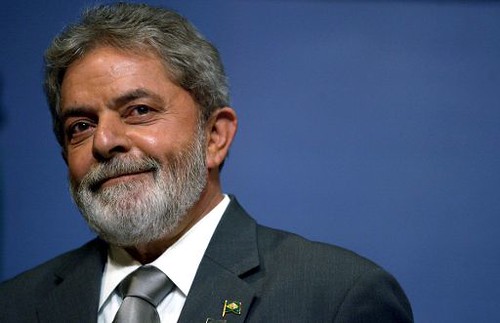
Lula's secret seems to be making cordiality rather than conflict and welcome rather than war.
The Crafty Superpower
By turns charming and cagey, cool to America and close to Obama, Lula is building a unique regional giant.
Mac Margolis
NEWSWEEK
From the magazine issue dated Apr 27, 2009
Go to Orginal
Brazilian President Luiz Inácio Lula da Silva is on a roll. In recent weeks he's shared a dais with Gordon Brown and Nicolas Sarkozy, and drew effusive praise ("My man!") from Barack Obama at the G20 summit in London. He even had a photo op with Queen Elizabeth II. The former machine-tool worker, who spent decades picketing "savage capitalism," is now the toast of bankers and boardrooms. "Don't you think it's chic that we are now lending the IMF money?" he joked at a press conference.
Not so long ago, such scenes would have been improbable. With Brazil's tender democracy, clawing poverty and an accident-prone economy, the country's leaders were more likely to be queuing for a bailout than standing toe-to-toe with rainmakers on the international stage. After decades of false steps, Brazil has become a solid free-market democracy, a rare island of stability in a region of turmoil and governed by the rule of law instead of the whims of autocrats. Now Brazil is asserting itself as never before, but in a way that is markedly different from other big global players. Over the past decade, Brazil has emerged as a unique regional powerhouse. Relying on the cover of America's security umbrella, and a hemisphere with no credible enemies, Brazil has been free to leverage its vast economic size advantage within South America to befriend, sway or co-opt neighbors, while managing to contain its most troublesome regional rival, Venezuela. Lula presides over a crafty superpower unlike any other emerging giant.
The Chinese police the Taiwan Strait, and Moscow never relinquished the Soviet sphere of influence in the Caucasus. India's security duties stretch from the Pakistani border to the Persian Gulf, and Washington casts a long shadow from pole to pole. Yet Brazil has asserted its international ambitions without rattling a saber. When tempers flare between neighbors—as when Ecuador and Peru nearly went to war in the 1990s, and after Colombia bombed guerrilla camps in the Ecuadoran jungle last year—diplomats and lawyers are dispatched to the hot zones rather than flotillas or tanks. And when U.N. peacekeepers clashed with street gangs in Haiti, the Brazilians called not for a troop surge, but for footballers Ronaldinho, Robinho and Ronaldo, who played a friendly in the war zone. Now Haitian youths do battle with cleats, not Kalashnikovs.
The Brazilians have also become a more assertive voice for the emerging markets in international affairs. They rallied the major developing nations to challenge the rich world's agricultural subsidies, forming a group now known as the G5. At Brasília's prodding, the ambassadors of Brazil, China, India and Russia now meet monthly in Washington to coordinate a common BRIC policy strategy, often to counter U.S. positions. Pushing its "south-south" agenda, the Lula government has opened 35 embassies since taking office in 2003, most of them in Africa and the Caribbean. Brazil also leads a widely acclaimed peacekeeping mission in Haiti, one of the hemisphere's biggest basket cases.
Brazil can do all this in large part because it has no credible state enemies with which to contend, and is therefore unshackled from many of the responsibilities of power, like patrolling sea lanes. Moreover, the United States has always been the peacemaker of last resort in the region, so while emerging nations in many global trouble zones must pump precious wealth into defense, Brazil's military expenditures have remained stagnant at about 1.5 percent of GDP, a quarter of China's defense spending and about 60 percent of India's and Russia's. "Brazil doesn't have the ambition to be a military power," says Amaury de Souza, a Brazilian political analyst. "What we have is economic strength, a history of defending our interests and a complex and compelling culture."
For years, Brazilians have wanted a larger role in world affairs, and the world has refused. Despite its war efforts—Brazil was the only Latin country to send troops to Europe during World War II—it had no seat at the postwar negotiating table. Brazil's international standing finally won an upgrade in the mid-1990s, when the reform-minded administration of Fernando Henrique Cardoso stopped inflation, opened the country to trade and normalized tattered relations with the world financial community. Cardoso parlayed the young democracy's new bona fides into a more assertive role abroad. He argued for a seat on the U.N. Security Council, jump-started the Mercosur free-trade zone for South America and rallied the larger developing nations under the banner of free trade.
But no government has been as determined as Lula's in extending Brazil's international footprint. Though he began his political career on the left, Lula surprised foreign and national investors alike by preserving Cardoso's market-friendly policies at home, much to the frustration of his militant Workers' Party allies. For the left, he offered a pumped-up foreign policy. "Lula put Cardoso's foreign policy on steroids," says Donna Hrinak, a former U.S. ambassador to a number of Latin countries.
Lula has doubled the number of departments in the Foreign Ministry and embarked on a breathless international itinerary, visiting 45 countries and spending nearly one of every five months in office abroad just since 2007. "Aero-Lula," the local press has dubbed him. The explicit purpose of all this diplomacy has been to boost relations with other developing countries. But Lula's increased visibility has also helped force the richest nations to lower trade barriers. In two major cases in 2004, the WTO ruled in favor of Brazil, ordering the U.S. to drop subsidies to cotton farmers, and told Europe to end its protection of the sugar-beet industry. In keeping with Lula's staunch support for free trade, Brazil also sided with the U.S. at the recent Doha trade talks over the developing world's own protectionist barriers. In a recent report warning of rising protectionism in developing nations, the World Bank praised Brazilians for resisting pressures to close down its own borders.
At least part of these efforts spring from Brazil's undeclared strategy to blunt U.S. influence in the region and dispel expectations that it play a proxy role for Washington. In fact, while U.S. officials wax diplomatic over their new "global partner," Brasília has been mostly silent as Venezuelan strongman Hugo Chávez threatens foreign companies, intimidates the opposition and bullies its courts and Congress. "No one can claim that democracy doesn't exist in Venezuela" is Lula's canned defense of companheiro Chávez. Citing the catchall rule of sovereignty, Brazil also roundly condemned Colombia, the U.S.'s closest ally in the region, for attacking a guerrilla encampment in the Ecuadoran jungle last year, and routinely abstains on U.N. resolutions condemning human-rights violations in Cuba.
But Lula has hardly thrown in with the Bolivarian revolution. Instead, he has controlled the region by co-opting his neighbors with trade, turning the whole continent into a captive market for Brazilian goods. Ultimately, Brazil's power derives not from guns but from its immense store of natural resources, including oil and gas, metals, soybeans and beef—and it has become a key supplier of markets in Asia and closer to home. Brazil now enjoys a trade surplus with every country in the region, including a $1 billion surplus with Venezuela. "Turning natural resources into value-added goods has helped Brazil punch above its weight," says David Rothkopf, a former U.S. Commerce Department official.
For instance, Lula has curbed two grandiose initiatives from Chávez's playbook, a regional development bank (Banco del Sur) and a joint Brazilian-Venezuelan oil refinery, by quietly never getting around to allocating money to help. He also chided Chávez for his lavish spending on modern weapons even though Venezuela's economy is so weak it has become utterly dependent on Brazil for basic consumer goods. "Christ, what do you want these weapons for?" Lula reportedly berated Chávez in a recent visit. "You can't even get milk for your coffee in the hotels." Brazil's Congress will probably end up approving Venezuela's entry into Mercosur in the coming weeks, not as an endorsement of Chávez's imperial designs but as a way to contain him through the trading bloc's treaty obligations, such as respect for democracy and property protection.
This might be risky politics. But the smart money is on the Brazilians. With no manual for becoming a global power, Lula's Brazil seems to be writing one of its own.
Lula's secret seems to be making cordiality rather than conflict and welcome rather than war.
The Crafty Superpower
By turns charming and cagey, cool to America and close to Obama, Lula is building a unique regional giant.
Mac Margolis
NEWSWEEK
From the magazine issue dated Apr 27, 2009
Go to Orginal
Brazilian President Luiz Inácio Lula da Silva is on a roll. In recent weeks he's shared a dais with Gordon Brown and Nicolas Sarkozy, and drew effusive praise ("My man!") from Barack Obama at the G20 summit in London. He even had a photo op with Queen Elizabeth II. The former machine-tool worker, who spent decades picketing "savage capitalism," is now the toast of bankers and boardrooms. "Don't you think it's chic that we are now lending the IMF money?" he joked at a press conference.
Not so long ago, such scenes would have been improbable. With Brazil's tender democracy, clawing poverty and an accident-prone economy, the country's leaders were more likely to be queuing for a bailout than standing toe-to-toe with rainmakers on the international stage. After decades of false steps, Brazil has become a solid free-market democracy, a rare island of stability in a region of turmoil and governed by the rule of law instead of the whims of autocrats. Now Brazil is asserting itself as never before, but in a way that is markedly different from other big global players. Over the past decade, Brazil has emerged as a unique regional powerhouse. Relying on the cover of America's security umbrella, and a hemisphere with no credible enemies, Brazil has been free to leverage its vast economic size advantage within South America to befriend, sway or co-opt neighbors, while managing to contain its most troublesome regional rival, Venezuela. Lula presides over a crafty superpower unlike any other emerging giant.
The Chinese police the Taiwan Strait, and Moscow never relinquished the Soviet sphere of influence in the Caucasus. India's security duties stretch from the Pakistani border to the Persian Gulf, and Washington casts a long shadow from pole to pole. Yet Brazil has asserted its international ambitions without rattling a saber. When tempers flare between neighbors—as when Ecuador and Peru nearly went to war in the 1990s, and after Colombia bombed guerrilla camps in the Ecuadoran jungle last year—diplomats and lawyers are dispatched to the hot zones rather than flotillas or tanks. And when U.N. peacekeepers clashed with street gangs in Haiti, the Brazilians called not for a troop surge, but for footballers Ronaldinho, Robinho and Ronaldo, who played a friendly in the war zone. Now Haitian youths do battle with cleats, not Kalashnikovs.
The Brazilians have also become a more assertive voice for the emerging markets in international affairs. They rallied the major developing nations to challenge the rich world's agricultural subsidies, forming a group now known as the G5. At Brasília's prodding, the ambassadors of Brazil, China, India and Russia now meet monthly in Washington to coordinate a common BRIC policy strategy, often to counter U.S. positions. Pushing its "south-south" agenda, the Lula government has opened 35 embassies since taking office in 2003, most of them in Africa and the Caribbean. Brazil also leads a widely acclaimed peacekeeping mission in Haiti, one of the hemisphere's biggest basket cases.
Brazil can do all this in large part because it has no credible state enemies with which to contend, and is therefore unshackled from many of the responsibilities of power, like patrolling sea lanes. Moreover, the United States has always been the peacemaker of last resort in the region, so while emerging nations in many global trouble zones must pump precious wealth into defense, Brazil's military expenditures have remained stagnant at about 1.5 percent of GDP, a quarter of China's defense spending and about 60 percent of India's and Russia's. "Brazil doesn't have the ambition to be a military power," says Amaury de Souza, a Brazilian political analyst. "What we have is economic strength, a history of defending our interests and a complex and compelling culture."
For years, Brazilians have wanted a larger role in world affairs, and the world has refused. Despite its war efforts—Brazil was the only Latin country to send troops to Europe during World War II—it had no seat at the postwar negotiating table. Brazil's international standing finally won an upgrade in the mid-1990s, when the reform-minded administration of Fernando Henrique Cardoso stopped inflation, opened the country to trade and normalized tattered relations with the world financial community. Cardoso parlayed the young democracy's new bona fides into a more assertive role abroad. He argued for a seat on the U.N. Security Council, jump-started the Mercosur free-trade zone for South America and rallied the larger developing nations under the banner of free trade.
But no government has been as determined as Lula's in extending Brazil's international footprint. Though he began his political career on the left, Lula surprised foreign and national investors alike by preserving Cardoso's market-friendly policies at home, much to the frustration of his militant Workers' Party allies. For the left, he offered a pumped-up foreign policy. "Lula put Cardoso's foreign policy on steroids," says Donna Hrinak, a former U.S. ambassador to a number of Latin countries.
Lula has doubled the number of departments in the Foreign Ministry and embarked on a breathless international itinerary, visiting 45 countries and spending nearly one of every five months in office abroad just since 2007. "Aero-Lula," the local press has dubbed him. The explicit purpose of all this diplomacy has been to boost relations with other developing countries. But Lula's increased visibility has also helped force the richest nations to lower trade barriers. In two major cases in 2004, the WTO ruled in favor of Brazil, ordering the U.S. to drop subsidies to cotton farmers, and told Europe to end its protection of the sugar-beet industry. In keeping with Lula's staunch support for free trade, Brazil also sided with the U.S. at the recent Doha trade talks over the developing world's own protectionist barriers. In a recent report warning of rising protectionism in developing nations, the World Bank praised Brazilians for resisting pressures to close down its own borders.
At least part of these efforts spring from Brazil's undeclared strategy to blunt U.S. influence in the region and dispel expectations that it play a proxy role for Washington. In fact, while U.S. officials wax diplomatic over their new "global partner," Brasília has been mostly silent as Venezuelan strongman Hugo Chávez threatens foreign companies, intimidates the opposition and bullies its courts and Congress. "No one can claim that democracy doesn't exist in Venezuela" is Lula's canned defense of companheiro Chávez. Citing the catchall rule of sovereignty, Brazil also roundly condemned Colombia, the U.S.'s closest ally in the region, for attacking a guerrilla encampment in the Ecuadoran jungle last year, and routinely abstains on U.N. resolutions condemning human-rights violations in Cuba.
But Lula has hardly thrown in with the Bolivarian revolution. Instead, he has controlled the region by co-opting his neighbors with trade, turning the whole continent into a captive market for Brazilian goods. Ultimately, Brazil's power derives not from guns but from its immense store of natural resources, including oil and gas, metals, soybeans and beef—and it has become a key supplier of markets in Asia and closer to home. Brazil now enjoys a trade surplus with every country in the region, including a $1 billion surplus with Venezuela. "Turning natural resources into value-added goods has helped Brazil punch above its weight," says David Rothkopf, a former U.S. Commerce Department official.
For instance, Lula has curbed two grandiose initiatives from Chávez's playbook, a regional development bank (Banco del Sur) and a joint Brazilian-Venezuelan oil refinery, by quietly never getting around to allocating money to help. He also chided Chávez for his lavish spending on modern weapons even though Venezuela's economy is so weak it has become utterly dependent on Brazil for basic consumer goods. "Christ, what do you want these weapons for?" Lula reportedly berated Chávez in a recent visit. "You can't even get milk for your coffee in the hotels." Brazil's Congress will probably end up approving Venezuela's entry into Mercosur in the coming weeks, not as an endorsement of Chávez's imperial designs but as a way to contain him through the trading bloc's treaty obligations, such as respect for democracy and property protection.
This might be risky politics. But the smart money is on the Brazilians. With no manual for becoming a global power, Lula's Brazil seems to be writing one of its own.
EARTH DAY - 2009
I gotta admit that I'm pretty tired of listening to all the annual green-spins of Earth Day. The harsh fact is that the legacy of past industrial output is still flowing into the present atmosphere and the emissions are still rising.

The graph shows recent monthly mean carbon dioxide measured at the Mauna Loa Observatory, Hawaii (recent months are preliminary data).
The National Oceanic and Atmospheric Administration is reporting that the concentrations of carbon dioxide and methane, the two most important greenhouse gases released through human activities, rose in 2008.
Andrew Revkin has the full story at DOT EARTH.
Pieter Tans of the agency’s Earth System Research Laboratory in Boulder, Colo., said, "Think of the atmosphere and oceans taking in greenhouse gases as a bathtub filling with more water than the drain can empty, and the drain is very slow."
So, what's the solution -- the game-changer that will open the drain?
Readers of this blog know that I believe the paradigm-shifter will be terra preta's modern incarnation as biochar. If you don't know about biochar, here's an excellent summary article by Thomas Blakeslee.
I truly believe that -- as a result of the exigencies imposed by climate change -- the ancient wisdom of Terra Preta de Indio, translated into the modern processes of pyrolysis, will be the game-changer. The technological shift will be to transform the wastes and depletions of the Industrial Age into healing reciprocities and renewals of an emerging Anthropocene Age of human-and-nature sustainability.
But there must be a foundation story -- a cultural and spiritual narrative to guide the evolving consciousness toward healing the relationship between people and nature. Last year I posted a possible storyline and the icon that I believe may guide the transition.

Here's is a round-up of a broad range of materials posted at VISIONSHARE. Please consider terra preta and tell the story.
We have something glorious and precious to care for and enjoy.

I gotta admit that I'm pretty tired of listening to all the annual green-spins of Earth Day. The harsh fact is that the legacy of past industrial output is still flowing into the present atmosphere and the emissions are still rising.
The graph shows recent monthly mean carbon dioxide measured at the Mauna Loa Observatory, Hawaii (recent months are preliminary data).
The National Oceanic and Atmospheric Administration is reporting that the concentrations of carbon dioxide and methane, the two most important greenhouse gases released through human activities, rose in 2008.
Andrew Revkin has the full story at DOT EARTH.
Pieter Tans of the agency’s Earth System Research Laboratory in Boulder, Colo., said, "Think of the atmosphere and oceans taking in greenhouse gases as a bathtub filling with more water than the drain can empty, and the drain is very slow."
So, what's the solution -- the game-changer that will open the drain?
Readers of this blog know that I believe the paradigm-shifter will be terra preta's modern incarnation as biochar. If you don't know about biochar, here's an excellent summary article by Thomas Blakeslee.
I truly believe that -- as a result of the exigencies imposed by climate change -- the ancient wisdom of Terra Preta de Indio, translated into the modern processes of pyrolysis, will be the game-changer. The technological shift will be to transform the wastes and depletions of the Industrial Age into healing reciprocities and renewals of an emerging Anthropocene Age of human-and-nature sustainability.
But there must be a foundation story -- a cultural and spiritual narrative to guide the evolving consciousness toward healing the relationship between people and nature. Last year I posted a possible storyline and the icon that I believe may guide the transition.
Here's is a round-up of a broad range of materials posted at VISIONSHARE. Please consider terra preta and tell the story.
We have something glorious and precious to care for and enjoy.
Tuesday, April 21, 2009
HOW TO BEST PRESERVE FORESTS AND ADDRESS CLIMATE CHANGE?
Climate negotiators widely agree that, unlike in the Kyoto Protocol, incentives for forest preservation must be included in the new agreement. The reason is simple: healthy forests absorb carbon dioxide. Cutting and burning forests, however, contributes about 18 percent of annual human-caused greenhouse gas emissions - a larger share than all the world's vehicles combined.
Yet it remains unclear how REDD will be integrated into the final emissions-mitigating mechanism - or whether it will be included at all. Among tropical countries, leaders are falling into two camps. A coalition of nations led by Papua New Guinea and Costa Rica is calling for the inclusion of REDD in a global cap-and-trade system. Under such an approach, industrialized countries would finance REDD projects, mainly in developing countries, to compensate for their own emissions.
The opposition, led by Brazil, advocates that industrialized nations should instead support REDD with direct public funding, akin to international aid. Bolivian President Evo Morales wrote last year that he supports such an approach. Read Ben Block's full story at Worldchanging.
Mongabay reports that a business survey finds high levels of support for using carbon offsets for avoided deforestation projects.
Climate negotiators widely agree that, unlike in the Kyoto Protocol, incentives for forest preservation must be included in the new agreement. The reason is simple: healthy forests absorb carbon dioxide. Cutting and burning forests, however, contributes about 18 percent of annual human-caused greenhouse gas emissions - a larger share than all the world's vehicles combined.
Yet it remains unclear how REDD will be integrated into the final emissions-mitigating mechanism - or whether it will be included at all. Among tropical countries, leaders are falling into two camps. A coalition of nations led by Papua New Guinea and Costa Rica is calling for the inclusion of REDD in a global cap-and-trade system. Under such an approach, industrialized countries would finance REDD projects, mainly in developing countries, to compensate for their own emissions.
The opposition, led by Brazil, advocates that industrialized nations should instead support REDD with direct public funding, akin to international aid. Bolivian President Evo Morales wrote last year that he supports such an approach. Read Ben Block's full story at Worldchanging.
Mongabay reports that a business survey finds high levels of support for using carbon offsets for avoided deforestation projects.
PICTURES SPEAK LOUDER THAN WORDS
Daniel Beltrá, who has freelanced with Greenpeace since 1990, is the winner of The Prince’s Rainforests Project Award at this year’s Sony World Photography Gala Ceremony in Cannes.
Check out his galleries here
Daniel Beltrá, who has freelanced with Greenpeace since 1990, is the winner of The Prince’s Rainforests Project Award at this year’s Sony World Photography Gala Ceremony in Cannes.
Check out his galleries here
Sunday, April 19, 2009
THE MUSICAL DOCTRINE OF SANTO DAIME: "The hymns are currents."
Much has been written and posted on the Internet about the musical doctrine of the Santo Daime religion. The anthropologist Edward McCrae, building on the work of Fernando Couto, has developed the notion of Santo Daime as "collective shamanism", Jose Murilo has offered a penetrating analysis of this in the context of developing urban Santo Daime communities and I've posted previously on spread of the musical doctrine here and here.
A key to understanding the spiritual works of Santo Daime is to focus on how the hymns are employed in a ritual setting. But, try as we might, it remains very difficult to stuff such a profound spiritual process into words and concepts. The realization of and the transformative power of the Doctrine of Santo Daime is located in its full mind-and-body musical performance.
Let's begin with the making of the sacrament. The objective is to forge hard work into a collective ritual of harmony, strength and joy. Here is how the process works in the forest roots community of Vila Fortaleza in rural Acre, Brazil. The hymns are from the hinario of Germano Guilhereme. The ritual is a batação where the jugube vines are pounded into fibers for cooking with the leaves of rainha.
The mallets and music are governed by Saturnino's maracá and the goal is to align with its high level of discipline in order to integrate the energies of work, celebration and union into a tightly performed ritual. If you listen carefully to the whole thing, you can feel the struggle to get it right -- a true batalha espiritual that rises, falls and amplifies as it channels energy into the sacramental tea.
The next video comes from the 2009 New Horizon celebration where the Daime hymns of Mestre Conselheiro Luiz Mendes were performed in an all-night ritual of welcoming in the New Year.
A few nights later Senhor Tufi Rashid Amin, who maintains one of the Alto Santo centers in Rio Branco and is a great friend of the Luiz Mendes family, arrived with his full family to present his hymns -- called Sou Feliz (I Am Happy) -- with incredible gusto and joy in celebration of the 69th birthday of Padrinho Luiz Mendes.
I really can't add any words to this -- the meaning is inside the energy current of the performance -- but I do recall the words of a Native American spiritual leader I once knew in Oregon. At the start of a ritual he would say,
"No one here is a medicine person but the Creator has given each of us a little piece of His Medicine. If we put those pieces together well in ritual, we get as close to God as human beings can get."
That's what I think the Work is in the Doctrine of the Santo Daime. It's a process of putting our pieces back together and perfecting the individual and collective performance of being all that human beings might be. And, with the Master in front, there is always a New Horizon.
Much has been written and posted on the Internet about the musical doctrine of the Santo Daime religion. The anthropologist Edward McCrae, building on the work of Fernando Couto, has developed the notion of Santo Daime as "collective shamanism", Jose Murilo has offered a penetrating analysis of this in the context of developing urban Santo Daime communities and I've posted previously on spread of the musical doctrine here and here.
A key to understanding the spiritual works of Santo Daime is to focus on how the hymns are employed in a ritual setting. But, try as we might, it remains very difficult to stuff such a profound spiritual process into words and concepts. The realization of and the transformative power of the Doctrine of Santo Daime is located in its full mind-and-body musical performance.
Let's begin with the making of the sacrament. The objective is to forge hard work into a collective ritual of harmony, strength and joy. Here is how the process works in the forest roots community of Vila Fortaleza in rural Acre, Brazil. The hymns are from the hinario of Germano Guilhereme. The ritual is a batação where the jugube vines are pounded into fibers for cooking with the leaves of rainha.
The mallets and music are governed by Saturnino's maracá and the goal is to align with its high level of discipline in order to integrate the energies of work, celebration and union into a tightly performed ritual. If you listen carefully to the whole thing, you can feel the struggle to get it right -- a true batalha espiritual that rises, falls and amplifies as it channels energy into the sacramental tea.
The next video comes from the 2009 New Horizon celebration where the Daime hymns of Mestre Conselheiro Luiz Mendes were performed in an all-night ritual of welcoming in the New Year.
A few nights later Senhor Tufi Rashid Amin, who maintains one of the Alto Santo centers in Rio Branco and is a great friend of the Luiz Mendes family, arrived with his full family to present his hymns -- called Sou Feliz (I Am Happy) -- with incredible gusto and joy in celebration of the 69th birthday of Padrinho Luiz Mendes.
I really can't add any words to this -- the meaning is inside the energy current of the performance -- but I do recall the words of a Native American spiritual leader I once knew in Oregon. At the start of a ritual he would say,
"No one here is a medicine person but the Creator has given each of us a little piece of His Medicine. If we put those pieces together well in ritual, we get as close to God as human beings can get."
That's what I think the Work is in the Doctrine of the Santo Daime. It's a process of putting our pieces back together and perfecting the individual and collective performance of being all that human beings might be. And, with the Master in front, there is always a New Horizon.
Subscribe to:
Posts (Atom)


