VISISIONSHARE (blog header)_edited

Wednesday, May 09, 2007

HENRY MOORE: RE-VISIONARY ARTIST

img_2847_edited

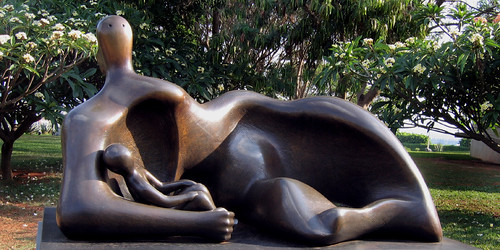
I've been thinking a lot about the artistic vision of Henry Moore. So I revisited a short essay that I wrote awhile ago and made a few "refinements" trying to get the words and images to journey together. For me Moore was the greatest sculptor of the 20th Century, presenting a totally radical re-vision, a deeper re-cognition between matter and awareness. I'll try to explain why I feel that way.

In 2005 I was very fortunate to see the Henry Moore Retrospective Exhibition which traveled from England to Brazil for showings in Rio de Janeiro, São Paulo and Brasília. This was the first time that Moore’s works had been shown in Latin America. I visited the exhibition only briefly in Rio which whetted my appetite. When it arrived in Brasília I was drawn to it as a child is drawn to a candy store. I think that I went to it four times but even that was hardly enough.
img_2686_edited

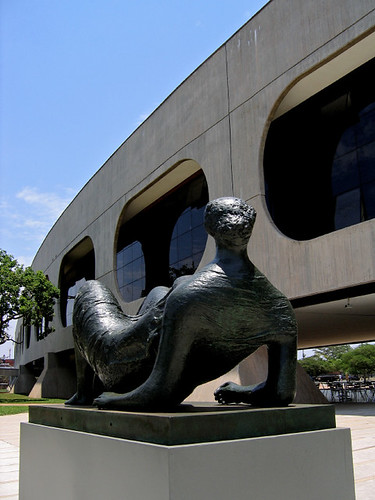
Immersing my awareness in the works of a great artist like Moore was a powerful experience. Almost immediately, the way that I perceived the world began to change. It’s not easy to express exactly how it changed but my attention shifted. I began to see objects not as isolated entities but as embedded in larger environments – the inside and outside and surroundings of the subject became more apparent and as important as the piece of art.
img_2816_edited

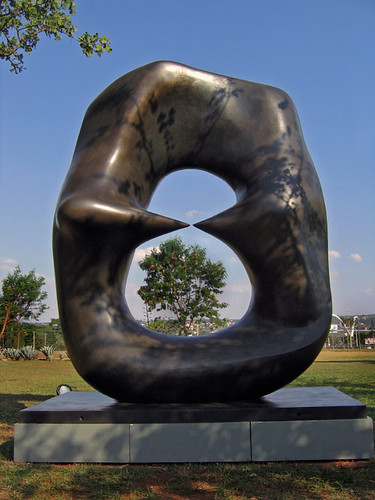
I understood that the final perceived vision is an interaction, a dynamic and participatory dance of form and space. Moore demolished the hierarchical, elitist and monumental vision of art as somehow above, beyond and separate from the viewer. He re-visioned the sculpture, the viewer and environment as part of a participatory world.
img_2822_edited

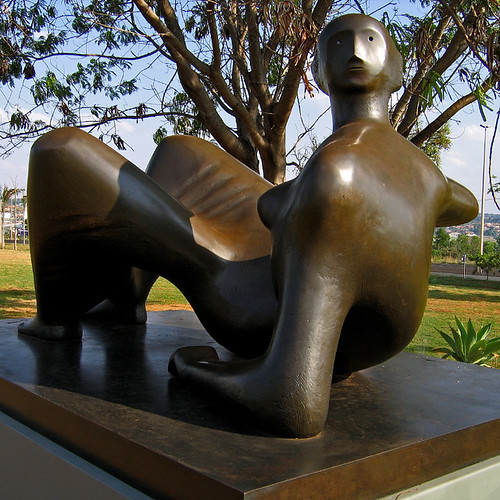
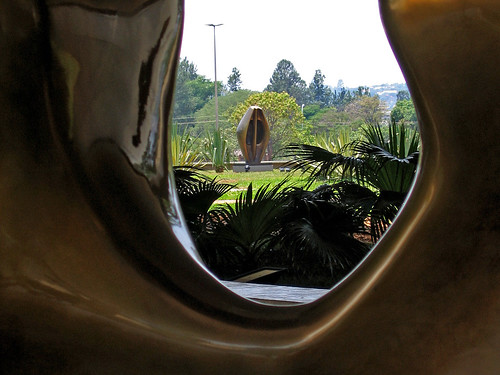
In one of the statements by Moore which was displayed on the exhibit walls he says that he learned that sculpture was not simply a manipulation of the material form but also a shaping of the space around it. He wanted his large pieces to be displayed in nature where they could interact with the surrounding space – as a form, as a window, as a reflection, as occupied and unoccupied space.
img_2674_edited_edited

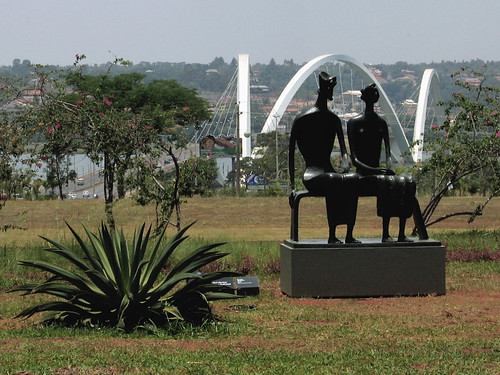
I thought of the profound Buddhist insight that is the opening of the Heart Sutra: Form is Emptiness. Emptiness is none other than Form. Moore’s sculptures are, of course, solid objects but the presentation of the work is a performance, an interaction with the environment and a living testament to the truth of this Buddhist insight about impermanence. Each location, each perspective, each eye presents something new. Form, emptiness and constant change. Somehow, it seems more like a conversation than a permanence.
img_3104_edited

Moore said that he considered art to be his spirituality which I take to mean that the work and the practice of the artist are to discover truth, reveal vision and create beauty.

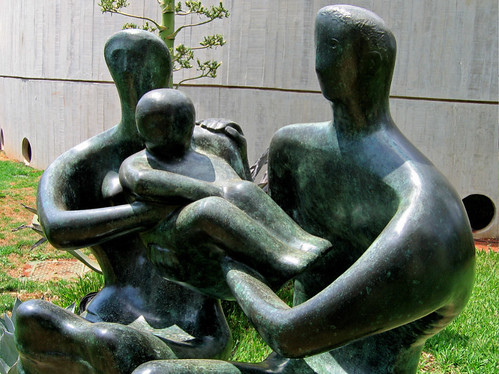
There is a very poignant moment in the documentary film about his life where Moore recalls the series paintings that he was commissioned to do about the WWII bombing of London. He said that when air raid sirens would start that he would feel a “strange exhilaration.” In the Tubes which served as the bomb shelters he joined the masses of people huddled and stretched out for the night. Moore -- who is arguably the master of the reclining figure -- said, “I had never seen nor imagined so many reclining figures.” Those paintings -- primarily scenes from the bomb shelters -- are hauntingly beautiful portrayals of people nested safely underground.

The theme of being safely held is powerfully presented in his sculptures
img_3052_edited

Even with his fallen warrior, the return to the ground, rather than a conquering of it, feels more like a nurturing than a defeat.
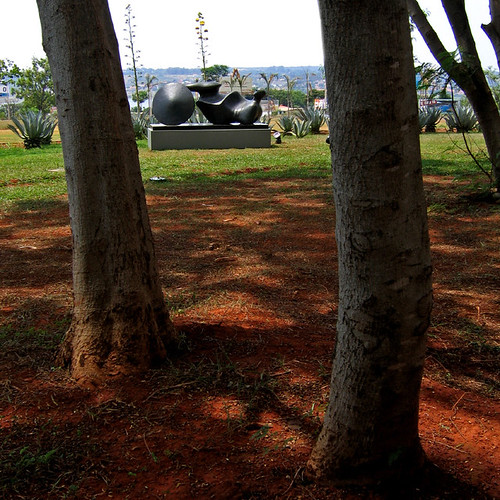
img_3024_edited

I understand Moore’s work,
above all, as a "monumental" return to humility. I don’t mean the stylized humility of manners and social forms. I mean “humility” as in the Greek root word -- humus. Moore took artistic beauty off the high pedestal, reclined it close to the ground or reduced it to the simplest of lines and materials, and in the end established beyond any doubt that the humble form is noble.
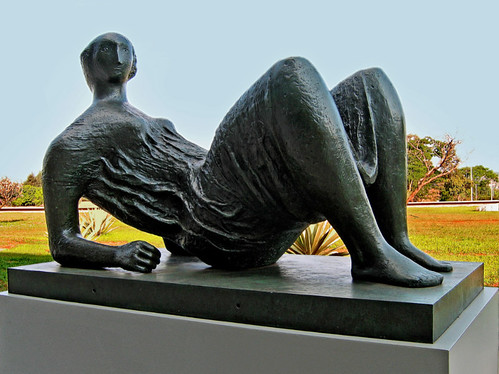
img_2863-copy_edited

It is the nobility of the Mother, our Mother, Mother Earth. She is the very ground of our existence, the source and foundation of life, the lowliest and most powerful of all beings.
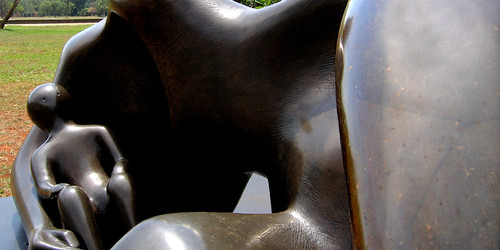
img_3011_edited

I chose to refer to Moore as a "re-visionary artist" because his art brings us back to a deeper vision of our relationship to the ground below us, to our Mother, to the earth. Looking once again at a slideshow of his works, I can only feel grateful... and childlike.

Click for the slideshow.

Sunday, May 06, 2007

YES, IT CAN BE DONE

This is an important visionshare about how one man with a vision was able to re-green the desert that all the previous experts who had tried using modern techniques had failed to achieve.


This video from Jordan was produced by the Permaculture Research Institute in Australia. The permaculture movement has spread around the world. This month the spotlight is on Brazil which is hosting the Eighth International Permaculture Conference.

Thursday, May 03, 2007

A FEW COLLAGES

IMG_0359_edited

A few years ago I made a bunch of collages just for the fun of it. It was before I got into the computer so they were cut with an exacto knife and pasted with rubber cement. Much later I photographed them and played around some more in the computer. Here are a few that I still like:

IMG_0344_edited_1

IMG_0345_edited_1

IMG_0367_edited

IMG_0315_edited_1

IMG_0319_edited_1

IMG_0364_edited

IMG_0362_edited

IMG_0347_edited_1

IMG_0348_edited_1

IMG_0376_edited

IMG_0356_edited_1

IMG_0386_edited

Saturday, April 28, 2007

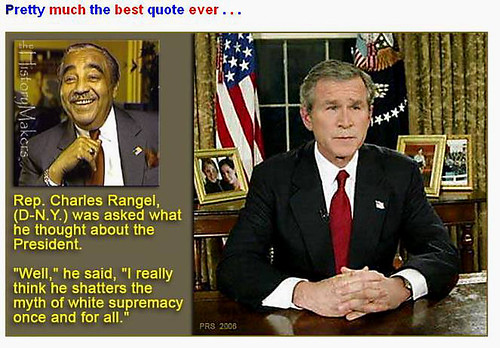
THE BEST QUOTE EVER

bestquote_edited

That pretty much said all there is to say on that topic.


Thanks for showing up at my blog. This is an eclectic place where I follow whatever attracts my attention, usually through my camera and travels in Brazil, but also just stumbling through the world wide web. Mostly, the images that I post are my own. This one is not. It was sent to me by a friend. I thought that I just had to pass it on.

Friday, April 27, 2007

ON THE ROAD WITH LUIZ MENDES: Boiçucanga Bonus

img_6084_edited

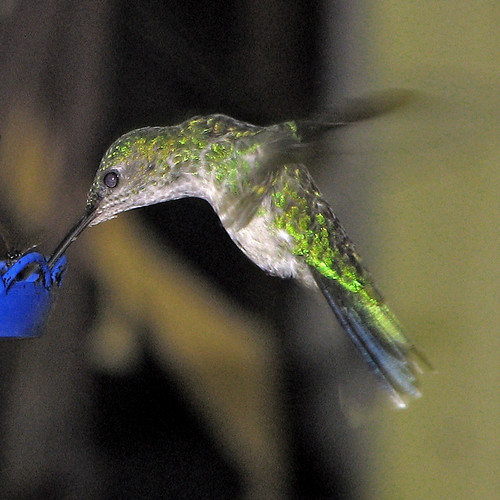
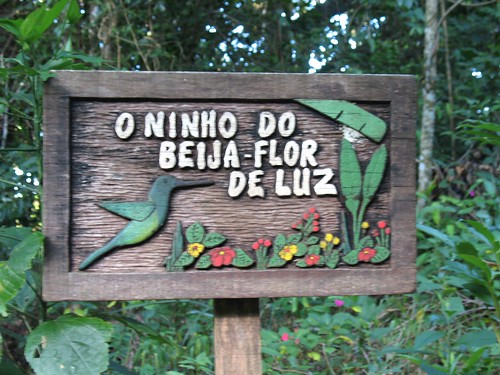
Being on the road and far away from home can be a draining experience, even under the best of circumstances. But rest and renewal come from being close to nature, which after all is our mother, our teacher and our healer. So it was a special bonus to spend some days at Boiçucanga which is a town on São Paulo state's northern coastline. The name comes from the Tupiniquin Indian language. Boi means snake. Açu means big and Canga means head.

However, for us, boiçucanga did not mean a big-headed snake but rather a beija-flor or humming bird.

IMG_3987_edited

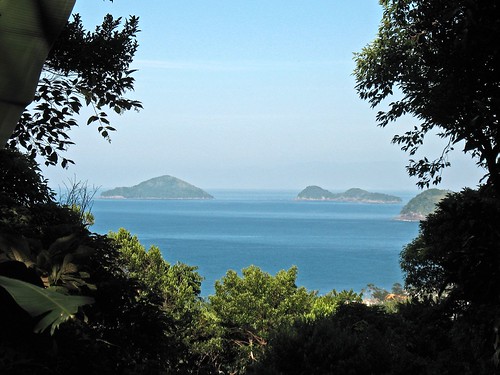
Here on a mountain ridge in a forest and overlooking the ocean

img_6095_edited

a little church sits like the nest of a humming bird.

img_6079_edited

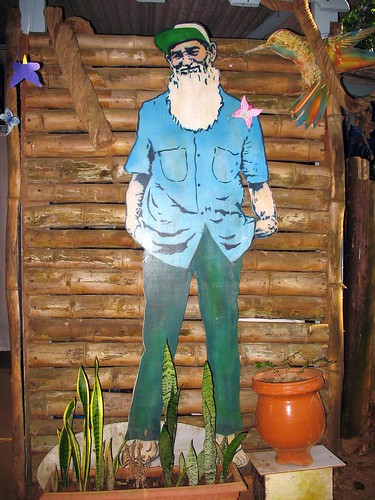
A likeness of Padrinho Sebastião stands at its entrance.

img_6080_edited

Padrinho (now deceased) predicted that he would become a humming bird in one of his late hymns.

Play the hymn.

Oh my God, oh my God
My God where am I?
Oh my God, oh my God
I am a humming-bird

Oh my God, oh my God
My God where are You?
Oh my God, oh my God
On the earth and the seaside
....

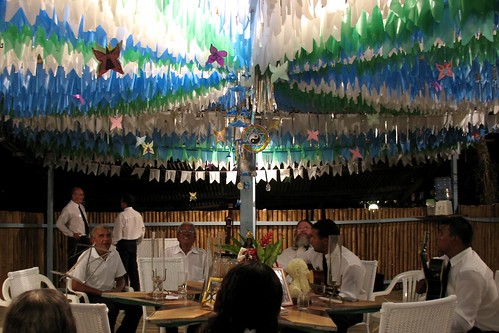
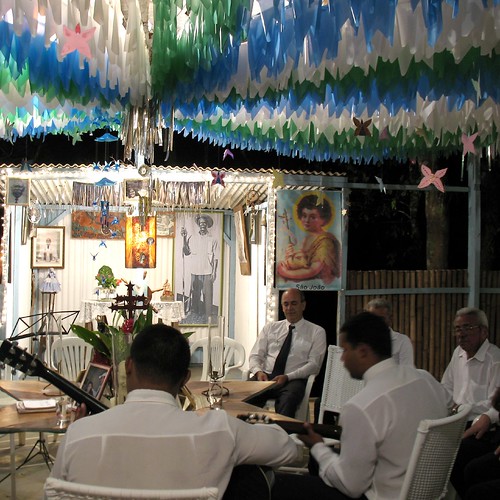
In this wonderful setting,
we prayed

img_6138_edited

img_6143_edited

and, of course, we played

img_3779_edited

img_3808_edited

img_3809_edited

with Sergio's family and friends

img_3877_edited

img_3946_edited

and felt the closeness of Madrinha Rita

img_6165_edited

Padrinho Sebastião

img_3963_edited

and Mestre Irineu.

img_6085_edited

Click for a slideshow of more photos.

Thursday, April 26, 2007

ON THE ROAD WITH LUIZ MENDES: Three more stops along the trail of happiness.

It's hard to describe in words exactly what it is like to be traveling with the Luiz Mendes comitiva. They carry the energy of Mestre Irineu always

img_6326_edited

and seem to bring the gift of happiness wherever they go. But the gift really is reciprocal, a relationship in which everyone contributes, somehow realizing that happiness is not something that we "get" but that it is something that we give. It seems to spread in all directions like a marvelous contagion.

The first spiritual work was offered at Reino do Sol

img_2559_edited

where we joined with Gê Marques and Rô

img_2561_edited

img_2557_edited

and lots of brothers and sisters to sing and dance all night

img_2576_edited

and share birthday celebrations.

img_2613_edited

Next stop was Céu da Fatima, the church that Alexandre and Adriana traveled the long distance to do works at for many years

img_6291_edited

and where Sidney told of his relationship with Seu Luiz and shared a memorable photograph.

img_6272_edited

img_6283_edited

I received a very special gift when someone offered to take my picture with Lusirene.

Me and Lusirene at Céu de Fatima

It was another great evening that stretched into the wee hours and ended with many smiles.

img_6329_edited

The last of the São Paulo area works was at Lua Cheia where Léo welcomed everyone.

img_6382_edited

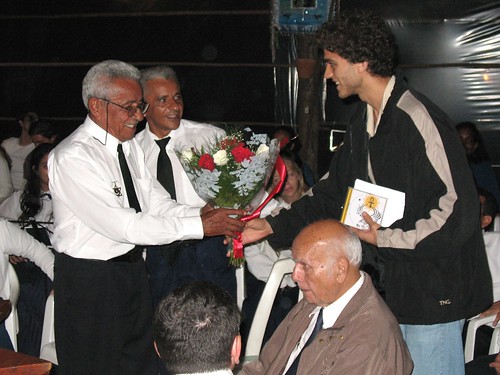
Representatives of Ana Vitória, Porta do Sol spoke eloquently for the union of all ayahausca youth in the world and brought a gift of flowers.

img_6365_edited

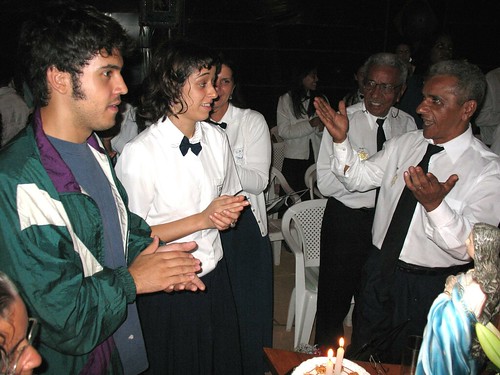
Of course there was another birthday to celebrate,

img_6397_edited

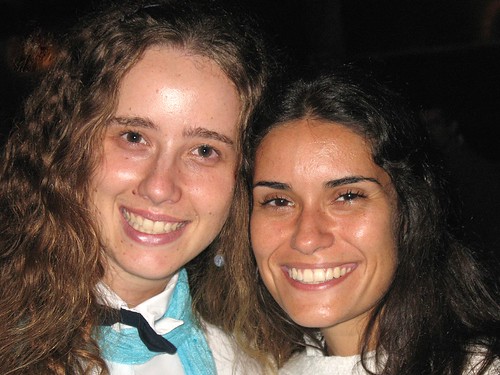
and more smiles,

img_6415_edited

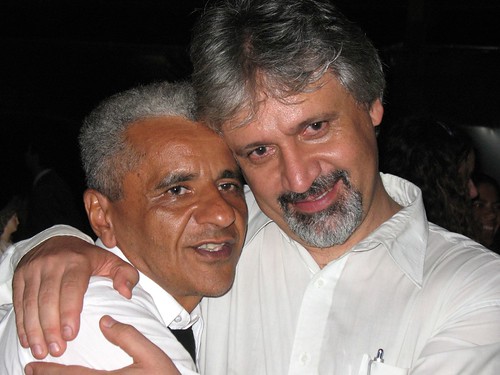
and more hugs.

img_6409_edited

Birthdays, smiles, hugs and healing. This was my sense of our travels through São Paulo.


Click for a slideshow of more Reino do Sol photos.

Click for a slideshow of more Céu da Fatima photos.

Click for a slideshow of more Lua Cheia photos.