VISISIONSHARE (blog header)_edited
Showing posts with label vision. Show all posts

Tuesday, November 20, 2007

TERRA PRETA STORY-TELLING LAUNCHED
ON BLACK AWARENESS DAY IN BRAZIL


São Paulo
Brazil
Black Awareness Day
20 November 2007

Hi Folks,

OK -- I'm still crazy after all these years -- and loving it. I'm well and thriving with the help of many wonderful friends. Brazil has to be the most cordial place in the world. It seems that this is the time and place for me to come out of retirement.

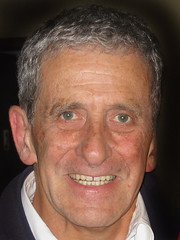
Here's a current pic:

IMG_0036-copy_edited

Here is what I used to look like:


I used to tell a story called
Lessons From the Ancient Forest: Earth Wisdom and Political Action (click to view).

Now, I've got the best story ever to tell. Terra preta de indio (Indian Black Earth) can save the world.

The story needs to go viral, spreading through the Internet. To do this we need storytellers and and song writers and networkers and a lot more conversation.

Maybe you can put it out to your email list(s).

Maybe get the kids (young and old) who are in the internet social networks to talk it up.

We can all do it just by spreading the news - by being a storyteller spreading a healing conversation around the globe.

We need to spread not just an awareness of a terra preta techinique but, even more importantly, we need to inspire folks with the knowledge that a lost Amazonian wisdom showed that large numbers of people could live in balance without destroying the earth.

PLEASE do what you can do.

hugs, lou

*******

I shared the story here.

Kelpie Wilson's easy-to-read and inspiring Terra Preta primer is here.

The BBC transcript of "TheSecret of El Dorado" is here .

The ABC video about the the modern version of terra preta called "Agrichar" is here.

Sunday, November 18, 2007

“What we do in the next two to three
years will determine our future. This
is the defining moment.”


-- Rajendra Pachauri,
director of the UN's International Panel on Climate Change


The story that defines what we might do has been
emerging from Brazil.

It's a golden opportunity.


First, the story...

Once upon a time, way back in the sixteenth century, the Spanish Conquistador Francisco de Orellanawas the first European explorer to travel down length of the Amazon River. Starting in Peru and into the Rio Negro, a huge tributary, upriver from present-day Manaus, the exploration traversed the continent to the Atlantic Ocean. For Orellana and his unfortunate companions it was a terrible trip plagued with every kind of adversity which, in the end, left him as the sole survivor to return to the Court of the King of Spain to tell the story.

But what a story it was. We might even speculate that Orellana survived the ordeal in order to complete his mission of telling of having found Eldorado -- fantastic golden cities in the heart of the forest of the New World. Orellana reported something even more unbelievable than gold -- there was an advanced indigenous civilization with many high density human settlements. Huge Indian populations were living along the waterways of Amazônia and, according to Orellana, at one place there was a city of continuous side-by-side houses stretching for twenty miles. His tale was both fantasic and fabulous. I doubt that the Spanish Court could really embrace the thought of a civilization more advanced than their own but they sure could imagine the gold.

Gold lust inspired many later adventures across the New World but none could find the fabled Eldorado. It was nearly a century later that missionaries came to the region explored by Orellana, but they reported finding only small nomadic bands of hunter-gathers roaming the forest. The obvious conclusion was that Orellana had fabricated a great tale to mask his own failed expedition. And, much later, a whole generation of modern scientists confirmed the implausibility of an Eldorado in the forest by noting that the nutrient poor Amazon soils could not have supported a large-scale agriculture which is the prerequisite of civilization.

But this "well etablished view" that the Amazon basin could not have contained large human populations has started to crumble. First with new research in Bolivia and, more recently, in central Amazõnia, scientists are discovering tell-tale signs of ancient large-scale populations. The indians appear to have figured out how to transform the nutrient-poor yellowish soils into deep deposits of an extremely fertile dark earth called terra preta de indio. What are these tell-tale signs? Terra preta soils are loaded with pottery sherds and charcoal. The pieces of ceramic are in the contour of large pots and vessels that could have been used only by stationary populations. And the charcoal -- apparently char from cleared forest -- has been ground into small pieces indicating that these soils were "made" by the local residents.

The resulting soils are amazingly fertile -- sometimes producing nearly 800% more plant growth compared with nearby untreated soil -- and clearly capable of supporting a large-scale agriculture. Also anthropologists have found at least one small tribe with an hierarchical cultural structure suggesting a distant past of living among large sedentary populations and not always as nomadic hunter-gathers.

Recent efforts to map the areas of terra preta soils along the Tapajos River have unearthed esquisite 2000 year-old pottery. Carbon dating of soils in some other areas suggest that they may be 2500-4000 years old -- and still fully fertile which is extraordinary in the Amazon where heavy rainfall typically leaches the nutrients out of the soils rather quickly. Interestingly, the mapping efforts are revealing a close correspondence with the Eldorado areas talked about by Orellana.

So what happened to these lost civilizations? No one knows for certain. There's little hard evidence because there is no stone in the area and the wooden structures were quickly reclaimed by the tropical forest. But the best speculation is that the first European expeditions carried in diseases -- smallpox, measels, flu, even the common cold -- to a population that had so harmoniously co-evolved with its niche that it had no disease ... and no need for immunity. After a catastrophic die-off there were only a few survivors who had devolved back into hunter-gathers. The sole legacy of the civilization remained hidden in the soil.

Today, in some areas, terra preta is harvested and sold as potting soils. If a limited amount (about 20 cm deep) is retained and the area then left fallow it will grow back to full depth in about 20 years. Apparently -- get this! -- terra preta soils develop into organic communities that are capable of growing like a biotic culture as in sourdough bread or yogurt, truly a living earth.

Five years ago, England's BBC did a special TV documentary called The Secret of Eldorado that concluded with these words: "So there is a true irony to the story of the hunt for El Dorado. There was once a great civilisation in the Amazon, one the Europeans destroyed even as they discovered it, but the Amazonians may have left us a legacy far more precious than the gold the Conquistadors were seeking. That black earth, the terra preta, may mean a better future for us all."

A golden opportunity.

At the time of the 2002 BBC documentary, a better future was understood as gaining the ability to BOTH save the rainforest and feed more people. But, now, global warming has added an incredibibly important new dimension -- the need to remove CO2 from the atmosphere and sequester it somewhere. This is exactly what terra preta does because 1) plants that grow faster, also remove CO2 from the atmosphere faster and 2) if the agricultural waste (unused portions of the plants) are made into charcoal, it can be used to renew the soil and sequester carbon.

The result of such a system would mean better soil, more food, cleaner fuel, less deforestation and, if Kyoto is revised to include payment for carbon negative sequestration in the soil, developing countries like Brazil and poor farmers everywhere will be paid to save the earth, while growing both food and fuel. This is why terra preta is being called the "new black gold".

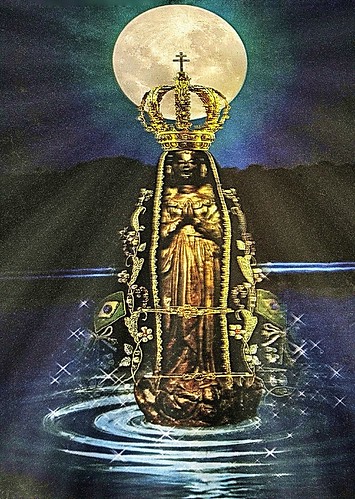
Everyone, who thinks of Brazil, knows of its gifts of samba and soccer which are world renown. But Brazil is also the place where the gift of light emerges out of darkness. When gold was discovered in the state of Minas Gerais, it was given the name ouro preto (black gold) because the nuggets had a dark coating. Later, when a statue of the Virgin with dark skin was discovered in a river bed, it was named, Nossa Senhora Conceição de Aparecida (Our Lady of Conception who Appeared) because it appeared to have wish-granting and healing powers. And, for me, this image is one of the great symbols of the fertility and abundance of Mother Earth.

Nossa Senhora Conceição de Aparecida

This Black Madonna became the patroness of Brazil and the center of the largest healing shrine in the world. Perhaps She is also a powerful symbol for the possibility of healing the earth.

Nowadays, we have the rediscovery of an empowering dark earth brew called terra preta, along with speculation of an ancient and highly advanced Indian civilization. Perhaps terra preta will be Brazil's greatest gift yet to the world. Perhaps we can all spread the story about how there once was a time when large numbers of people lived in a bountiful harmony with the earth in a place called Eldorado and that, with love and care and attention, we can repeat the performance.

Here are links to more information:

Australian Broadcasting Company video (11 min) about the global terra preta movement.

GREAT BBC Documentary "The Secret of El Dorado" (49 min video)

Full transcript of BBC El Dorado documentary.

Easy to read primer on Terra Preta.

Expandable Google map of Terra Preta sites.

Pdfs of the best magazine articles.

Continuous updates of all relevant links.

How biofuels can become carbon-negative and save the planet.

US Senator introduces bio-char legislation.

Research confirms bio-char in soil increases yields.

Biopact on the IPCC bio-fuel recommendations.

UPDATE: This post has been linked in a roundup by Global Voices Online, and translated to Portuguese here.


Wednesday, May 09, 2007

HENRY MOORE: RE-VISIONARY ARTIST
img_2847_edited

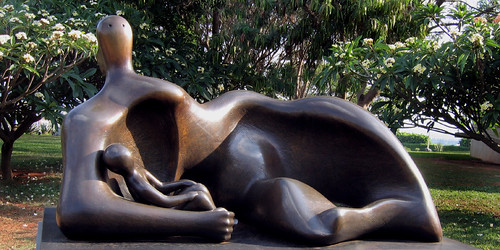
I've been thinking a lot about the artistic vision of Henry Moore. So I revisited a short essay that I wrote awhile ago and made a few "refinements" trying to get the words and images to journey together. For me Moore was the greatest sculptor of the 20th Century, presenting a totally radical re-vision, a deeper re-cognition between matter and awareness. I'll try to explain why I feel that way.

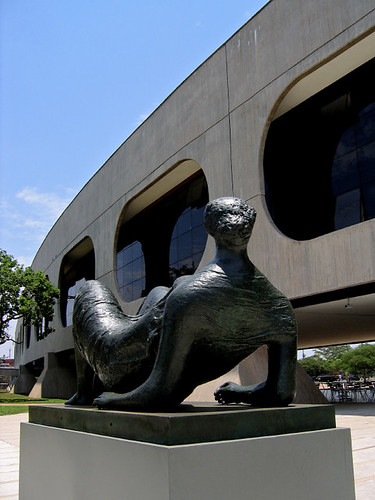
In 2005 I was very fortunate to see the Henry Moore Retrospective Exhibition which traveled from England to Brazil for showings in Rio de Janeiro, São Paulo and Brasília. This was the first time that Moore’s works had been shown in Latin America. I visited the exhibition only briefly in Rio which whetted my appetite. When it arrived in Brasília I was drawn to it as a child is drawn to a candy store. I think that I went to it four times but even that was hardly enough.
img_2686_edited

Immersing my awareness in the works of a great artist like Moore was a powerful experience. Almost immediately, the way that I perceived the world began to change. It’s not easy to express exactly how it changed but my attention shifted. I began to see objects not as isolated entities but as embedded in larger environments – the inside and outside and surroundings of the subject became more apparent and as important as the piece of art.
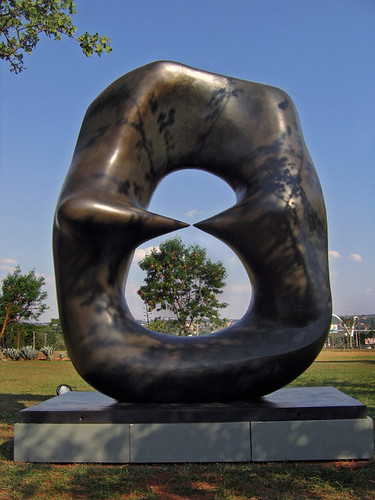
img_2816_edited

I understood that the final perceived vision is an interaction, a dynamic and participatory dance of form and space. Moore demolished the hierarchical, elitist and monumental vision of art as somehow above, beyond and separate from the viewer. He re-visioned the sculpture, the viewer and environment as part of a participatory world.
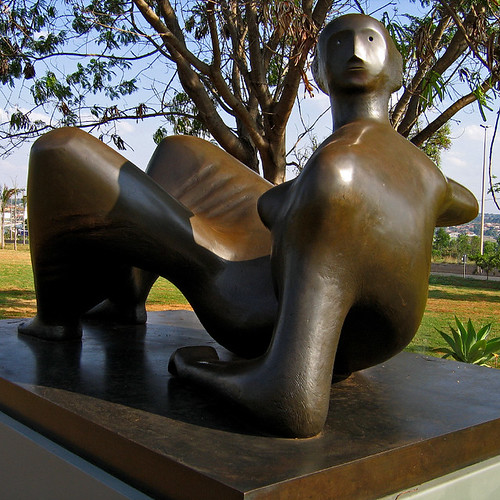
img_2822_edited

In one of the statements by Moore which was displayed on the exhibit walls he says that he learned that sculpture was not simply a manipulation of the material form but also a shaping of the space around it. He wanted his large pieces to be displayed in nature where they could interact with the surrounding space – as a form, as a window, as a reflection, as occupied and unoccupied space.
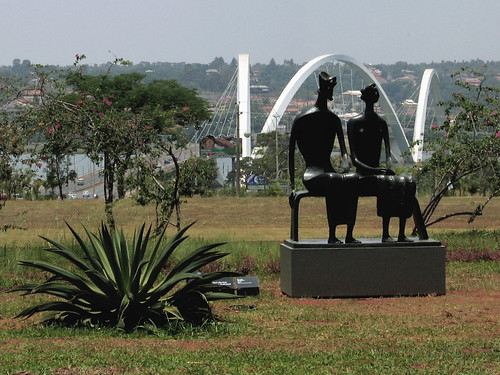
img_2674_edited_edited

I thought of the profound Buddhist insight that is the opening of the Heart Sutra: Form is Emptiness. Emptiness is none other than Form. Moore’s sculptures are, of course, solid objects but the presentation of the work is a performance, an interaction with the environment and a living testament to the truth of this Buddhist insight about impermanence. Each location, each perspective, each eye presents something new. Form, emptiness and constant change. Somehow, it seems more like a conversation than a permanence.
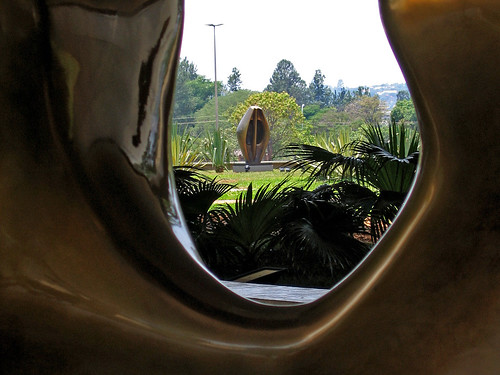
img_3104_edited

Moore said that he considered art to be his spirituality which I take to mean that the work and the practice of the artist are to discover truth, reveal vision and create beauty.

There is a very poignant moment in the documentary film about his life where Moore recalls the series paintings that he was commissioned to do about the WWII bombing of London. He said that when air raid sirens would start that he would feel a “strange exhilaration.” In the Tubes which served as the bomb shelters he joined the masses of people huddled and stretched out for the night. Moore -- who is arguably the master of the reclining figure -- said, “I had never seen nor imagined so many reclining figures.” Those paintings -- primarily scenes from the bomb shelters -- are hauntingly beautiful portrayals of people nested safely underground.

The theme of being safely held is powerfully presented in his sculptures
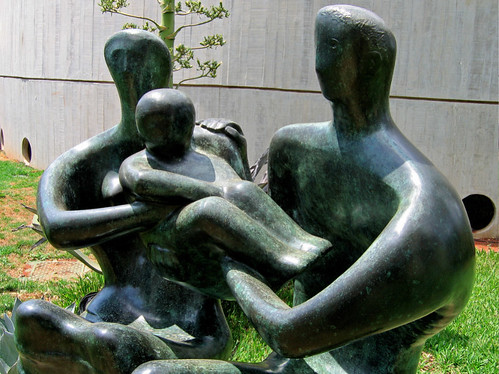
img_3052_edited

Even with his fallen warrior, the return to the ground, rather than a conquering of it, feels more like a nurturing than a defeat.
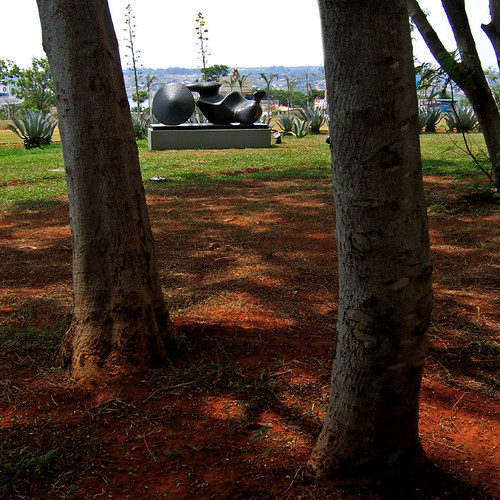
img_3024_edited

I understand Moore’s work,
above all, as a "monumental" return to humility. I don’t mean the stylized humility of manners and social forms. I mean “humility” as in the Greek root word -- humus. Moore took artistic beauty off the high pedestal, reclined it close to the ground or reduced it to the simplest of lines and materials, and in the end established beyond any doubt that the humble form is noble.
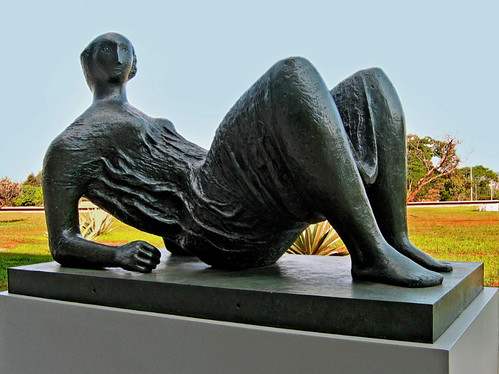
img_2863-copy_edited

It is the nobility of the Mother, our Mother, Mother Earth. She is the very ground of our existence, the source and foundation of life, the lowliest and most powerful of all beings.
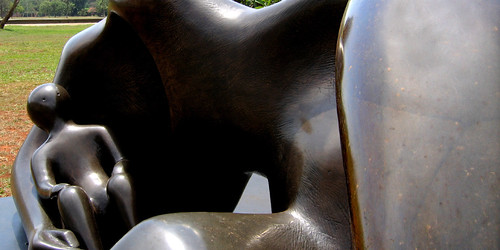
img_3011_edited

I chose to refer to Moore as a "re-visionary artist" because his art brings us back to a deeper vision of our relationship to the ground below us, to our Mother, to the earth. Looking once again at a slideshow of his works, I can only feel grateful... and childlike.

Click for the slideshow.
Sunday, May 06, 2007

YES, IT CAN BE DONE

This is an important visionshare about how one man with a vision was able to re-green the desert that all the previous experts who had tried using modern techniques had failed to achieve.


This video from Jordan was produced by the Permaculture Research Institute in Australia. The permaculture movement has spread around the world. This month the spotlight is on Brazil which is hosting the Eighth International Permaculture Conference.