THE NEXT STEPS
According to treehugger there are some steps you can take to help limit deforestation in the Amazon. Here are their suggestions for action:
You may have seen how a new Greenpeace report ties together the Brazilian cattle industry, deforestation and several popular global shoe brands who are using what is in essence 'deforestation leather'. If you didn't see the story the first time around, check out this quick video which summarizes the issues, dig into the full Slaughtering the Amazon report, and then take action:
Tell Nike, Timberland, Adidas, Reebok, Clark's, and Geox that you don't want your shoes contributing to global climate change by increasing deforestation in the Amazon.
The cattle industry is now the driving factor in deforestation in the Amazon, with cattle pastures now occupying land the size of Iceland. Cattle raising in Brazil is responsible for 14% of all the tropical deforestation in the world, and is their largest source of greenhouse gas emissions. Including emissions from deforestation, Brazil is the third largest emitter of greenhouse gases in the world.
All told, global deforestation and agriculture is a greater source of greenhouse gas emissions than the entire transport sector.
There's more background info and some hopeful signs here.

Showing posts with label deforestation. Show all posts
Showing posts with label deforestation. Show all posts
Friday, June 05, 2009


Sunday, March 23, 2008
Resurrection of the Earth
seems like a perfect post for an Easter Sunday.
But, first I'd like you to consider an image -- a photo montage created by the Brazilian visionary artist and designer Guta.
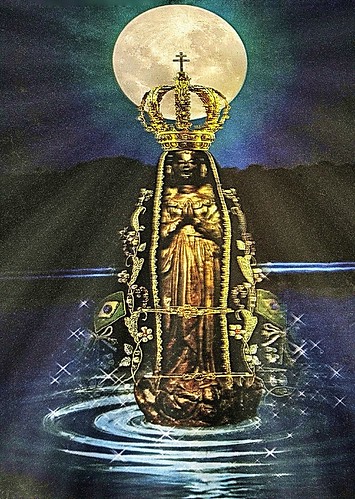
I'm sure that Guta would have presented a much more professional-looking rendering of this magnificent image. (I simply "posterized" a poor photo of his work.) It captures the interweaving of two great Brazilian religious traditions -- Aparecida and Santo Daime -- both of which manifest the spiritual energy of this Brazilian and universal Goddess. And, now, I have an additional connection in mind.
Back in November I reported a newspaper article that said:
"God is Brazilian", said Brazilian President Luiz Inacio Lula da Silva in response to his government's announcement that massive new oil reserves had been discovered offshore.
But, it turns out that there is more than one kind of Black Gold. The recent "rediscovery" of Terra Preta soils of the ancient Amazonian Indians may prove to be more valuable than off-shore oil. If God is Brazilian, She just might be Black.
This image is of the much-revered Black Madonna of Brazil, Nossa Senhora de Conceição Aparecida -- Our Lady of Conception Who Appeared.

The story is that a statue of the Virgin made around 1650 was somehow lost. Then, in 1717, some government people were traveling north to the gold mining region of Minas Gerais where the precious metal was called Ouro Preto due to a dark coating on the nuggets. Along the way fishermen cast their nets in a river hoping to catch fish for a big banquet. Instead of fish, they found the statue -- all darkened by years in the river bed. The travelers went on but the statue was kept in a little family shrine.
Soon the statue appeared to have healing and wish-granting powers -- at least for some faithful ones -- and a cult began to grow around it. As time passed, it had to be housed in larger and larger quarters and came to be venerated throughout Brazil. In 1929, the Virgin was proclaimed Queen of Brazil and its official Patron Saint. Today its Basilica, in the city of Aparecida near São Paulo, receives about 7 million visitors yearly and is the largest Marian shrine in the world.
From the first time I saw this great Black Madonna, this symbol appeared to me as more than an artifact of the Catholic Church. Indeed, it seemed even more like an icon of the power of the earth.
Nowadays, there is an emerging parallel story. As the world searches for solutions to hunger, fuel shortages, deforestation and climate change, Terra Preta soil from deep in Amazônia may be emerging as as a way to heal the earth. YES, biochar -- the modern equivalent of Terra Preta de Indios -- may be rising into our awareness truly as the resurrection of the earth.
And, yes, the Goddess is Black.
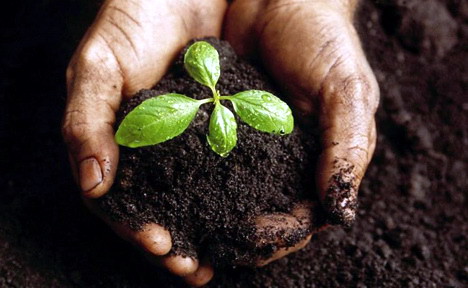
Can you imagine fighting hunger, energy poverty, deforestation and climate change SIMULTANEOUSLY?
Please stay tuned.
seems like a perfect post for an Easter Sunday.
But, first I'd like you to consider an image -- a photo montage created by the Brazilian visionary artist and designer Guta.
I'm sure that Guta would have presented a much more professional-looking rendering of this magnificent image. (I simply "posterized" a poor photo of his work.) It captures the interweaving of two great Brazilian religious traditions -- Aparecida and Santo Daime -- both of which manifest the spiritual energy of this Brazilian and universal Goddess. And, now, I have an additional connection in mind.
Back in November I reported a newspaper article that said:
"God is Brazilian", said Brazilian President Luiz Inacio Lula da Silva in response to his government's announcement that massive new oil reserves had been discovered offshore.
But, it turns out that there is more than one kind of Black Gold. The recent "rediscovery" of Terra Preta soils of the ancient Amazonian Indians may prove to be more valuable than off-shore oil. If God is Brazilian, She just might be Black.
This image is of the much-revered Black Madonna of Brazil, Nossa Senhora de Conceição Aparecida -- Our Lady of Conception Who Appeared.
The story is that a statue of the Virgin made around 1650 was somehow lost. Then, in 1717, some government people were traveling north to the gold mining region of Minas Gerais where the precious metal was called Ouro Preto due to a dark coating on the nuggets. Along the way fishermen cast their nets in a river hoping to catch fish for a big banquet. Instead of fish, they found the statue -- all darkened by years in the river bed. The travelers went on but the statue was kept in a little family shrine.
Soon the statue appeared to have healing and wish-granting powers -- at least for some faithful ones -- and a cult began to grow around it. As time passed, it had to be housed in larger and larger quarters and came to be venerated throughout Brazil. In 1929, the Virgin was proclaimed Queen of Brazil and its official Patron Saint. Today its Basilica, in the city of Aparecida near São Paulo, receives about 7 million visitors yearly and is the largest Marian shrine in the world.
From the first time I saw this great Black Madonna, this symbol appeared to me as more than an artifact of the Catholic Church. Indeed, it seemed even more like an icon of the power of the earth.
Nowadays, there is an emerging parallel story. As the world searches for solutions to hunger, fuel shortages, deforestation and climate change, Terra Preta soil from deep in Amazônia may be emerging as as a way to heal the earth. YES, biochar -- the modern equivalent of Terra Preta de Indios -- may be rising into our awareness truly as the resurrection of the earth.
And, yes, the Goddess is Black.
Can you imagine fighting hunger, energy poverty, deforestation and climate change SIMULTANEOUSLY?
Please stay tuned.
Tuesday, November 20, 2007
TERRA PRETA STORY-TELLING LAUNCHED
ON BLACK AWARENESS DAY IN BRAZIL
São Paulo
Brazil
Black Awareness Day
20 November 2007
Hi Folks,
OK -- I'm still crazy after all these years -- and loving it. I'm well and thriving with the help of many wonderful friends. Brazil has to be the most cordial place in the world. It seems that this is the time and place for me to come out of retirement.
Here's a current pic:

Here is what I used to look like:

I used to tell a story called
Lessons From the Ancient Forest: Earth Wisdom and Political Action (click to view).
Now, I've got the best story ever to tell. Terra preta de indio (Indian Black Earth) can save the world.
The story needs to go viral, spreading through the Internet. To do this we need storytellers and and song writers and networkers and a lot more conversation.
Maybe you can put it out to your email list(s).
Maybe get the kids (young and old) who are in the internet social networks to talk it up.
We can all do it just by spreading the news - by being a storyteller spreading a healing conversation around the globe.
We need to spread not just an awareness of a terra preta techinique but, even more importantly, we need to inspire folks with the knowledge that a lost Amazonian wisdom showed that large numbers of people could live in balance without destroying the earth.
PLEASE do what you can do.
hugs, lou
*******
I shared the story here.
Kelpie Wilson's easy-to-read and inspiring Terra Preta primer is here.
The BBC transcript of "TheSecret of El Dorado" is here .
The ABC video about the the modern version of terra preta called "Agrichar" is here.
ON BLACK AWARENESS DAY IN BRAZIL
São Paulo
Brazil
Black Awareness Day
20 November 2007
Hi Folks,
OK -- I'm still crazy after all these years -- and loving it. I'm well and thriving with the help of many wonderful friends. Brazil has to be the most cordial place in the world. It seems that this is the time and place for me to come out of retirement.
Here's a current pic:
Here is what I used to look like:
I used to tell a story called
Lessons From the Ancient Forest: Earth Wisdom and Political Action (click to view).
Now, I've got the best story ever to tell. Terra preta de indio (Indian Black Earth) can save the world.
The story needs to go viral, spreading through the Internet. To do this we need storytellers and and song writers and networkers and a lot more conversation.
Maybe you can put it out to your email list(s).
Maybe get the kids (young and old) who are in the internet social networks to talk it up.
We can all do it just by spreading the news - by being a storyteller spreading a healing conversation around the globe.
We need to spread not just an awareness of a terra preta techinique but, even more importantly, we need to inspire folks with the knowledge that a lost Amazonian wisdom showed that large numbers of people could live in balance without destroying the earth.
PLEASE do what you can do.
hugs, lou
*******
I shared the story here.
Kelpie Wilson's easy-to-read and inspiring Terra Preta primer is here.
The BBC transcript of "TheSecret of El Dorado" is here .
The ABC video about the the modern version of terra preta called "Agrichar" is here.
Friday, November 09, 2007
AMAZÔNIA: WHAT WILL BE THE FUTURE?
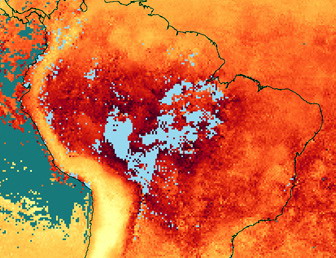
The above photo from NASA shows the concentrations of carbon monoxide (grey areas) hovering over Amazônia during September 2007. Carbon monoxide indicates smoke, fire, greenhouse gas pollution and, of course, deforestation. Burning and cutting the tropical rainforests now contributes more than 20% of global greenhouse gas pollution.
It is now believed that the eastern half of the Amazon forest, located in Brazil, may be seriously at risk. "It's not out of the question to think that half of the basin will be either cleared or severely impoverished just 20 years from now," stated Dr. Daniel Nepstad, head of the Woods Hole Research Center's Amazon program. "The nightmare scenario is one where we have a 2005-like year that extended for a couple years, coupled with a high deforestation where we get huge areas of burning, which would produce smoke that would further reduce rainfall, worsening the cycle. A situation like this is very possible." Read more at Mongabay.
The future Amazon will be the result of choices made by Brazil and the rest of the world in coming years. John Terborgh, writing in the current NY Review of Books tells us how it looks from the highest levels in Brazil:
What is the attitude of the Brazilian government toward a possible climatic calamity in the Amazon? On being shown the predictions of some climate models, President Luiz Inácio Lula da Silva reputedly posed two alternatives. If the rest of the world is so concerned about the future of the Amazon, then let the rich countries pay us not to cut it down. Otherwise, if the forest is going to succumb to drought and fire, then we ought to cut it down first so that we can benefit from the resources before they are lost to the ravages of nature.
Not everyone will be happy with these alternatives, but Lula's pronouncements may not be that far off the mark. The Amazon is being logged at a prodigious rate and with further improvements in transportation envisioned under the Avança Brasil program, logging, and with it the risk of fire, is bound to spread over much of the basin. Slowing or stopping the logging would require a political will that simply doesn't exist in a country obsessed with maximizing development.
Which of Lula's alternatives will the future bring, a green Amazon supported by an international community united against the specter of radical climate change, or a brown Amazon, parched by deforestation and scorched by fire? In my view, the prospects of the green alternative will be determined by the treaty that will succeed Kyoto. At Kyoto, it was decided not to include forests in a system by which carbon emissions are controlled through "cap-and-trade"—i.e., by allowing countries that cut back on emissions to receive tradable credits for doing so. Many now feel that the omission was a mistake because forests store such huge stocks of carbon. Yet how forests will be brought into a second-generation treaty is anyone's guess. Short of significant international intervention through financial incentives or other mechanisms, the business-as-usual scenario will certainly prevail.
Kyoto is about to be reformulated. The choice over the future of Amazônia is likely to come soon. There's been some foolish talk about who owns the Amazon forest. Without doubt, it is owned by Brazil and its neighbors. But the financial choice over its future is clearly owned by all of us.
Wednesday, November 07, 2007
US Ethanol Subsidies Help Fuel Range Wars and Fires in the Amazon
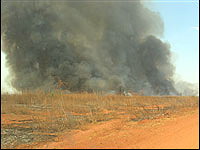 On Monday (11-05-07) US National Public Radio ran a feature segment on "All Things Considered" about the record 2007 fire
season in the Amazon and the situation in Mato Grosso. The photo at the left shows a fire that was intentionally set on neighboring property in the struggle over land titles but spread and eventually burned 90% of John Carter's 22,000 acre ranch.
(photo credit: npr)
Click to hear John tell the story.
This year's fire season dominated the US news for many days as a "national disaster" was declared in southern California because Santa Ana winds whipped about 25 fires into a local frenzy. But compared to the Amazon it would seem no more than a few embers. Mongabay reported some astonishing fire statistics -- depending on which satellite data set is used, this season there were between 50,729 and 72,329 Amazon fires, close to or more than the all-time record.
Here is a NASA satellite view of the fires burning in the states of Mato Grosso, Para and Amazônas on September 29, 2007. The most intense burning is located in areas that had been opened by roads, and now the fires were spreading across agricultural lands and protected reserves as well. Road-building comes first, then a mix of development and protection but fire respects neither.

Unfortunately, these data seem to end speculation that the reductions of fire and deforestation seen in Brazil across the last 2-3 years were the results of aggressive new government initiatives of regulation, monitoring and enforcement. Instead, it appears that variations in the amount fire and deforestation are more closely correlated with fluctuations in global commodity prices, which now are recovering from a recent slump.
While many factors influence the rate of fire and deforestation, the main driving force seems to be the planting of soybeans. The Mongabay report offered the views of two leading scientists:
Dr. Philip M. Fearnside, one of the most widely cited experts on the Amazon, says that the rise of soy in the region has provided support for infrastructure projects which, in turn, have fueled forest destruction.
"Soybean farms cause some forest clearing directly. But they have a much greater impact on deforestation by consuming cleared land, savanna, and transitional forests, thereby pushing ranchers and slash-and-burn farmers ever deeper into the forest frontier," he explained after co-authoring a 2004 paper in Science on the impact of soy. "Soybean farming also provides a key economic and political impetus for new highways and infrastructure projects, which accelerate deforestation by other actors."
"What’s most striking is that fires in 2007 have increased dramatically in the main soy-production states in the Brazilian Amazon—Mato Grosso, Para, Maranhao, and Tocantins—but have dropped or remain stable in other Amazonian states," said Dr. William Laurance, a senior researcher at the Smithsonian Tropical Research Institute (STRI) in Panama and another noted Amazon scientist. "Clearly, soy farming is becoming a major driver of land-use change in the Amazon. The international consumers of Brazilian soy need to understand its key role in driving Amazon deforestation" Rhett A. Butler, 2007 Amazon Fires Among the Worst Ever, October 22, 2007.
And what has caused soybean prices to recover in the global market? Many factors, but chief among them are the new US ethanol agricultural subsidies that have been been causing midwestern farmers to shift from beans to corn. The new "greening of fuel" in the US -- supposedly to fight global warming -- is a big force fueling the fires in the Amazon. It is now thought that, tropical deforestation accounts for more than 20% of the greenhouse gas emissions worldwide, which is more than the amount contributed by the entire transportation sector.
It's a small world where everything is connected to everything. There simply is no people, nor place, nor process that does not bump up against everything else.
On Monday (11-05-07) US National Public Radio ran a feature segment on "All Things Considered" about the record 2007 fireseason in the Amazon and the situation in Mato Grosso. The photo at the left shows a fire that was intentionally set on neighboring property in the struggle over land titles but spread and eventually burned 90% of John Carter's 22,000 acre ranch.
(photo credit: npr)
Click to hear John tell the story.
This year's fire season dominated the US news for many days as a "national disaster" was declared in southern California because Santa Ana winds whipped about 25 fires into a local frenzy. But compared to the Amazon it would seem no more than a few embers. Mongabay reported some astonishing fire statistics -- depending on which satellite data set is used, this season there were between 50,729 and 72,329 Amazon fires, close to or more than the all-time record.
Here is a NASA satellite view of the fires burning in the states of Mato Grosso, Para and Amazônas on September 29, 2007. The most intense burning is located in areas that had been opened by roads, and now the fires were spreading across agricultural lands and protected reserves as well. Road-building comes first, then a mix of development and protection but fire respects neither.
Unfortunately, these data seem to end speculation that the reductions of fire and deforestation seen in Brazil across the last 2-3 years were the results of aggressive new government initiatives of regulation, monitoring and enforcement. Instead, it appears that variations in the amount fire and deforestation are more closely correlated with fluctuations in global commodity prices, which now are recovering from a recent slump.
While many factors influence the rate of fire and deforestation, the main driving force seems to be the planting of soybeans. The Mongabay report offered the views of two leading scientists:
Dr. Philip M. Fearnside, one of the most widely cited experts on the Amazon, says that the rise of soy in the region has provided support for infrastructure projects which, in turn, have fueled forest destruction.
"Soybean farms cause some forest clearing directly. But they have a much greater impact on deforestation by consuming cleared land, savanna, and transitional forests, thereby pushing ranchers and slash-and-burn farmers ever deeper into the forest frontier," he explained after co-authoring a 2004 paper in Science on the impact of soy. "Soybean farming also provides a key economic and political impetus for new highways and infrastructure projects, which accelerate deforestation by other actors."
"What’s most striking is that fires in 2007 have increased dramatically in the main soy-production states in the Brazilian Amazon—Mato Grosso, Para, Maranhao, and Tocantins—but have dropped or remain stable in other Amazonian states," said Dr. William Laurance, a senior researcher at the Smithsonian Tropical Research Institute (STRI) in Panama and another noted Amazon scientist. "Clearly, soy farming is becoming a major driver of land-use change in the Amazon. The international consumers of Brazilian soy need to understand its key role in driving Amazon deforestation" Rhett A. Butler, 2007 Amazon Fires Among the Worst Ever, October 22, 2007.
And what has caused soybean prices to recover in the global market? Many factors, but chief among them are the new US ethanol agricultural subsidies that have been been causing midwestern farmers to shift from beans to corn. The new "greening of fuel" in the US -- supposedly to fight global warming -- is a big force fueling the fires in the Amazon. It is now thought that, tropical deforestation accounts for more than 20% of the greenhouse gas emissions worldwide, which is more than the amount contributed by the entire transportation sector.
It's a small world where everything is connected to everything. There simply is no people, nor place, nor process that does not bump up against everything else.
Tuesday, November 06, 2007
SOY IN THE AMAZON
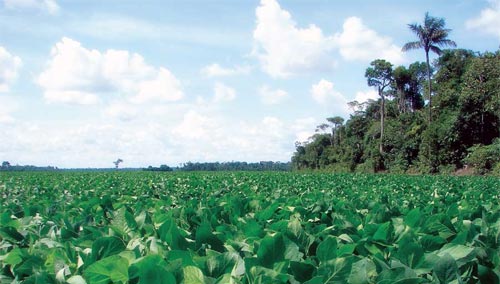
Photo by Pat Joseph
Pat Joseph, writing in the special South American edition of the Virginia Quarterly Review, has given us one of the most thorough, honest and challenging reports on the dynamics of deforestation in the Cerrado and Amazon that I have encountered. I'm going to draw heavily from it in this post. I really urge you to read it in full as there's no way a few excerpts can do it justice.
Pat's report is from Mato Grosso State which in recent years has been the scene of massive burning, deforestation and a center stage for global environmental concern.
He traveled the area with an "americano-brasilieiro" agricultural consultant who wrote him an email saying:
Dear Pat: I am a Brazil/Mato Grosso fanatic. I love the pioneer spirit, the wide-open spaces, and positive attitude among the dynamic farmers in the area. Lucas do Rio Verde, Mato Grosso, is the Garden of Eden in my opinion. My friends there are a pioneer success story. ... in the middle of “soybean ground zero” on the whole planet.
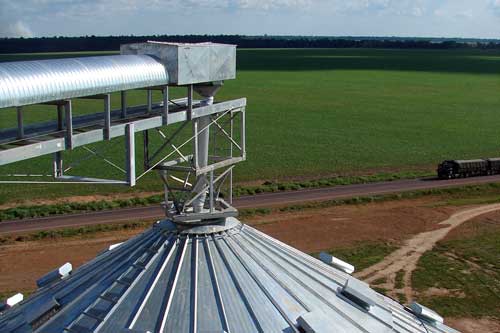
Photos and italicized text above and below from Virginia Quarterly Review
I know this success story. I was born in Chicago. Later, I lived for 14 years among the corn and soybean fields of central Illinois. Many of my friends were the children of the similarly enterprising pioneer families that had drained the wetlands and wiped out the native prairie. They were hard-working, ambitious, and no-nonsense Midwesterner farmers and also very friendly, generous and justifiably proud folks, mostly of German heritage. Just like in Mato Grosso, except for the fact that the average farm size in Illinois was about 600 acres, whereas here it can run 20,000 acres (and upwards) and the new success stories can put Horatio Alger to shame.
I didn't remain in Illinois, I found that I just wasn't a flatlander by nature. In 1982 I moved from the corn and bean fields to the forests and mountains of Oregon seeking the romance of wild places and wilderness solitude. I was part monk, part adventurer, part burned-out political activist and part hippie dropout. Oregon seemed like the perfect spot. I even found a place to live in the Illinois Valley, the river of which begins at a spring flowing from a mountain called Chicago Peak. But, as a midwesterner, I had no idea of the massive deforestation taking place in National Forests. When I saw it, I was shocked. My new home, where I had come to get away from it all, quickly thrust me back into politics as a tree-hugging hermit activist trying to save the remaining 10% of the US ancient forests.
Twenty-five years later, I am now in Brazil, as sort of a spiritual pilgrim following the Queen of the Forest by exploring the path of Santo Daime. And that leads me to places like Acre State where I am finding the spirit of America in Amazônia and facing the classic dilemma confronting a visitor from a rich and consuming society to a new world of economic development and rising expectations. One can not look at this most incredible forest on earth, witness the massive deforestation and not wonder, "whose forest is this anyway, does it not also belong to the world?"
That very same question confronted Pat Joseph in Mato Grosso (two states away from Acre but also in what is called the Amazon "arc of deforestation"). Here's his description of the historical context and the confrontation he faced on the ground:
Settlement of the Brazilian Amazon was sparked by the paranoia of the military government. The generals who ran the country for two decades worried that their unsettled borders and vast empty interior would tempt foreign encroachment on Brazilian soil. Occupar para não entregar. That was the slogan. One of many. “Occupy so as not to surrender.” Another was, “Land without men for men without land.” The generals built roads to encourage migration, then did little to manage how the process unfolded. ...
Even today, an undercurrent of paranoia runs through Brazilian society when it comes to the Amazon, their sense of threatened sovereignty stoked in part by the ill-considered comments of well-meaning politicians such as Al Gore, who once insisted that, “Contrary to what Brazilians think, the Amazon is not their property. It belongs to all of us.” One need only imagine how Americans would feel if foreign leaders made similar pronouncements about, say, Alaska. Not long before I arrived in Brazil, David Miliband, the British environment secretary, was touting a proposal—one enthusiastically supported by Tony Blair—to set up an international trust that would effectively buy a vast portion of the Amazon and manage it as a preserve. The Brazilian response to the idea was swift and unequivocal. President da Silva issued a resounding demurral. “The Amazon,” he said flatly, “is not for sale.”
On a long bus ride across the Cerrado, I sat next to a schoolteacher on vacation and a pastor who was returning to his flock. ... While reclined in his seat, the young pastor ... turned his head toward me and said, “Tell me, why do Americans worry so much about our forest when they cut theirs down in the name of progress?”
In one form or another, I’d had the question put to me many times in Brazil. ... the pastor had a point. What difference did it make that our frontier had closed a century ago? All that meant was that our ancestors did the dirty work for us. And dirty work it was. In conquering the continent, North American settlers had exercised every kind of depravity. We dammed and straightened and diverted our rivers and riprapped their banks. We overgrazed our prairies and drained our wetlands. We cut down our old-growth forests and introduced alien species that grew like weeds in their stead. We hunted down and poisoned predators because they ate our livestock and “our” game. We killed off most of the bison and decimated the salmon. Even now, we’re draining our aquifers, blowing the tops off mountains to get at the coal seams, sinking wells in the gas fields of the West as fast as we can. And how did it all look from Brazil? The United States exploited its resources with a vengeance, and it was rich, the most powerful country in the world. To Brazilians, our high-minded concerns about the rainforest were the rankest sort of hypocrisy—or worse, a conspiracy to keep Brazil from developing into a major economic force in the hemisphere.
Near the end of my trip, Kory and I spent a morning in Sinop being lectured to by the president of the rural syndicate (a coalition of local farmers and loggers). Antonio Galvan is an irascible man with steely eyes, the build of a wrestling coach, and a voice like a broken horn. He was clearly annoyed by the presence in his office of two meddlesome gringos, and, after one question, set off on a tirade that lasted the better part of an hour. His rant was peppered with the words absurd and ridiculous, each point punctuated by a forearm pounding the desk. If you don’t want me to farm, then pay me, Galvan cried. Bam. No one else in the world produces and preserves at the same time! We leave 80 percent of the Amazon untouched! We leave the forest along the rivers standing! Bam. Who else does this? Don’t tell me about how many football fields of Amazon are disappearing every minute. It’s absurd! Bam. Ridiculous!
If you think that Pat Joseph might be exaggerating the tensions facing an outside reporter or (worst) an environmentalist in Mato Grosso, just watch this video from Greenpeace:
What can I say about this? Yes, I (and many friends) have "been there, done that." We sat in front of the bulldozers, climbed the trees, faced the angry locals, made it all the way to the national and international media, and guess what? The big trees are still being cut in Oregon. I came to Brazil in hopes of finding a better way, one that might go beyond the first step of raising awareness (thank God for Greenpeace), to find a path along which true preservation and local sustainability might be achieved. So here in Brazil, I am doing something that I wasn't very good at back in Oregon -- I am listening to the local people.
I read the words of the local leader Antonio Galvan:
If you don’t want me to farm, then pay me.
We leave 80 percent of the Amazon untouched!
No one else in the world produces and preserves at the same time!
I believe that he is asking the right questions:
Who will pay the developing world to avoid the the easy but mistaken path that was followed by the developed world?
Brazilian law requires that 80% of the forest be preserved. But so what, when much of the present logging is done illegally? What will give local people an incentive to follow the rules and protect the forest?
It's true that no one protects and produces at the same time -- at least that's the way it has been. But there is a new world of global warming that demands that we do both and a dream of restoration and renewal that promises that we can.
These, indeed, are the three questions that must be answered. I will be discussing them in coming posts. Stay tuned, and please read Pat's full story Soy in the Amazon.
Photo by Pat Joseph
Pat Joseph, writing in the special South American edition of the Virginia Quarterly Review, has given us one of the most thorough, honest and challenging reports on the dynamics of deforestation in the Cerrado and Amazon that I have encountered. I'm going to draw heavily from it in this post. I really urge you to read it in full as there's no way a few excerpts can do it justice.
Pat's report is from Mato Grosso State which in recent years has been the scene of massive burning, deforestation and a center stage for global environmental concern.
He traveled the area with an "americano-brasilieiro" agricultural consultant who wrote him an email saying:
Dear Pat: I am a Brazil/Mato Grosso fanatic. I love the pioneer spirit, the wide-open spaces, and positive attitude among the dynamic farmers in the area. Lucas do Rio Verde, Mato Grosso, is the Garden of Eden in my opinion. My friends there are a pioneer success story. ... in the middle of “soybean ground zero” on the whole planet.
Photos and italicized text above and below from Virginia Quarterly Review
I know this success story. I was born in Chicago. Later, I lived for 14 years among the corn and soybean fields of central Illinois. Many of my friends were the children of the similarly enterprising pioneer families that had drained the wetlands and wiped out the native prairie. They were hard-working, ambitious, and no-nonsense Midwesterner farmers and also very friendly, generous and justifiably proud folks, mostly of German heritage. Just like in Mato Grosso, except for the fact that the average farm size in Illinois was about 600 acres, whereas here it can run 20,000 acres (and upwards) and the new success stories can put Horatio Alger to shame.
I didn't remain in Illinois, I found that I just wasn't a flatlander by nature. In 1982 I moved from the corn and bean fields to the forests and mountains of Oregon seeking the romance of wild places and wilderness solitude. I was part monk, part adventurer, part burned-out political activist and part hippie dropout. Oregon seemed like the perfect spot. I even found a place to live in the Illinois Valley, the river of which begins at a spring flowing from a mountain called Chicago Peak. But, as a midwesterner, I had no idea of the massive deforestation taking place in National Forests. When I saw it, I was shocked. My new home, where I had come to get away from it all, quickly thrust me back into politics as a tree-hugging hermit activist trying to save the remaining 10% of the US ancient forests.
Twenty-five years later, I am now in Brazil, as sort of a spiritual pilgrim following the Queen of the Forest by exploring the path of Santo Daime. And that leads me to places like Acre State where I am finding the spirit of America in Amazônia and facing the classic dilemma confronting a visitor from a rich and consuming society to a new world of economic development and rising expectations. One can not look at this most incredible forest on earth, witness the massive deforestation and not wonder, "whose forest is this anyway, does it not also belong to the world?"
That very same question confronted Pat Joseph in Mato Grosso (two states away from Acre but also in what is called the Amazon "arc of deforestation"). Here's his description of the historical context and the confrontation he faced on the ground:
Settlement of the Brazilian Amazon was sparked by the paranoia of the military government. The generals who ran the country for two decades worried that their unsettled borders and vast empty interior would tempt foreign encroachment on Brazilian soil. Occupar para não entregar. That was the slogan. One of many. “Occupy so as not to surrender.” Another was, “Land without men for men without land.” The generals built roads to encourage migration, then did little to manage how the process unfolded. ...
Even today, an undercurrent of paranoia runs through Brazilian society when it comes to the Amazon, their sense of threatened sovereignty stoked in part by the ill-considered comments of well-meaning politicians such as Al Gore, who once insisted that, “Contrary to what Brazilians think, the Amazon is not their property. It belongs to all of us.” One need only imagine how Americans would feel if foreign leaders made similar pronouncements about, say, Alaska. Not long before I arrived in Brazil, David Miliband, the British environment secretary, was touting a proposal—one enthusiastically supported by Tony Blair—to set up an international trust that would effectively buy a vast portion of the Amazon and manage it as a preserve. The Brazilian response to the idea was swift and unequivocal. President da Silva issued a resounding demurral. “The Amazon,” he said flatly, “is not for sale.”
On a long bus ride across the Cerrado, I sat next to a schoolteacher on vacation and a pastor who was returning to his flock. ... While reclined in his seat, the young pastor ... turned his head toward me and said, “Tell me, why do Americans worry so much about our forest when they cut theirs down in the name of progress?”
In one form or another, I’d had the question put to me many times in Brazil. ... the pastor had a point. What difference did it make that our frontier had closed a century ago? All that meant was that our ancestors did the dirty work for us. And dirty work it was. In conquering the continent, North American settlers had exercised every kind of depravity. We dammed and straightened and diverted our rivers and riprapped their banks. We overgrazed our prairies and drained our wetlands. We cut down our old-growth forests and introduced alien species that grew like weeds in their stead. We hunted down and poisoned predators because they ate our livestock and “our” game. We killed off most of the bison and decimated the salmon. Even now, we’re draining our aquifers, blowing the tops off mountains to get at the coal seams, sinking wells in the gas fields of the West as fast as we can. And how did it all look from Brazil? The United States exploited its resources with a vengeance, and it was rich, the most powerful country in the world. To Brazilians, our high-minded concerns about the rainforest were the rankest sort of hypocrisy—or worse, a conspiracy to keep Brazil from developing into a major economic force in the hemisphere.
Near the end of my trip, Kory and I spent a morning in Sinop being lectured to by the president of the rural syndicate (a coalition of local farmers and loggers). Antonio Galvan is an irascible man with steely eyes, the build of a wrestling coach, and a voice like a broken horn. He was clearly annoyed by the presence in his office of two meddlesome gringos, and, after one question, set off on a tirade that lasted the better part of an hour. His rant was peppered with the words absurd and ridiculous, each point punctuated by a forearm pounding the desk. If you don’t want me to farm, then pay me, Galvan cried. Bam. No one else in the world produces and preserves at the same time! We leave 80 percent of the Amazon untouched! We leave the forest along the rivers standing! Bam. Who else does this? Don’t tell me about how many football fields of Amazon are disappearing every minute. It’s absurd! Bam. Ridiculous!
If you think that Pat Joseph might be exaggerating the tensions facing an outside reporter or (worst) an environmentalist in Mato Grosso, just watch this video from Greenpeace:
What can I say about this? Yes, I (and many friends) have "been there, done that." We sat in front of the bulldozers, climbed the trees, faced the angry locals, made it all the way to the national and international media, and guess what? The big trees are still being cut in Oregon. I came to Brazil in hopes of finding a better way, one that might go beyond the first step of raising awareness (thank God for Greenpeace), to find a path along which true preservation and local sustainability might be achieved. So here in Brazil, I am doing something that I wasn't very good at back in Oregon -- I am listening to the local people.
I read the words of the local leader Antonio Galvan:
If you don’t want me to farm, then pay me.
We leave 80 percent of the Amazon untouched!
No one else in the world produces and preserves at the same time!
I believe that he is asking the right questions:
Who will pay the developing world to avoid the the easy but mistaken path that was followed by the developed world?
Brazilian law requires that 80% of the forest be preserved. But so what, when much of the present logging is done illegally? What will give local people an incentive to follow the rules and protect the forest?
It's true that no one protects and produces at the same time -- at least that's the way it has been. But there is a new world of global warming that demands that we do both and a dream of restoration and renewal that promises that we can.
These, indeed, are the three questions that must be answered. I will be discussing them in coming posts. Stay tuned, and please read Pat's full story Soy in the Amazon.
Monday, November 05, 2007
SOUTH AMERICA IN THE TWENTY-FIRST CENTURY

The Virginia Quartery Review has produced a GREAT special edition on South America. Editor Daniel Alarcón says, "After eighteen months of work, we are extraordinarily proud of this project and delighted finally to be able to share it with you. We hope that you will be as challenged and enthralled in reading this issue as we were in editing it."
"Enthralled" may be too weak a word. You really should check it out. I found the article "Soy in the Amazon" by Pat Roberts to be an absolute "must read."
Subscribe to:
Posts (Atom)


