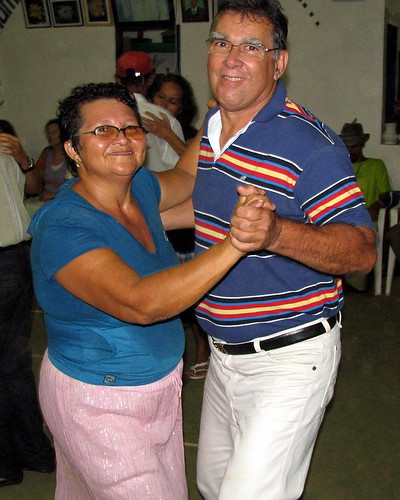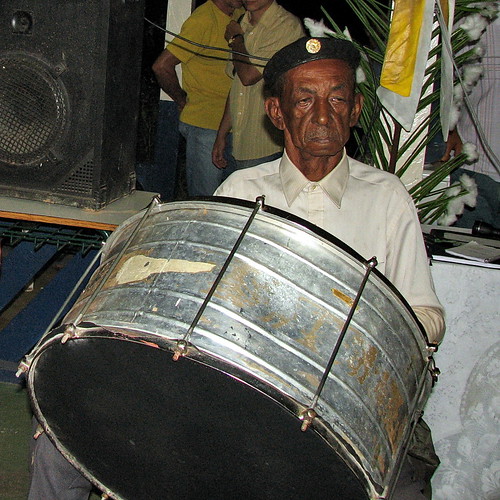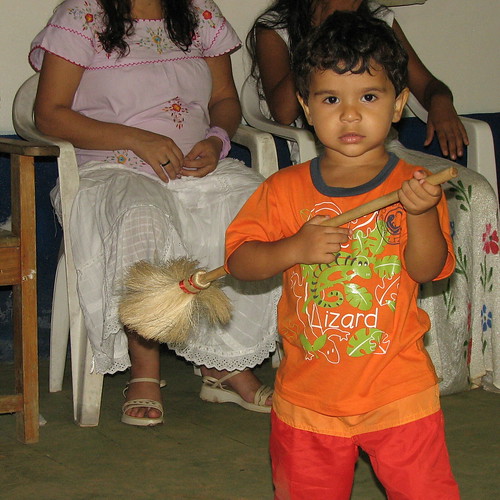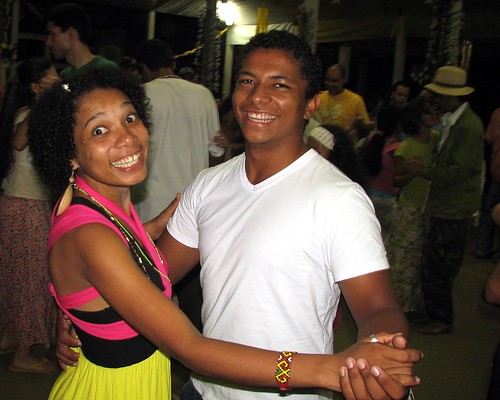
VISISIONSHARE (blog header)_edited
Showing posts with label Chico Mendes. Show all posts

Tuesday, April 08, 2008

CONDOMS FOR CONSERVATION

I guess that you might also call this one "love it and leave it alone." The Brazilian government has begun producing condoms using rubber from trees in the Amazon.
IMG_3240
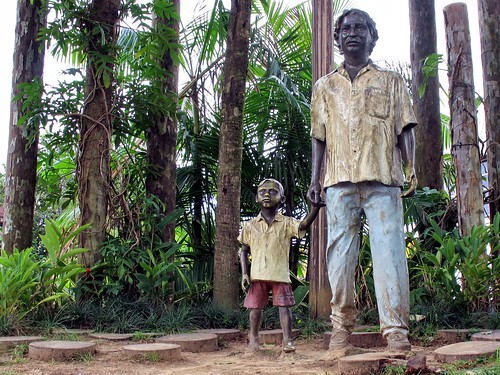
Chico Mendes as memorialized in the central square of Acre state capital Rio Branco. Condoms will be produced from latex collected in the Chico Mendes Extractive Reserve in Xapuri.


Brazil makes 'rainforest' condoms
By Gary Duffy
BBC News, Sao Paulo

The health ministry says the move will help preserve the largest rainforest in the world.

It will also cut dependence on imported contraceptives, which are given away to fight Aids.

The Brazilian government has one of the biggest programmes in the world to distribute free condoms in the fight against the disease.

The new state-run factory is in the north-western state of Acre, and will initially produce 100 million condoms a year, which will be known by the name Natex.

Officials believe that not only will it generate income for Amazon residents, but it will involve using a product which is widely available and can be obtained without destroying large areas of the rainforest.

The latex will come from the Chico Mendes reserve, an area named after the famous conservationist and rubber tapper who was shot dead in 1988 by local ranchers.

The factory will benefit at least 500 families and provide 150 jobs in the town of Xapuri which has a population of around 15,000 people.

The health ministry says the condoms will be the only ones in the world made of latex harvested from a tropical forest, and will reduce the reliance on foreign imports.

The Brazilian government says it is the world's largest single buyer of condoms, purchasing more than a billion of the contraceptives in recent years to give away free as part of the country's national programme to combat Aids.

The policy, which is at its most visible during the Carnival period, has often been criticised by Catholic bishops who say it only encourages promiscuity.

Go to original article.


Monday, April 07, 2008

Leaving Vila Fortaleza:
The Beauty and the Challenge

IMG_1814a

Final days were for myself full of nostalgia or longing. Actually, it's more than that -- closer to something Brazilians call saudade, a word so unique that there is a full wikipedia page and lots of discussion devoted to it.

I carried my camera and shot almost randomly, just capturing some of the beauties of people and place. Looking back now, I selected a few from the last week at Vila Fortaleza.

IMG_1816

IMG_2375

IMG_1875

IMG_2468

IMG_2269

IMG_2347

IMG_2539

IMG_2560

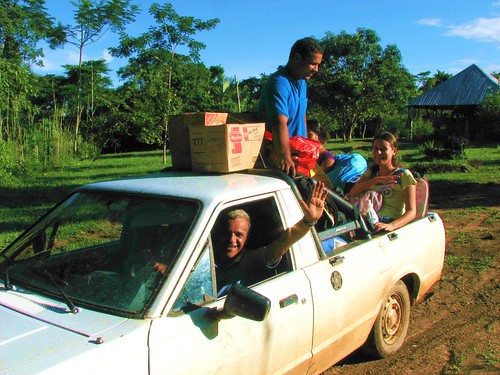
And then came the challenges of leaving. Getting people and stuff into Saturnino's little pick-up was the fun part.

IMG_2426_edited

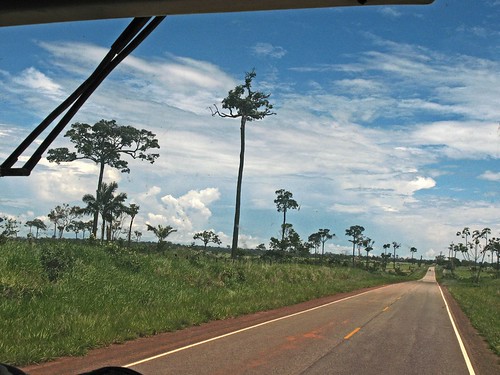
Heading down the road was more difficult.

I'm going to let the photos speak for themselves.

IMG_2572

IMG_2201

IMG_2596

IMG_2193

In coming posts, I'll share some news about how people are trying to deal with the opportunities and intrusions of this modern fuel-hungry world.

There are some more photos here.


Tuesday, March 25, 2008

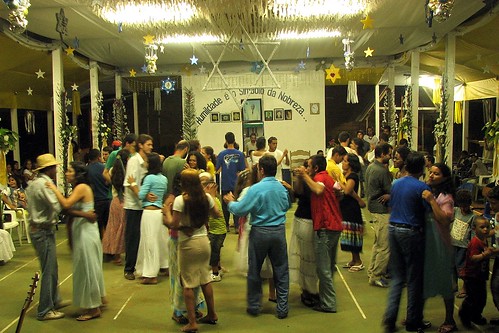
FORRÓ WITH DAIME
Encounter for a New Horizon
Vila Fortaleza January 2008


IMG_1421

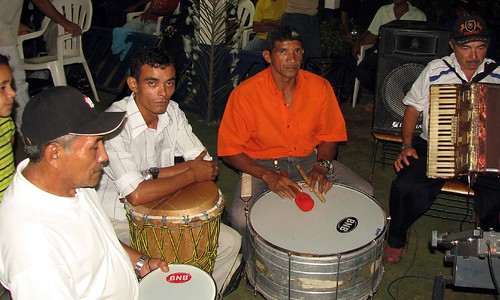
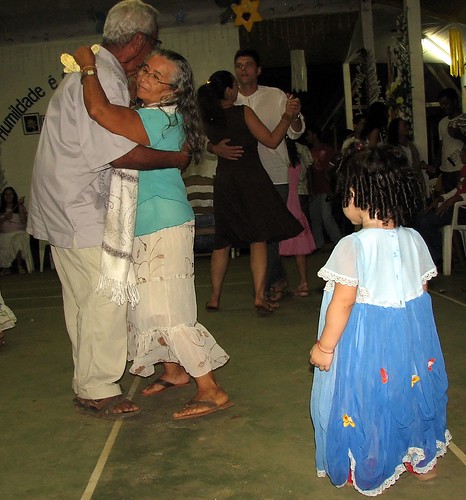
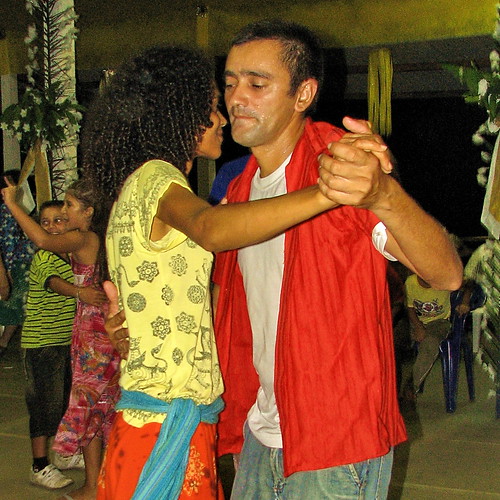
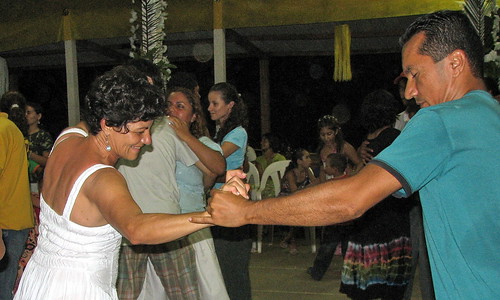
Forró is the popular dance form from Northeastern Brazil where Mestre Irineu was born. In its modern form it is a vigorous dance like a polka but more rhythmic and hip twisting and it has been remixed into forms that are currently popular throughout Brazil, and even in the USA.


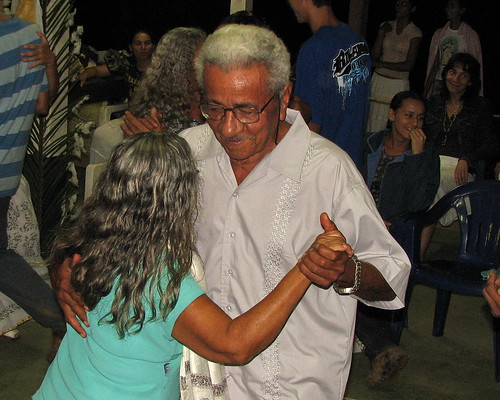
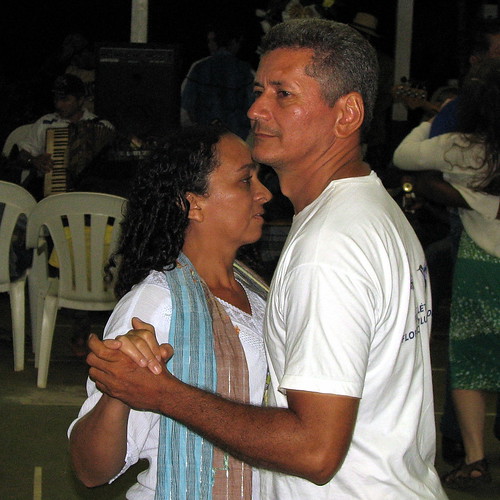
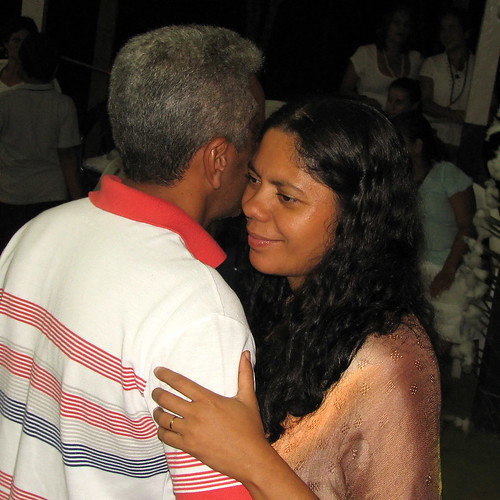
In Vila Fortaleza it is danced mostly in the old-fashioned waltz style. Here are the words (in italics) of Padrinho Luiz Mendes recalling forró in the days of Mestre Irienu.


"He provided dance parties. Mestre danced a lot and his favorite dance was precisely the forró. He liked the forró. He was a good and beautiful dancer and was fun in a party. I happened to be in a party that lasted the whole night, but there was a time in the past where they danced for three consecutive nights. ....

"Drinking Daime at a forró… boy, it made a party of it...."


"It is a [spiritual] work. It is a work that gives joy to witness, to dance with your mother, drinking Daime, mirando [visioning], the most beautiful thing that one can appreciate. “Oh! But I don't know how to dance!” The orchestra teaches, the Daime teaches, placing everything in the right way as it should: dancing and mirando."

IMG_1348

IMG_1346

IMG_1349


"There is an expression he [Mestre Irineu] used when he was going to ask a lady for a dance. It is a thing so rich, so rich, the force of this expression upon asking a lady for a dance.... He would stand up and say: “A lady made of silver to dance with a gentleman made of gold.”
"It is very pleasant, it is very good to dance with your woman, to dance with your sister and to dance, finally, with all the ladies, mostly the ones that also took the Daime, because in order for it to work is recommended that the gentleman drinks Daime and the lady also drinks Daime. But it is good, it is very good, it is like a dream that we are just remembering."


"And let’s dance, and let’s cheer up."


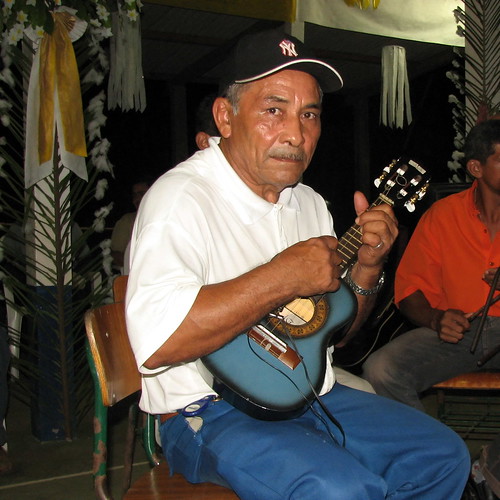
Saturnino singing a Luiz Gonzaga classic.

The song complains about the loss of good air, water, land and of Chico Mendes. At the song's end, Saturnino changes the lyrics slightly to include Mestre Irineu. Chico Mendes and Raimundo Irineu Serra both launched globally significant movements -- political and spiritual -- giving new hope to people and nature from the forests of Acre.

On this night most of the forró musicians (and many guests) were from the local township of Caipixaba which borders on Xapuri where Chico Mendes fought to save the rainforest from the ravages logging and ranching and was murdered in 1988. Across the last 20 years the politics of the area has become more progressive with Acre State programs of land-use planning and sustainable economic development. The old tensions between those who want to preserve and those who want to exploit are being eased in the process.

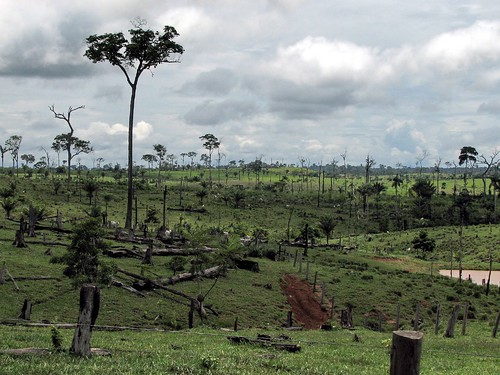
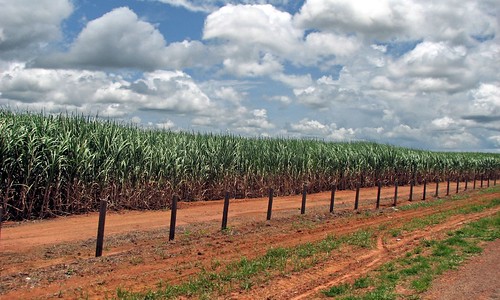
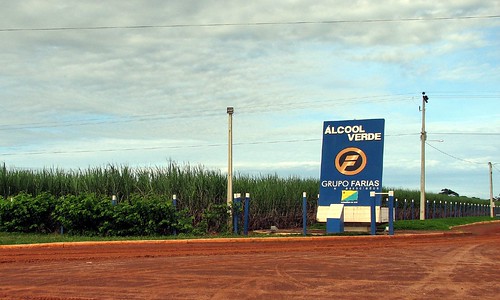
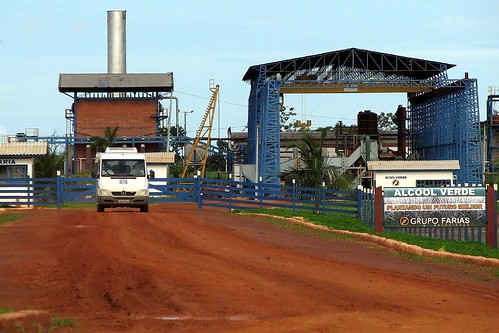
Today, of course, there are new pressures. Signs of globalization are everywhere. There is sugar cane being planted for ethanol

IMG_2196

IMG_2195

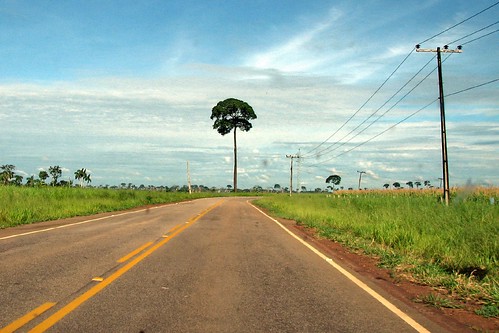
and even gas and oil prospecting (in northern Acre). The road to the west coast is being paved in Peru where, unfortunately, violence and murder have flared up again and illegal logging has penetrated onto Indian lands in Brazil.

The situation is more tranquil in Acre, for sure, but the pressure to develop economically through exports is great. Already, a new bridge to Peru has been opened connecting the roads of Acre and Brazil to Asia and the markets of the Pacific Rim.

img_0666_edited


On this night of forró at Vila Fortaleza another bridge is being built -- between local people from the rural ranching culture and Santo Daime visitors from the urban centers and abroad. Here, in tiny Vila Fortaleza, they are singing and dancing along the "inner road" of Santo Daime where the important "export products" are friendship and joy. Perhaps, this exuberance and happiness may also have global significance.


Here are some photos:

IMG_1436

IMG_1411

IMG_1528b

IMG_1487

IMG_1413

IMG_1377

IMG_1375

IMG_1486

IMG_1319

IMG_1358

IMG_1541

IMG_1580

IMG_1450

IMG_1362

IMG_1330

IMG_1528a

View all the photos here.

NOTE: I think it's important to state that the Daime-Forró shown in this post is not a common experience along the Santo Daime path, and it is not presented by the Luiz Mendes group outside of the home ground of Vila Fortaleza.

Ayahuasca-based rituals involve a very strong psychoactive substance that is often purgative and extremely difficult. In no sense can they be considered as "party drugs." In order to achieve what is shown above, there must be a very strong spiritual container and many well-practiced people. Fortunately, that is what exists at Vila Fortaleza.

Friday, November 02, 2007

Dot Earth

I've been following Andrew Revkin's new blog at the NY Times.

revkin.125vert

It's quite wonderful.

Somehow, I feel a special connection with him -- perhaps because of his 1990 book The Burning Season which told the story of Chico Mendes and the struggle against the destruction of the Amazon forest in Xapuri, Acre State. This is quite close to my spiritual heart home with the family of Luiz Mendes at Vila Fortaleza in neighboring Caipixaba.

At Andrew's blog there are also a great set of earth links.

Check it out.